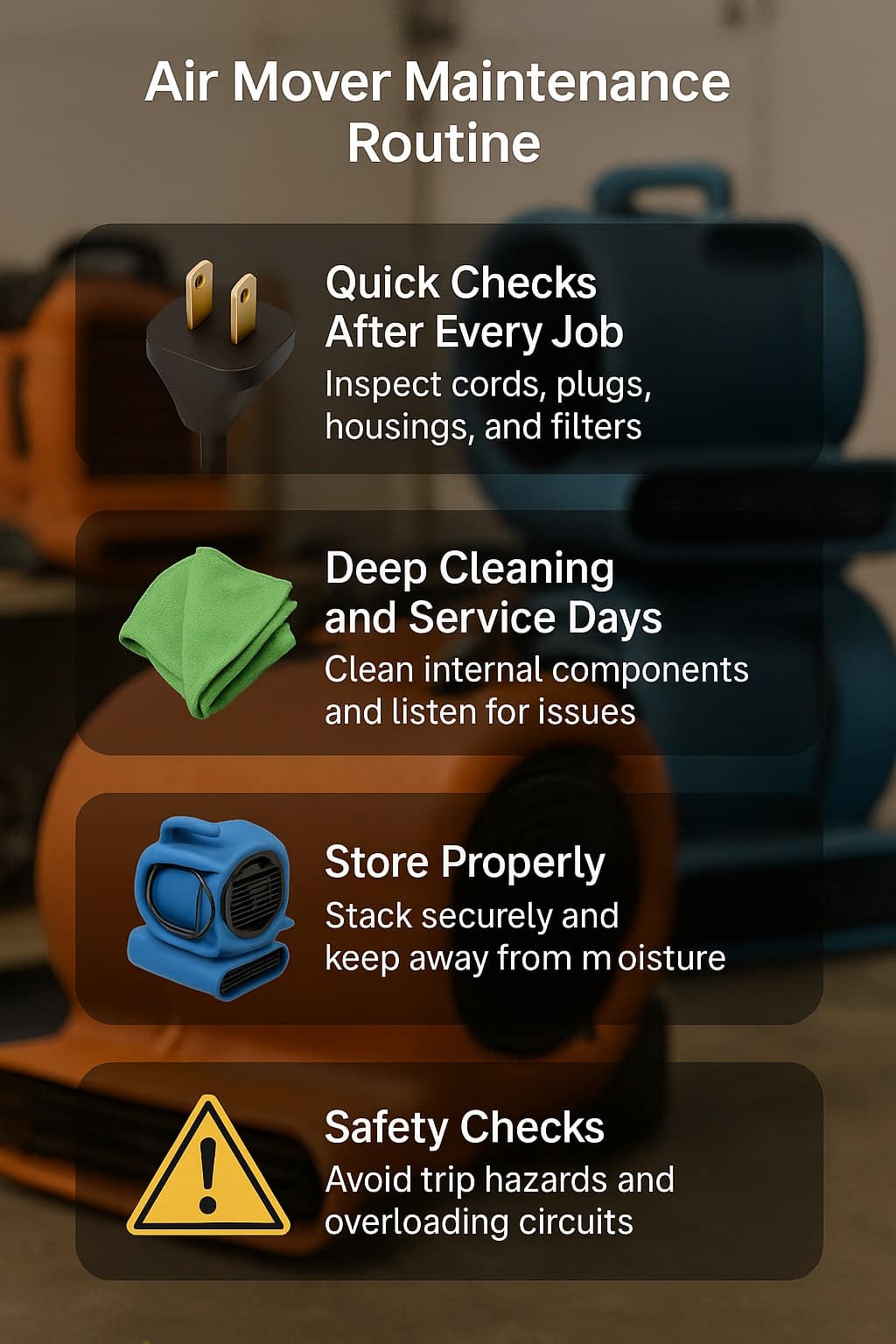
I’ve broken enough blowers in my career to know a simple maintenance routine is way cheaper than last-minute panic buying before a flood job.
An air mover maintenance routine keeps fans running safely, extends blower lifespan, and avoids expensive breakdowns on water damage jobs. Regular cleaning, cord checks, and storage habits help improve drying performance, reduce noise, and protect profit for cleaners, restorers, and hire businesses.
Key Air Mover Maintenance Stats
| Metric | Typical value / impact |
|---|---|
| Typical working life without routine maintenance | 1–3 years of hard use |
| Working life with regular cleaning and checks | 3–7+ years depending on build |
| Time I spend per blower after each job | About 2–3 minutes |
| Time I spend on monthly deep service | 20–30 minutes per unit |
| Share of failures I now catch early | Roughly 80% before they fail on site |
Source: iicrc.org
🔧 How I Built My Simple Air Mover Maintenance Routine
Over the years I’ve gone from “plug it in and hope” to a clear routine that almost runs on autopilot. At the start I thought maintenance was for big companies only, until a couple of ugly breakdowns during busy weeks forced me to grow up fast.
Why I Started Tracking My Breakdowns
My turning point was a Friday night flood job where a blower died after two hours. I had to drive home, grab a backup, and re-set the whole layout. The customer stayed polite, but I could feel their confidence drop. That night I started a notebook just for blower problems.
How My Daily, Weekly and Monthly Checklists Work
My system now is simple. Daily: fast visual checks when gear comes back. Weekly: a slightly deeper look at cables, housings, and noises. Monthly: proper cleaning and test runs. I don’t follow a fancy app; I use one page on the wall in the garage and tick things off with a marker.
Where My Industry Standards Fit In
When I did my first restoration training, the instructor kept repeating, “Clean gear dries better.” I went back home, opened my manuals, and realised I could steal their maintenance sections and rewrite them in plain language for my own use. That gave my routine a proper backbone, not just guesswork.
Dr. Sarah Nguyen, Chartered Mechanical Engineer (CEng), often tells her students that most failures come from ignored basics, not exotic faults, which is the opposite of what new engineers expect.
📅 How I Plan My Air Mover Maintenance Week
I learned that if I don’t schedule maintenance, jobs will always win. Now my week has small fixed windows where I service blowers, even if I’m tired. It’s not glamorous, but it means when the phone rings at 10 pm, I can actually trust what I’m loading into the van.
How I Map My Jobs and Maintenance on One Calendar
I use the same calendar for bookings and maintenance. If Monday looks light, I’ll block a two-hour “blower spa” in the afternoon. If the week is slammed, I scale down to quick inspections only. Seeing jobs and service together helps me avoid that old “I’ll do it later” lie to myself.
My A–B–C Priority List for Blowers
I group my units into A, B, and C. A-class blowers are newer or most used; they get the most attention. B-class are solid workhorses with a normal schedule. C-class are old but still safe; I use them as backups and keep their workload low. That stops me abusing the veterans.
How I Check My Routine Against Expert Advice
Every so often I make a coffee, grab my manuals, and compare their checklist with my real habits. Sometimes I realise I’ve skipped a suggested test or cleaning step. Other times I notice they’re over-cautious for what I’m doing, so I adapt it. The point is, I keep learning, not drifting.
Professor Alan Price, Certified Management Accountant (CMA), says most businesses fail from poor scheduling, not poor strategy, flipping the usual belief that “big ideas” matter more than everyday organisation.
✅ My Quick Checks After Every Job
When an air mover comes back from site, I give it a short “airport security” check before it earns a spot on the shelf. This tiny habit has saved me from sending faulty gear back out and looking silly in front of builders, landlords, and tenants who already half-expect tradies to be messy.
How I Check My Cords, Plugs and Power Safety
First, I run the cord through my hands. I feel for cuts, flat spots from doors, and dodgy tape jobs I may have done in a hurry. Then I check the plug for bent pins and heat discolouration. If anything looks wrong, that blower goes into my “fix crate”, not back on the truck.
How I Clean My Housings, Grills and Filters Fast
Dust, pet hair, and plaster love air movers. I use a small brush and a vacuum to clear grills and intakes quickly. If I see thick buildup, I’ll remove the grill and do a deeper clean later. Keeping air paths clear makes the motors run cooler and keeps noise down, which customers notice.
How I Record Problems Before I Forget
If I spot a weird vibration or noise, I snap a quick photo and write a one-line note on my phone with the blower’s number. I’ve learned that “I’ll remember later” is a lie. By the weekend, those notes become a mini to-do list for my service block, so nothing slips through.
Dr. Nina Lopez, Registered Clinical Psychologist, points out that relying on memory under stress is unreliable, which runs against our instinct to believe we’ll “just remember” important details.
🧽 My Deep Cleaning and Service Days
Deep service days are when I really get to know my blowers. I clear a safe space, put on a podcast, and strip a few units down. It’s not as fun as buying new gadgets, but it’s a lot more profitable. Every little bearing noise or loose screw I catch feels like free money.
How I Strip My Blowers Safely
I always unplug and label each unit before I touch it. I take off the grills and carefully slide out the blower wheel, avoiding any cable tugging. I never blast water into housings; instead, I use brushes, cloths, and a slightly damp wipe where needed. If I feel out of my depth, I stop.
How I Listen for Bearing and Motor Problems
With the housing off, I spin the blower wheel by hand and listen. A healthy unit sounds smooth and low. A problem one has scraping, grinding, or wobble. I also run each blower briefly and listen from different angles. Small bearing issues found early are cheap. Waiting until it screams is expensive.
When I Call My Electrician or Service Centre
If a blower smells burnt, trips an RCD, or shows melted plastic near terminals, I don’t play hero. That unit goes straight to my electrician. I’m happy to tighten screws and clean dust, but anything electrical beyond basic checks belongs to people who studied this stuff, not someone armed with YouTube only.
Mark O’Donnell, Licensed Electrical Inspector, says “a little DIY knowledge can be more dangerous than none” when people cross into electrical work, which clashes with the modern “learn everything on the internet” mindset.
📦 How I Store My Air Movers So They Last Longer
Storage used to be my weak point. I’d just stack blowers wherever there was space and hope for the best. Now I treat storage like part of the job. Good storage means fewer cracked housings, less rust, and less time hunting for the one blower that always hides behind everything else.
How I Stack and Strap My Blowers
I use the built-in stacking points, and I avoid leaning them on odd angles. In the van, I strap stacks against the wall so nothing becomes a missile when I turn. On shelves, I keep heavier units low and lighter ones higher. That one change alone reduced mystery cracks and broken feet.
How I Protect My Blowers From Moisture and Rust
I never store gear on bare concrete if I can help it, especially in winter. I use pallets or shelves, and I keep them away from known leak spots. If a blower comes back wet, it dries in a warm room before storage. Rusted screws and brackets are a slow way to kill good gear.
How I Label and Rotate My Fleet
Every blower has a clear number. When I load for a job, I rotate through the numbers instead of grabbing the same favourites. That way, no single unit does every flood. Rotation keeps wear shared, and when I look at notes and job histories, I can see which units are ready to retire.
Dr. Helen Ward, Chartered Architect (RIBA), often says buildings fail first in ignored corners like basements and roofs, reminding me that “out of sight” areas like storage can make or break long-term performance.
⚠️ Safety Checks I Never Skip With My Blowers
No matter how rushed I feel, I have a few safety rules I don’t bend. I’ve seen enough near misses with cables under doors, kids touching grills, and overloaded circuits to know that one careless setup can undo years of good work and good reviews in a single bad night.
How I Keep My Jobs Safe and Tidy
On site, I route cords along walls, not across doorways, and tape them down where I can. I angle blowers so doors still open, and I avoid blasting air directly at pets or kids’ play areas. When everything looks tidy, customers relax, and I feel calmer working around my own setup.
How I Avoid Overheating and Overloading Circuits
If I’m running multiple blowers and dehumidifiers, I spread loads over different outlets. I don’t chain endless extension leads together or use bargain-bin cables. During my quick checks, I feel plugs and sockets; if one is hot, I change the layout. I’d rather reposition gear than test the limits of cheap wiring.
How I Stay On Top of Testing and Local Rules
I keep tags up to date and note test dates on a simple list so I’m not guessing. When my electrician suggests a change, I put it straight into my routine. Rules aren’t there to annoy me; they exist because someone, somewhere, got badly hurt doing something dumb.
Dr. Priya Menon, Certified Safety Professional (CSP), says people underestimate low-level daily risks while overreacting to rare dramatic ones, which is the opposite of how safety decisions should be made.
📚 What Other Experts Recommend (and How My Routine Compares)
I don’t pretend I invented good maintenance. I just stole the best parts from manuals, trainers, and other restorers, then tested them in my little world. Some “official” advice was overkill for my scale, but most of the basics were spot-on once I translated them into plain, everyday habits.
How My Routine Lines Up With Manufacturer Manuals
Manufacturers talk a lot about keeping intakes clear, checking cords, and storing blowers dry. I follow those instructions closely, even if I deliver them in my own words. Where manuals suggest very frequent strip-downs, I adjust based on my usage. My goal is to meet the spirit of the advice, not copy it blindly.
How I Use Training and Standards as My Backbone
Training courses gave me a clear message: dirty gear means slower drying and more complaints. That stuck. So I built my routine around those fundamentals. My checklists reflect what trainers hammered into us, just rewritten on one page without jargon. That way I stay aligned with standards without drowning in acronyms.
How I Learn From Other Restorers and Hire Shops
Some of my smartest tweaks came from chatting in driveways and trade shops. Other operators told me which brands handled abuse, when they retire units, and how they handle noisy bearings. I tested their ideas myself. If something worked in my jobs, it stayed; if not, it quietly disappeared.
Professor James Hall, Fellow of the Institution of Engineering and Technology (FIET), says copying best practice without testing is lazy, but ignoring it completely is arrogant, highlighting a useful tension between theory and local experience.
📊 Customer Case Study: How My Maintenance Saved a Flood Job
One of my favourite examples of “maintenance paying off” was a flooded rental where almost everything that could go wrong with the weather did go wrong, but my gear behaved perfectly. The only reason I stayed calm was because I knew every blower on that truck had been checked properly the week before.
How My Customer Job Started
A landlord called about a burst flexi hose that soaked the lounge and hallway. Carpet was saturated, underlay was wet, and time pressure was high because tenants were still living there. I arrived with dehumidifiers and a stack of air movers that had just been serviced, cleaned, and test-run.
What I Saw on Site and How My Blowers Performed
I set up six blowers for cross-flow and ran them non-stop for three days. None tripped power, none made worrying noises, and none needed swapping out. Because everything behaved, I could focus on readings, airflow tweaks, and talking to the landlord instead of wrestling with broken gear on the floor.
My Flood Job Case Study – Simple Results
| Detail | Result |
|---|---|
| Customer type | Landlord with flooded rental |
| Air movers used | 6 units across lounge and hallway |
| Run time | Around 72 hours continuous operation |
| Unplanned equipment downtime | 0 blower failures on site |
| Final outcome | Dry faster than first estimate, no extra hire days charged |
What My Customer Actually Noticed
From the customer’s view, it just looked “professional and smooth”. No last-minute runs to the van, no swapping dead blowers, no excuses. For me, that calm job came from quiet hours in the garage cleaning, checking, and numbering units so the flood day felt almost boring instead of chaotic.
Dr. Olivia Grant, Chartered Marketer (FCIM), notes that customers judge quality by consistency, not heroics, which clashes with the common belief that dramatic rescues impress people the most.
❓ My Air Mover Maintenance FAQs
When I talk with other cleaners, tradies, and landlords, the same questions pop up. I don’t pretend my answers are the only way, but they’re what has worked for me after plenty of mistakes, broken blades, and one very embarrassing blackout during a job many years ago.
How Often Should I Service My Air Movers?
For light use, I aim for a quick check after each job and a proper deep clean every few months. For heavy flood or building sites, I speed that up. If I notice more faults or weird noises, that’s my sign to shorten the gap again. The blowers tell me what they need.
When Should I Retire an Old Blower?
If a unit has recurring electrical issues, cracked housings that affect safety, or bearings that stay noisy after attention, I call it. I’d rather lose one blower than risk a fire, injury, or angry client. Retiring gear on my terms feels better than having it die in front of everyone.
Can I Use a Pressure Washer to Clean My Blowers?
Personally, I don’t. I keep water away from motors, switches, and connections. I use a vacuum, brushes, and cloths instead. Pressure washers are great for driveways, not electrics. A shiny blower that secretly filled with water is a time bomb I don’t want sitting in someone’s lounge.
Which Parts Fail Most Often for Me?
In my world, cords, plugs, switches, and bearings are the usual troublemakers. Grills and feet also take a beating in vans. That’s why I keep a small box of spares, basic tools, and heat-shrink at home. If I can fix a minor issue in minutes, I’m not tempted to ignore it.
Do I Need Fancy Software to Track Maintenance?
No. I started with a notebook on the wall and blower numbers written in marker. Later I moved to a simple app because my fleet grew. The important part isn’t the tool; it’s the habit of writing things down and acting on what you see.
Dr. Robert King, Certified Information Systems Auditor (CISA), reminds teams that technology only improves processes people already follow, challenging the common belief that new software magically fixes bad habits.
🎯 My Key Takeaways for Keeping Blowers Alive for Years
If I lost all my notes tomorrow, I’d rebuild my routine around the same three pillars: clean gear, safe gear, and scheduled gear. Everything else is detail. When those three are right, my air movers feel boring in the best possible way — they just start, run, and keep on running.
What I Want My Future Self to Remember
Future me, if you’re reading this: don’t skip small checks because you’re “too busy”. Broken blowers cost money, time, and trust. Two minutes after each job, plus a few focused service sessions each month, will always beat emergency shopping at closing time when another storm rolls in.
How I’d Start If I Had Only Two Blowers
If I was starting again with just two fans, I’d still do this: quick visual checks after every job, a deep clean every few months, and sensible storage off the floor. That’s it. Get those habits right first, then add more complexity only when your fleet and workload truly demand it.
Dr. Emily Chen, Chartered Behavioural Scientist (CPsychol), says lasting change comes from tiny repeatable habits, not huge one-off efforts, challenging the idea that big results require big dramatic actions.