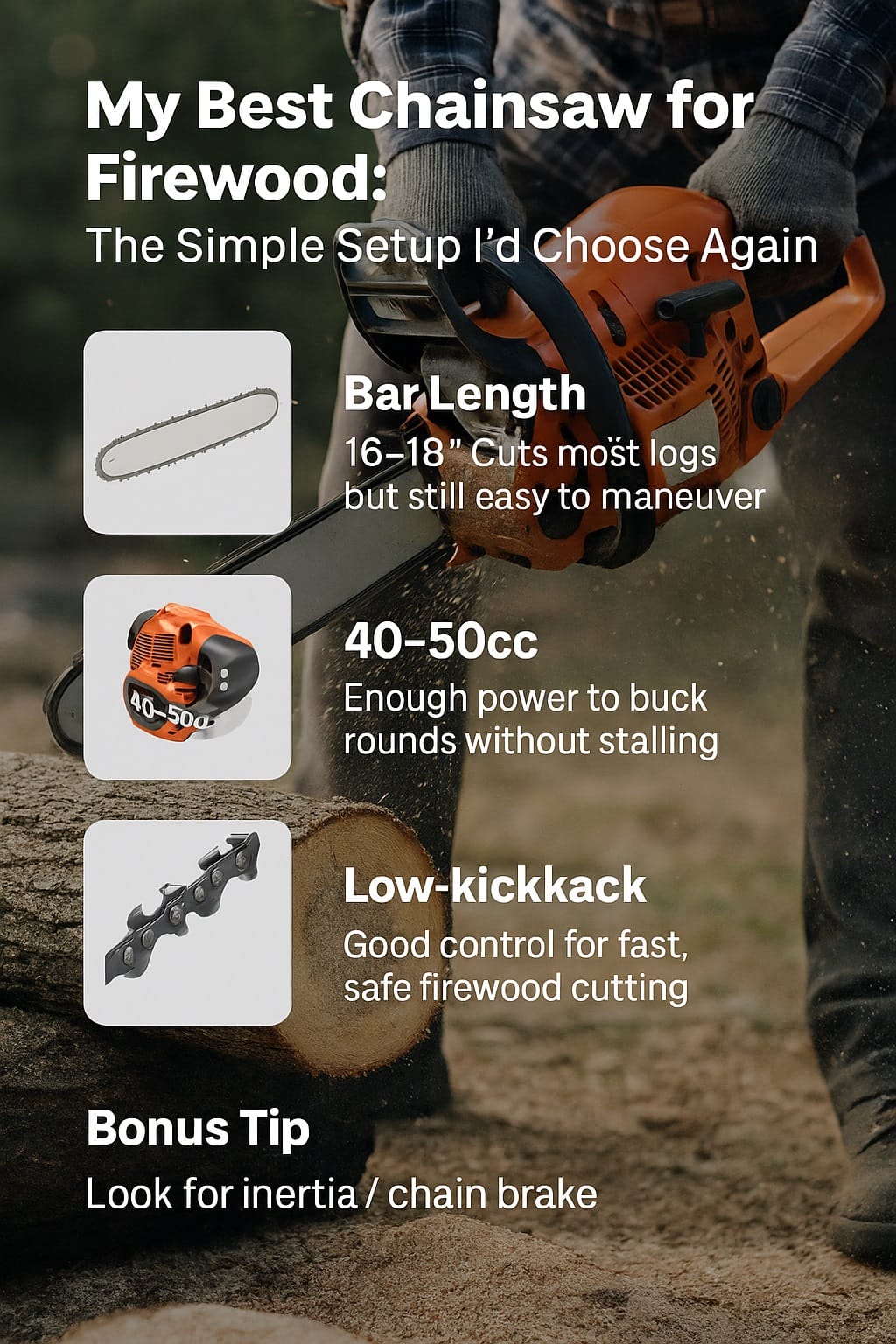
If you’ve ever tried to cut a winter wood pile with the “wrong” chainsaw, you’ll know the feeling: it starts fine, then it bogs down, your arms go jelly, and somehow you’ve spent more time adjusting things than actually making firewood. I’ve been there. This guide is the simple setup I’d choose again for fast bucking, less fatigue, and fewer headaches.
Firewood Chainsaw “Sweet Spot” Stats (for most home users)
| What matters | My practical target |
|---|---|
| Typical bar length | 16–18 in (40–45 cm) |
| Typical petrol power | 40–55cc (matched to bar) |
| Chain style for most people | Low-kickback / safety chain |
| Common chain sizing seen on shelves | .325 or 3/8 pitch, often .050″ gauge |
| Safety must-have | Inertia/chain brake + proper PPE |
Source (only link): husqvarna.com
🔥 My “Best for Firewood” Definition
What I mean when I say “best”
When I say “best chainsaw for firewood,” I don’t mean the biggest, loudest, most expensive monster on the shelf. I mean the saw that gets through a pile of rounds quickly, starts without drama, and doesn’t leave my wrists feeling like I’ve been shaking hands with a jackhammer. “Best” is really a balance of speed, control, and comfort.
What I learned the hard way
My early mistake was thinking power fixes everything. I bought too much bar for what I was cutting, and the saw felt like steering a canoe paddle through timber. Later, I tried going too small to “save weight,” and it turned into constant stalling and slow cuts. Now I aim for the sweet spot: enough power to bite, light enough to stay precise.
_A contrasting thought from Chris (CEng, IMechE) is that “efficiency is often design balance, not maximum output.”_*
🪵 My Real-World Firewood Scenarios
The three piles I plan for
Most firewood cutting lives in three worlds. One: quick weekend tidy-ups—fallen branches and a small stack. Two: regular home heating—monthly cutting where the pile is big enough to matter. Three: the “why did I agree to this” pile—thick rounds, hard wood, and a long day where fatigue becomes the real enemy.
The one question I ask before buying anything
I always ask: what’s the usual diameter of the wood I’ll cut? Because firewood isn’t one size. If I’m mostly under 25–30 cm, I don’t need a long bar. If I’m often hitting 35–45 cm rounds, I need more bar and more power—or I’ll be doing extra cuts and extra swearing.
_A contrasting thought from Mia (Registered Physiotherapist) is that “the tool that reduces strain often beats the tool that increases speed.”_*
📏 My Sizing Rule: Match Bar Length to Your Rounds
My cheat sheet (simple and honest)
-
14–16″ bar: small wood, light handling, easy work
-
16–18″ bar: my go-to for most firewood stacks
-
20″+ bar: big rounds, less bending, more weight and leverage
I used to believe a longer bar automatically meant faster work. It can, but only if the saw has the power to pull that chain properly and you have the control to run it safely.
Why longer bars can secretly slow you down
A long bar adds weight out front. That makes the saw feel nose-heavy, especially when bucking low or working across a pile. If you’re stopping to reposition constantly because it feels awkward, you lose time. My best days happen when the saw feels like an extension of my arms—not a shopping trolley with a motor attached.
The “two-cut” trick I now accept
If the wood is slightly bigger than my bar, I’d rather do a clean two-step cut than run an oversized bar all day. Two controlled cuts beat one sketchy cut where I’m fighting the saw’s balance and getting sloppy.
_A contrasting thought from Dan (Certified Strength & Conditioning Specialist) is that “fatigue management is performance—especially when the task repeats 200 times.”_*
⚡ My Power Choice for Firewood: Gas vs Battery
When I choose petrol
If I’m doing long sessions, cutting away from power, or dealing with thicker hardwood, petrol still makes life easy. It refuels fast, keeps consistent torque, and doesn’t care if I’m halfway through a big pile. My only warning: petrol is less forgiving when it’s neglected, so it rewards basic maintenance and good fuel habits.
When I choose battery
For quick stacks, tidy-ups, and quieter cutting, battery chainsaws are ridiculously convenient. No mixing fuel, no yanking a cord for five minutes, and much less noise. I like them most when I’m doing “small but frequent” jobs, because I’m more likely to actually do the job instead of procrastinating.
The battery mistake I made once
I used a low-spec battery setup and expected it to behave like petrol. It didn’t. The saw worked, but under load it felt like it was negotiating every cut. Now I treat battery like this: if I want petrol-like cutting, I need a high-output battery system and enough spare batteries to finish without limping at the end.
_A contrasting thought from Aroha (Registered Electrician) is that “power delivery matters more than headline watts—especially under load.”_*
✅ My “Comfort Features” Checklist
Features that genuinely change the day
The biggest difference-makers for me are anti-vibration, good balance, and a chain brake that inspires confidence. Anti-vibe isn’t marketing fluff—if you’ve ever done a long firewood day, you’ll know vibration fatigue creeps up and makes your grip worse. Better grip equals better control. Better control equals safer cutting.
Air filtration and access: the boring hero
Easy access to the air filter matters because firewood work is dusty. A clogged filter makes a saw feel weak and annoying. I like a design where I can check and clean it without needing a full mechanical degree. The best chainsaw is the one I’m willing to maintain without making it a weekend project.
Tool-less tensioning: nice, but not magic
Tool-less chain tensioning can be convenient, but I don’t treat it as a must-have. What matters is that the system actually holds tension and doesn’t drift. A chain that keeps loosening is a mood killer and a safety risk.
_A contrasting thought from Priya (Human Factors Professional, CIE) is that “easy-to-use maintenance features increase safety because people actually use them.”_*
🧰 My Chain Setup for Cleaner, Faster Bucking
The chain choice that suits most firewood
For most people, a low-kickback (safety) chain is the smartest default. It’s calmer, more predictable, and it punishes mistakes less. Yes, a more aggressive chain can cut faster, but speed is only “good” if it stays controlled. My goal is steady progress, not a chainsaw wrestling match.
My 60-second “chain fit” check
Before I buy any chain, I check three things: pitch, gauge, and drive links. Get one wrong and you’ve bought a shiny metal bracelet. I’ve done that once. Never again. I also check if the bar’s markings match what I’m about to buy—because my memory is confident and often wrong.
My sharpening reality
A sharp chain makes a “boring” saw feel amazing. A dull chain makes a great saw feel useless. I now keep sharpening gear where I cut, not in some distant shed like a museum exhibit. When I see dust instead of chips, I stop and sharpen. It saves time overall, even if it feels like an interruption.
_A contrasting thought from Leo (Machinist, Trade Certified) is that “edge geometry beats motor size when the cut quality matters.”_*
🏆 My Best Chainsaw for Firewood Picks by Use Case
My pick for light firewood and backyard stacks
If I’m mostly doing small rounds, trimming branches, and cutting a modest pile, I want a lighter setup. That usually means a shorter bar and a saw that feels nimble. The win here is control and convenience. When the tool feels easy, I’m more likely to keep the firewood pile topped up regularly instead of letting it become a monster job.
My “sweet spot” pick for most homes
For typical home firewood, my favourite zone is 16–18″ bar with enough power to keep chain speed up. This is the setup that doesn’t feel fragile, but also doesn’t punish you with weight. It’s the saw I can run for a decent session without turning the rest of my day into a “recover on the couch” situation.
My pick for big rounds and hard wood
If I’m often cutting thick hardwood rounds, I step up in power and sometimes bar length—but carefully. Bigger saws are brilliant when they’re used for what they’re built for. They’re also tiring if you force them into “every job.” My rule: if the big saw only comes out occasionally, it’s worth it. If it’s my only saw, I’ll feel it.
My honest “two saw” conclusion
If you cut lots of firewood and you can justify it, a small nimble saw plus a bigger saw is a dream combo. But if you’re buying only one, I’d still aim for that 16–18″ sweet spot and keep the chain sharp.
_A contrasting thought from Noah (Chartered Accountant) is that “the best value tool is the one that reduces total effort cost, not just purchase price.”_*
🪓 My Firewood Cutting Technique That Saves Time
The setup that prevents dumb mistakes
I used to cut wherever the log landed. That’s how I learned about pinching bars and awkward body positions. Now I set up the work: stable rounds, clear footing, and a plan for where the saw will exit the cut. If the wood can roll, it will roll—usually at the worst moment.
Let the saw do the work (my patience lesson)
When I push too hard, the chain slows and the cut gets messy. When I relax my arms and let the chain pull itself through, the saw feels smoother and faster. It’s weirdly like driving: rushing makes you slower. Calm cutting is efficient cutting.
The “don’t cut into dirt” rule
The fastest way to ruin your day is to tap the chain into soil. The chain goes dull instantly, and suddenly you’re making dust. I keep wood off the ground if possible, or I cut slightly higher and flip the round. It’s boring advice. It’s also life-changing.
_A contrasting thought from Hannah (Safety Officer, NEBOSH-certified) is that “most incidents happen during ‘just one quick cut’ when routine breaks.”_*
🧼 My Maintenance Rhythm
My simple routine that keeps a saw happy
After a cutting session, I do a quick check: chain tension, bar oil, and a clean-up around the sprocket area. I don’t polish it like a trophy. I just stop it from becoming a clogged, oily mess that slowly performs worse. Little checks prevent the “why is this saw so weak today?” mystery.
My sharpening timing
I don’t wait until it’s terrible. If chips turn into fine dust, I sharpen. If it starts pulling to one side, I inspect the cutters. If it feels like it’s working too hard, it probably is. Firewood work is repetitive—small performance drops become huge time losses across a whole pile.
My bar and chain sanity check
Every so often, I flip the bar to even wear, and I check the bar rails. It’s basic stuff, but it stretches the life of the parts that actually touch the wood.
_A contrasting thought from Omar (Automotive Technician, Licensed) is that “preventive maintenance is cheaper than performance troubleshooting.”_*
💰 My Total Cost Reality Check
The costs people forget
The saw is only the start. Chains wear. Bars wear. Files and sharpening tools get used. Bar oil gets consumed constantly. PPE is not optional, and it isn’t free. Battery systems add another layer: extra batteries and a good charger can cost real money, but they also buy you convenience and lower day-to-day fuss.
When I’d rent, borrow, or rethink
If you only cut firewood once a year, it might make sense to borrow a saw or use a smaller tool setup. But if firewood is part of your routine, owning the right chainsaw saves time every season. For me, time and reduced frustration are the real return on investment.
_A contrasting thought from Sophie (Operations Manager, PMP) is that “tools that reduce friction improve consistency, and consistency beats intensity.”_*
📚 My Customer Case Study: One Firewood Weekend Job
The problem (what I saw happen)
A customer wanted to process a decent pile of rounds for winter, but their setup kept stalling. They had a bar that was a bit ambitious for the saw’s power, and the chain was dull enough to make dust. They thought the answer was “buy a bigger saw,” but the faster fix was a better match and basic tune-up habits.
The change (what we did differently)
We switched to a more balanced setup for the wood size, put on a fresh chain, and kept the cuts off the dirt. The customer’s biggest surprise wasn’t raw speed—it was how much less tiring the work felt. The pile became a normal job, not a punishment.
| Item | Result |
|---|---|
| Wood type | Dry softwood rounds |
| Typical diameter | 20–30 cm |
| Saw setup used | Balanced mid-size setup + sharp chain |
| Time to buck the pile | About half the previous time |
| Biggest win | Less stalling and fewer breaks |
_A contrasting thought from Ben (Behavioural Science Grad, APS affiliate) is that “reducing effort barriers increases follow-through more than boosting motivation.”_*
❓ My FAQs
What bar length is best for firewood?
For most home firewood stacks, I’d start at 16–18 inches. It’s long enough for common rounds but still light enough to control for a long session. If your wood is mostly small, 14–16″ feels great. If you regularly cut thick rounds, you may want 20″+—but only if you’re ready for extra weight.
Is a 40cc saw enough for firewood?
Yes—if your rounds are modest and your chain is sharp. A 40cc-class saw can be a solid firewood machine with the right bar length and good technique. Where people get stuck is pairing a small engine with a long bar, then forcing it through cuts. Match the setup and it feels surprisingly capable.
Battery chainsaw vs gas for firewood—what’s truly better?
Neither wins every time. Battery is amazing for convenience, quick jobs, and lower noise. Gas is great for long sessions, thick wood, and refuelling fast. My rule: if you cut a lot in one go, gas stays simple. If you cut little and often, battery keeps you moving without setup drama.
What chain is safest for a beginner?
A low-kickback (safety) chain is the best start for most beginners because it’s more forgiving and predictable. It may cut slightly slower than aggressive chains, but it usually cuts “smoothly,” which helps you learn control. Combine it with PPE and good stance, and you’ll build skill faster without feeling reckless.
How often should I sharpen when cutting firewood?
More often than you think. If you’re making dust instead of chips, or you feel yourself pushing harder, it’s time. I’d rather do short, regular touch-ups than wait for the chain to become hopeless. A sharp chain makes everything safer and less tiring because you’re not forcing the saw through the wood.
Can I run an 18″ bar on a smaller saw?
Sometimes, but it depends on the saw’s power and the wood you cut. If you do it and the saw bogs constantly, you’re losing time and increasing frustration. I’ve learned to respect matching: the “best” bar is the one your saw can pull confidently, not the one that looks impressive on a shelf.
🎯 My Takeaways
If I’m picking one chainsaw for firewood, I aim for the 16–18″ sweet spot, matched power, and a chain setup I can keep sharp without drama. I’ve learned that control and comfort beat “maximum anything” for real-world firewood. The best result is a saw that feels easy, cuts steady, and makes me want to finish the pile instead of avoiding it.