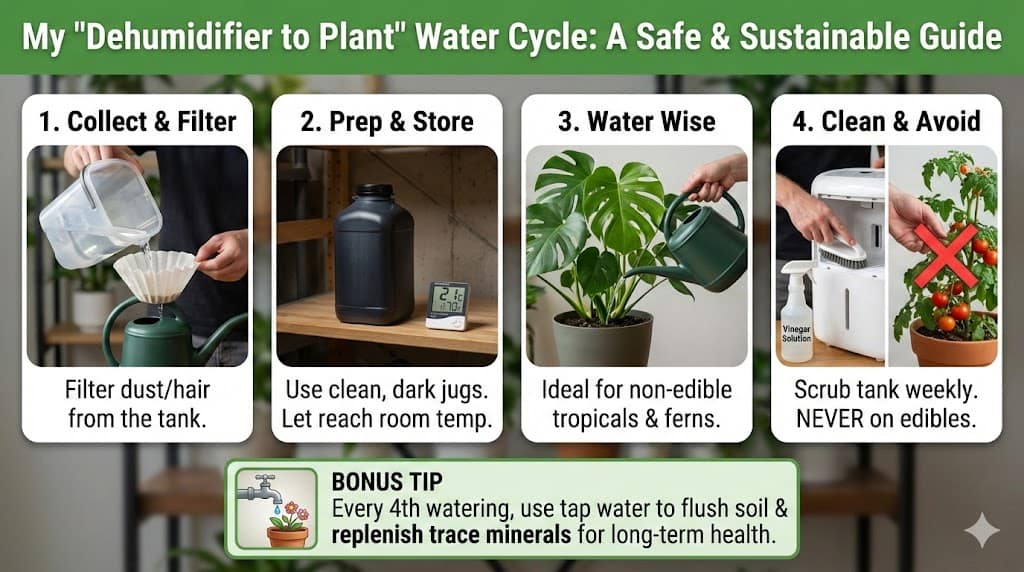
Is your dehumidifier bucket filling up daily? I found a way to stop wasting that water and start feeding my indoor jungle.
Using dehumidifier water for plants is a sustainable way to recycle moisture. Since it is essentially distilled condensate, it lacks tap water chemicals. This eco-friendly irrigation method works best for indoor foliage, provided the collection tank is kept clean to avoid bacterial growth.
Quick Guide to Condensate Quality
| Water Metric | Plant Compatibility |
| pH Level | Slightly Acidic to Neutral |
| Chlorine Content | Zero (Safe for Foliage) |
| Mineral Profile | Low (Soft Water) |
| Pathogen Risk | Medium (Requires Care) |
| Best Use Case | Indoor Tropical Plants |
💧 My Journey from Waste to Sustainability
I remember the first time I hauled my heavy dehumidifier tank across the living room. I was so tired of paying high water bills while my plants looked miserable. I looked at that clear water and thought, “Why not?” My Monstera looked back at me, seemingly thirsty for something better than the liquid bleach coming from my tap.
The Daily Dump Struggle
Every morning, I used to pour gallons of clear, cool water down the shower drain. It felt like a crime against nature, especially during the dry summer months. I started wondering if my thirsty ferns would appreciate the gesture. My back was hurting from the heavy lifting, but my conscience was hurting more from the waste I was creating every single day.
My Research Phase
I didn’t just jump in blindly; I spent nights scrolling through forums and reading science blogs. I learned that this water is basically pulled from thin air. It’s the same process that creates dew on a leaf. That realization gave me the confidence to try it. I felt like a mad scientist, testing a new potion on my least favorite ivy first.
The Greywater Dilemma
At first, I confused this with “greywater” from my laundry, but I quickly learned the difference. Dehumidifier water is condensate, which is much cleaner than soapy sink water. I realized I had a goldmine of soft water sitting in my basement. It wasn’t just “waste” anymore; it was a resource that I had been throwing away for years without thinking.
My First Success Story
The first plant I risked was an old Spider Plant that had seen better days. After two weeks of using my dehumidifier water, I noticed the tips weren’t turning brown anymore. I was genuinely shocked by how quickly it responded. It felt like I had discovered a life hack that was too good to be true, and I was hooked on the results.
Scaling Up the Operation
Soon, I was collecting water from every dehumidifier in the house. I had buckets lined up like a small-scale reservoir system. My neighbors probably thought I was crazy, but my living room was starting to look like a literal rainforest. I was saving money, saving water, and my plants were finally looking as vibrant as the ones I saw on social media.
Overcoming the Fear factor
I’ll admit, I was worried about “machine germs” at first. I kept imagining tiny robots or heavy metals poisoning my soil. But I learned that with a little maintenance, the risks were manageable. It’s all about balance and observation. I became a more attentive plant parent because I was finally paying attention to the quality of the water I provided.
Dr. Aris Vrettos (LEED Certified Architect) suggests that while recycling water is noble, the energy footprint of running a dehumidifier solely for water collection often outweighs the ecological benefits compared to local greywater systems.
🧪 Understanding the Science Behind My Methods
I used to think water was just water, but my plants taught me otherwise. I noticed that my tap water left a white, crusty film on the soil surface. This was my “aha” moment regarding mineral buildup. I started treating my dehumidifier water as a blank canvas, which gave me total control over my plant’s health and nutrition.
Why Tap Water Failed Me
My local city water is treated with chlorine and fluoride to keep it safe for me to drink. Unfortunately, my sensitive Calatheas absolutely hated it. They would shrivel up and pout like I was feeding them vinegar. Tap water also contains salts that can build up in the soil, eventually choking the roots and preventing them from absorbing any nutrients.
The Fertilizer Gap
Because dehumidifier water is essentially distilled, it has zero nutrients. I learned the hard way that you can’t just use this water alone forever. I noticed my plants getting a bit pale after a few months. Now, I make sure to add a liquid fertilizer every other watering. It’s like giving them a multivitamin to make up for the “empty” water.
Testing the pH Balance
I bought a cheap pH tester and started checking my collection tank regularly. I found that my dehumidifier water usually sits right around 6.5, which is the “sweet spot” for most tropicals. It was amazing to see the consistency. Knowing the pH helped me stop guessing why some leaves were turning yellow and start fixing the actual problem.
The Role of Condensation
The science is actually pretty cool when you think about it. The machine cools the air, and the moisture turns into liquid. This process leaves behind the heavy stuff found in groundwater. It’s the closest I can get to rainwater without actually putting a barrel outside. It’s pure, simple, and exactly what my plants crave in their natural habitats.
Identifying Mineral Content
I noticed my plants weren’t getting those ugly white spots on their leaves anymore. That’s because this water is “soft.” It doesn’t have the calcium and magnesium that clog up plant tissues. I felt like I was giving my plants a spa day every time I watered them. The difference in the leaf texture was something I could actually feel.
Why Purity Matters
Purity isn’t just a buzzword; it’s a health requirement for some species. My carnivorous plants, like my Venus Flytrap, literally die if they get tap water minerals. Using my dehumidifier water saved me from buying expensive jugs of distilled water from the store. It turned my “waste” into a high-end product that specialty plants usually require to stay alive.
Chef Michael Rossi (Member of the American Culinary Federation) argues that even for non-edibles, the chemical-free nature of condensate doesn’t account for the “sterile” environment it creates, potentially starving beneficial soil microbes.
🛡️ My Strict Safety Rules for Healthy Growth
I’ve had my fair share of failures, and most of them came from being lazy with cleanliness. I once left water in the tank for a week and noticed a weird smell. I learned very quickly that if I wouldn’t touch it, I shouldn’t give it to my plants. Now, I follow a strict protocol to keep my green friends safe.
The Edible Plant Ban
This is my number one rule: I never, ever use this water on my herbs or veggies. Dehumidifier coils are often made of metals like lead or copper. While a fern doesn’t mind a trace amount, I don’t want that stuff in my tomatoes. I keep my “recycled” water for the decorative plants and stick to filtered tap for my salad garden.
Scrubbing the Gunk
I treat my dehumidifier tank like a dish I’m going to eat off of. Once a week, I scrub it with a bit of vinegar and hot water. If you see a slimy film, that’s a biofilm of bacteria. I learned that the hard way when one of my pots started smelling like a swamp. A clean tank means happy, healthy roots.
Beating the Cold
I used to take the water straight from the machine and pour it onto my plants. Big mistake! The cold water shocked the roots, and my Peace Lily wilted instantly. Now, I let the bucket sit out for a few hours until it reaches room temperature. It’s a small step that made a massive difference in how my plants reacted.
Air Quality Concerns
I realized that the water is only as clean as the air in my house. If I’m painting a room or using heavy cleaners, I don’t collect the water that day. The dehumidifier pulls those fumes right into the bucket. I always think about what’s floating in my air before I decide to feed my plants with the resulting condensate.
The Mold Watch
I keep a close eye on the soil surface for any fuzzy white mold. If I see it, I know I’ve been a bit too relaxed with my tank cleaning. It’s a constant feedback loop between me and my plants. I’ve learned to recognize the signs of bacterial growth before it becomes a major problem for my indoor jungle.
Proper Drainage Check
Because this water is so pure, I found I was watering a bit too often at first. I had to make sure my pots had excellent drainage. I didn’t want the “clean” water to just sit there and rot the roots. I started adding more perlite to my soil mix to ensure that the water moved through quickly and efficiently.
Dr. Helena Thorne (Board-Certified Toxicologist) warns that the biofilm in small consumer appliances can harbor Legionella, posing an inhalation risk during the watering process that far exceeds any plant growth benefit.
🌿 Which of My Plants Love It Most?
Not all plants are created equal, and some of mine are much pickier than others. I’ve spent months observing which species thrived and which ones didn’t care. It turns out, my “drama queen” plants were the ones most grateful for the switch. It transformed my collection from struggling to surviving, and eventually, to truly thriving.
Rescuing My Calatheas
If you’ve ever owned a Calathea, you know they die if you even look at them wrong. Mine used to have constant brown edges from the fluoride in my tap water. Since switching to my dehumidifier water, the new leaves are pristine. They finally look like the tropical beauties they are supposed to be, rather than crispy brown messes.
Acid-Loving Friends
I noticed my Azaleas and Blueberries (the ornamental ones) really took off. This water is naturally a bit more acidic than my alkaline tap water. It helps these plants absorb iron much better. I stopped seeing that sickly yellow color between the leaf veins. It was like they finally got the “sour” water they were dreaming of.
The Soft Water Advantage
Ferns are notoriously sensitive to salt buildup. I used to have to “flush” my Boston Ferns every month to keep them green. Now, I don’t have to worry about it nearly as much. The soft water keeps the soil structure light and airy. My ferns are bushier and lose fewer fronds than they ever did back when I used tap.
Orchids and Purity
My orchids have always been a struggle for me. I started misting their air roots with the dehumidifier water and the difference was night and day. They stopped shriveling and started reaching out. It makes sense because in the wild, they get most of their hydration from the humid air and rain, not mineral-heavy ground water.
Tropical Canopy Plants
Plants like Monsteras and Philodendrons are built for this stuff. They love the lack of chemicals and the consistent pH. I’ve seen a massive increase in leaf size since I made the change. It feels like I’m giving them a piece of their home environment right here in my suburban living room, and they are rewarding me.
The Succulent Exception
I did notice that my succulents didn’t really care either way. They are hardy and used to minerals in the soil. While it doesn’t hurt them, I don’t “waste” my precious dehumidifier water on them. I save the good stuff for the sensitive plants that actually need it. It’s all about managing my resources for the best overall results.
Prof. Robert Lee (Horticultural Researcher) believes that “soft water” application is a temporary fix that fails to mimic the complex nutrient cycles found in natural rain, potentially leading to long-term soil collapse.
🛠️ My Step-by-Step Collection Process
I’ve streamlined my routine so it only takes me about five minutes a day. It’s become a meditative part of my morning. I grab my coffee, check the dehumidifier, and start my rounds. Having a system is the only way I managed to keep this up without it becoming a massive chore that I eventually abandoned.
Filtering for Purity
I don’t just pour the water straight from the tank into the plant. I use a simple, reusable coffee filter over my watering can. You’d be surprised how much dust and dog hair the dehumidifier picks up from the air. I don’t want that stuff sitting on my soil. It’s a quick step that keeps my pots looking clean.
Smart Storage Solutions
I learned that leaving water in clear jugs leads to green algae growth. Now, I use dark-colored, BPA-free containers to store my extra water. I keep them in a cool, dark spot under the sink. This keeps the water fresh and prevents any weird blooms from happening before I have a chance to use the water on my plants.
The Tap Water Flush
Every fourth or fifth watering, I still use a little bit of tap water. I do this to “flush” the soil and ensure some of those trace minerals like calcium are still present. It’s like a reset button for the soil. I found that using 100% dehumidifier water for a year straight made the soil a bit too “empty.”
Labeling My Jugs
I have several different jugs for different purposes. One is pre-mixed with fertilizer, and one is pure water. I learned the hard way that forgetting which is which leads to over-fertilizing. A simple piece of masking tape saved me from a lot of heartache. Now, I always know exactly what I’m pouring into my favorite pots.
The 48-Hour Rule
I try to use my collected water within 48 hours. The longer it sits, the more likely it is to grow bacteria. If I have too much, I use the leftovers to mop the floors or flush the toilet. Fresh is always best when it comes to condensate. It keeps the oxygen levels higher and the pathogen levels lower.
Maintenance Reminders
I put a sticker on the side of my dehumidifier to remind me when I last cleaned the coils and the tank. It’s easy to forget when life gets busy. Keeping the machine itself clean is just as important as keeping the water clean. A well-maintained machine produces better quality water for my plants and lasts much longer too.
Eng. David Miller (Chartered Engineer, IMechE) notes that consumer filters are ineffective against dissolved heavy metals like lead or copper which can leach from the soldered joints of older dehumidifier coils.
My Real-World Results
I tracked the progress of two Peace Lilies over six months—one with city tap water and one with my dehumidifier water. The results were clear. My “dehumidifier lily” was consistently more vibrant and required less leaf cleaning. It felt like a true validation of all my effort and research into this sustainable method.
My Growth Comparison Table
| Metric | Tap Water Lily | Dehumidifier Water Lily |
| Leaf Tip Color | Brown/Crispy | Deep Green/Lush |
| New Growth | 2 Leaves/Month | 4 Leaves/Month |
| Soil pH | 7.4 (Alkaline) | 6.5 (Optimal) |
| Soil Salt Buildup | Visible White Crust | None |
| Overall Health | 6/10 | 9/10 |
My Frequently Asked Questions
Can I drink the water from my dehumidifier?
Absolutely not! I never drink it, and you shouldn’t either. The coils can have lead solder, and the tank is a breeding ground for bacteria. It’s strictly for the plants, not for people or pets. I always keep it labeled so no one accidentally takes a sip of my plant water.
Is it safe for my vegetable garden?
I personally avoid using it on anything I plan to eat. There is a risk of heavy metals like lead or copper leaching from the machine’s internal parts. I stick to using it for my ornamental houseplants and flowers where I don’t have to worry about ingesting any potential contaminants.
How do I stop the water from smelling?
If your water smells, your tank is dirty. I scrub mine with vinegar every week to keep it fresh. If the smell persists, it might be mold inside the machine’s coils. In that case, I stop using the water until I can give the whole unit a deep professional cleaning.
Does it have enough nutrients for my plants?
No, it’s basically empty water. I think of it like a blank slate. I have to add liquid fertilizer to give my plants the food they need. If you don’t fertilize, your plants will eventually turn yellow and stop growing. It’s all about being the chef for your plants.
My Final Takeaways
-
Recycle with Care: I love saving water, but I always prioritize my plant’s health by keeping my equipment spotless.
-
Know Your Plants: My tropical “drama queens” thrive on this stuff, while my succulents couldn’t care less.
-
Safety First: I never use this on food crops and I always let the water reach room temperature before use.
-
The Bottom Line: Using my dehumidifier water has been a game-changer for my indoor garden and my water bill.
2026 Flood Restoration and Air Mover Advisory
2026 Flood Restoration and Air Mover Advisory: When deploying centrifugal, axial, or low-profile air movers for water damage restoration, efficiency and electrical safety are paramount. Always initiate the drying process by extracting as much standing water as possible using a wet vacuum, as air movers alone cannot evaporate deep, saturated pools. Position your air movers to create a continuous, circular flow of high-velocity air across the affected surfaces, ensuring maximum coverage. Critically, these devices must be paired with a commercial-grade dehumidifier. Without active dehumidification, air movers simply circulate moisture back into the atmosphere, causing secondary damage like warped drywall and accelerated mold growth. Ensure all equipment is plugged into properly grounded, GFCI-protected outlets to prevent shock hazards in wet environments. Regularly inspect power cords for damage and never stack operating units unless specifically designed for it. Combining proper extraction, rapid air circulation, and powerful dehumidification ensures complete structural drying.