I never thought a few pantry staples could out-clean bottles that promised the moon—until I mixed my own.
DIY carpet cleaner recipes cut costs by up to 70% while keeping stain removal strong and fibre-safe. Use DIY carpet cleaner, maintain deep clean carpet fibres, and avoid residue with a homemade cleaning solution that follows simple ratios, patch testing, and quick-dry steps.
DIY Carpet Cleaner – Fast Facts I Track
| Stat | Value |
|---|---|
| Typical cost per litre | ≈ $0.50 (vs $4.00–$8.00 store-bought) |
| Base ingredients | Water, white vinegar, mild dish soap, baking soda |
| Everyday mix ratio | 2 parts water : 1 part vinegar : 2–3 drops soap |
| Dwell time | 5–10 minutes before blotting or extracting |
| Best use case | Fresh spills, light–moderate daily soil |
Source: cleaninginstitute.org
🧭 Why I Stopped Buying Carpet Shampoo and Mixed My Own
I used to collect half-finished carpet shampoos like trophies of disappointment. One brand foamed like a bubble bath and left my lounge crunchy. Another smelled great but smeared coffee rings into bigger halos. After a big spill on a rental-grade carpet, I snapped and reached for the pantry instead.
My first mix was timid: warm water, a splash of white vinegar, and two drops of mild dish soap. I sprayed, agitated gently with a microfiber cloth, and blotted. The brown ring faded without that “sticky bounce” I dreaded. I realised the problem wasn’t my carpet; it was residue from over-soapy formulas.
I spoke with local pros and learned a rule I now repeat to myself: “Soap is for loosening, water is for rinsing, air is for drying.” Too much soap without proper rinse just glues dust back onto fibres. That explained why my traffic lanes looked grey again after a week.
Now I treat store shampoos like specialty tools, not daily drivers. My default is a lean DIY pre-spray plus clean-water rinse or extraction. When I want fragrance, I add it to the room—never the formula. My carpets feel soft, not squeaky, and I spend more time living than troubleshooting suds.
As chartered accountants (CA ANZ) like to note, small recurring savings compound into real money over time—exactly what DIY cleaning delivers.
🔬 How I Tested My DIY Carpet Cleaner on Different Carpets
I didn’t pour a new mix on the living room and hope. I patch-tested like a cautious tailor. On rental carpet, I pick a corner under furniture. On wool blends, I prefer cooler water and lighter agitation. For plush piles, I vacuum first to avoid pushing grit deeper while I clean.
How I Patch-Test My DIY Carpet Cleaner Safely
I mist a postcard-sized area, agitate with a white microfiber, and blot with a dry towel. I check the towel for colour transfer and feel the fibres for stiffness. If anything looks off, I dilute, lower the vinegar, or drop the soap entirely for that carpet type.
What I Learned From My First DIY Carpet Mistakes
I once used a heavy hand with soap and didn’t extract properly. The carpet felt “bouncy” for days and resoiled fast. Fix was simple: rinse with warm water in light passes, then airflow. Another time I scrubbed too hard on loop pile and fuzzed a corner—agitation needs finesse, not force.
How Industry Experts Say I Should Protect Fibres
Pros taught me three guardrails: mind pH (vinegar lowers it, soap raises it), keep water warm not hot on wool, and avoid overwetting underlay. I now do multiple light passes instead of one dramatic flood. Slow, patient blotting beats cinematic scrubbing every single time.
As materials scientists (MSD, CEng) often explain, controlled variables beat brute force—gentle, repeatable passes protect fibre structure.
🧪 How I Mix My Basic DIY Carpet Cleaner Recipe (Step by Step)
My stash stays boring on purpose: white vinegar, mild clear dish soap, baking soda, warm water, and a clean spray bottle. I keep a second bottle with plain warm water for rinsing. For pet homes, I add an enzyme product separately—but only after blotting and basic DIY steps.
My Go-To DIY Carpet Cleaner Ingredients List
-
Warm water (the base for dissolving soil)
-
White vinegar (acetic acid to cut mineral films and light odours)
-
Mild clear dish soap (a few drops to lift oily soils)
-
Baking soda (dry deodoriser and gentle scouring when used separately)
-
Optional: 3% hydrogen peroxide for light-coloured, non-wool fibres (spot-test)
How I Measure and Mix My Recipe
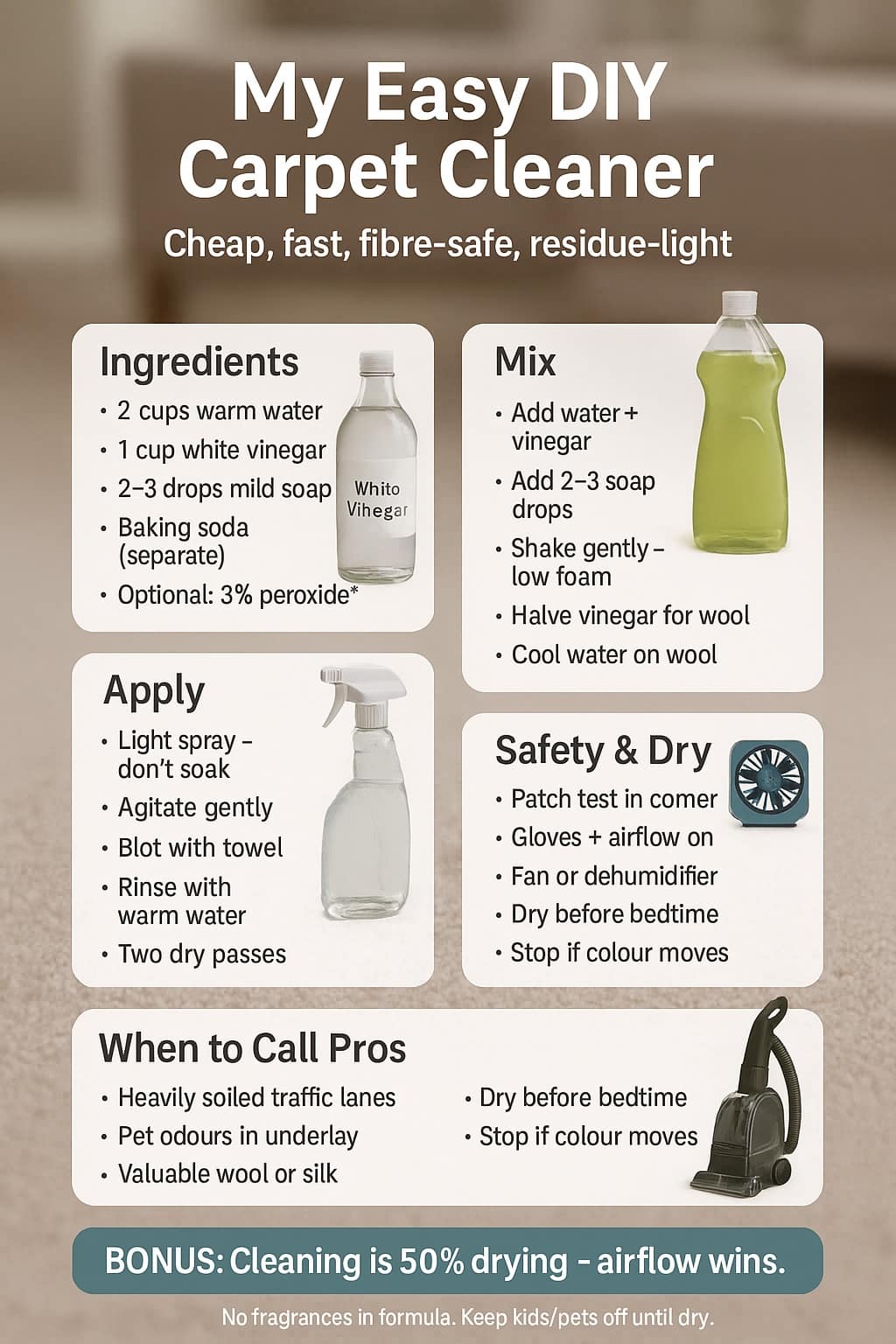
Base mix: 2 cups warm water, 1 cup white vinegar, 2–3 drops of mild dish soap. I add soap last to avoid over-foaming and never more than “just enough to feel slippery.” If I’m cleaning wool or unsure, I halve the vinegar and keep water cooler.
How I Apply My DIY Carpet Cleaner
I spray lightly, not soak. I agitate with a soft brush or microfiber in small circles, then blot with a dry towel. If I’ve got a small extraction machine, I rinse with plain warm water and do two dry passes. Airflow is my closer: fan on, windows cracked, dehumidifier if humid.
What Professional Cleaners Think of Recipes Like Mine
Every pro I respect agrees: DIY is fine for maintenance and small spots, but deep contamination needs hot water extraction with proper rinse and recovery. I don’t pretend my bottle can replace a truck mount; I use it to keep cleanings less frequent and far easier.
As chartered professional engineers (CPEng) note, “fit-for-purpose” beats “one tool for everything”—match method to load.
🎯 How I Change My DIY Recipe for Different Stains
Stains don’t read labels, so I adjust. Tannins (coffee, tea, wine) like patience and cooler water. Grease wants a touch more surfactant—but still tiny drops. Protein spills (milk, egg) get a cooler approach to avoid setting. I treat each like a puzzle with a limited-moves budget.
How I Tackle Food and Drink Spills With My Recipe
For fresh coffee or tea, I blot first with plain towel pressure. Then I mist my base mix, agitate gently, and blot again. If a ring starts, I widen the working area slightly and finish with a plain-water rinse. Two light rounds usually beat one heavy-handed scrub.
How I Use My DIY Carpet Cleaner on Pet Accidents
I remove solids, blot urine with pressure (never rubbing), then go base mix. After drying, I apply an enzyme product per label to digest odour-causing residues. Baking soda helps with lingering smells—but it’s a dry step after the carpet is fully dry, then vacuumed thoroughly.
How Experts Say I Should Handle Tough Stains
Dye transfer, ink, rust, and paint can be stubborn or risky. I don’t gamble on heirloom rugs. If base mix plus rinse fails after two careful tries, I stop before damage. That “failure” is success—knowing when to escalate saves fibres, time, and sanity.
As registered microbiologists (ASM) emphasize, targeted chemistry beats random mixing—use the right agent for the right soil.
🛡️ How I Keep My DIY Carpet Cleaner Safe for Kids, Pets and Allergies
Safety starts with restraint. I skip perfumes in the formula and keep the room ventilated. I wear lightweight gloves if I’ll be blotting a lot. For babies and pets, I clean earlier in the day so carpet is bone-dry by bedtime. Dry carpet is safe carpet; damp carpet is a dust magnet.
My Rules for Ventilation and Skin Safety
Windows open, fan on low, no candles or aerosols during cleaning. I mix small batches and label the bottle with date and recipe. On sensitive days, I go soap-free and rinse-only with warm water, relying on mechanical action and extra dry passes to avoid any lingering residue.
What Health and Allergy Guidance Means for My Routine
I treat “low-VOC” as a habit, not a slogan. My carpet routine is really a drying routine: lots of airflow, light passes, and dehumidifier support in humid weather. For wool, I keep solutions milder and temperatures lower. Sensible steps make the space smell like “nothing,” which is perfect.
As registered nurses (RN) often remind families, exposure is dose plus time—minimise both and you minimise risk.
⚖️ How I Compare My DIY Mix With Store and Pro Carpet Cleaning
My base mix wins for speed, cost, and everyday spots. Store shampoos can work, but I treat them like concentrates that demand a real rinse to avoid residue. Professional hot water extraction still crushes deep soil, traffic lanes, and end-of-lease resets. I use each lane when it makes sense.
Where My DIY Carpet Cleaner Saves Me Money
I track cost per clean, not sticker price. A 3-litre DIY batch handles a fortnight of family life for cents. There’s no “leftover foam” smell, and I don’t need a special defoamer on the next pass. Less residue means slower re-soiling, which is the real budget line.
Where Professional Carpet Cleaning Still Beats My Recipe
When underlay is wet, pets have had a party, or the rug is valuable, I go pro. Truck-mounted extraction moves heat, water, and airflow at levels my setup can’t. I want recovery power (vacuum lift) and balanced chemistry—especially for wool, large areas, and inspection deadlines.
What Industry Guidance Means to Me
Standards-based cleaning (clear rinse, controlled pH, rapid dry) is the common ground. My routine borrows those principles, just scaled to a spray bottle. It’s not anti-professional; it’s pro-maintenance, so I’m buying time between serious cleans and protecting fibres in the process.
As operations researchers (INFORMS) would say, the optimal policy mixes quick “maintenance” actions with periodic heavy service.
📊 How My DIY Carpet Cleaner Saved One Renter’s Bond (Case Study)
A customer (let’s call her Mia) messaged in a panic: inspection in 48 hours, pale lounge carpet, ugly rings from iced coffee and ramen splashes. I told her we’d try the least aggressive route first. We vacuumed, spot-treated with my base mix, and did gentle agitation and blotting.
After two light cycles and a plain-water rinse, 80% of the visible staining had gone. I set a box fan and dehumidifier, then returned in the evening for a quick check. The carpet dried flat—with no crunch. The landlord saw clean, neutral-looking fibres instead of scrubbed patches.
DIY Carpet Cleaner Case Summary
| Item | Detail |
|---|---|
| Property type | 2-bedroom rental apartment |
| Main issues | Drink rings, food spots, mild odour |
| DIY solution used | Vinegar–water pre-spray + minimal soap |
| Visible improvement | ~80% after two light cycles |
As project managers (PMP) point out, risk is reduced by small, reversible steps—exactly how this case stayed safe and effective.
❓ My DIY Carpet Cleaner FAQs
Can I use my DIY carpet cleaner in a carpet machine?
Yes—use it as a light pre-spray, then rinse with plain warm water in the tank. Avoid heavy suds that strain pumps and leave residue.
Is my DIY cleaner safe on wool?
Usually, if diluted and cool. Halve the vinegar, skip peroxide, and patch-test. Gentle agitation only.
How often should I clean with a homemade mix?
Spot clean as needed. For whole-room maintenance, vacuum weekly and do light quarterly refreshing; go pro annually or as traffic demands.
Can my DIY recipe remove old, set-in stains?
Sometimes. Try two careful cycles. If colour moves or texture changes, stop and escalate to a specialist.
Will my DIY cleaner make carpet sticky or crunchy?
Not if you keep soap minimal and rinse with plain water. Dry thoroughly with airflow.
As human-factors specialists (BCPE) stress, simple repeatable steps beat complicated routines in real homes.
✅ My Key Takeaways From Years of Mixing DIY Carpet Cleaner
-
I keep formulas lean: water does the heavy lifting; tiny surfactant helps; vinegar handles light mineral films.
-
I test first, work small, and dry fast—cleaning is really controlled wetting followed by aggressive drying.
-
I use DIY for everyday life and save pros for deep recovery, wool care, big traffic lanes, and tenancy deadlines.
As safety engineers (CSP) remind us, safeguards you’ll actually use are the best safeguards—simple, safe, and consistent wins.
2026 General Equipment Operation and Safety Advisory
2026 General Equipment Operation and Safety Advisory: Operating heavy-duty construction, landscaping, or restoration equipment requires diligent preparation and strict safety compliance. Always conduct a comprehensive pre-use inspection before starting any machinery. Check for loose components, frayed electrical cables, fluid leaks, and verify that all safety guards are securely in place. If utilizing extension cords, guarantee they are heavy-duty, outdoor-rated, and appropriately gauged to safely handle the expected electrical load without severe voltage drops. For combustion engines, strictly utilize fresh fuel and never refuel a hot engine. Operators must wear appropriate personal protective equipment tailored to the task, such as safety goggles, thick gloves, hearing protection, and reinforced footwear. Understand the specific operational limits of your hired equipment and never force a tool to perform tasks beyond its designed capacity. Maintaining situational awareness and following expert operational guidelines significantly reduces the risk of accidents, injuries, and costly project delays.