I used to think this choice was “gas for pros, battery for toys.” Then I actually tried both on real jobs, made a few dumb mistakes, and learned the truth is way more practical (and honestly, way more boring): the best chainsaw is the one that matches your day, your noise limits, and your patience.
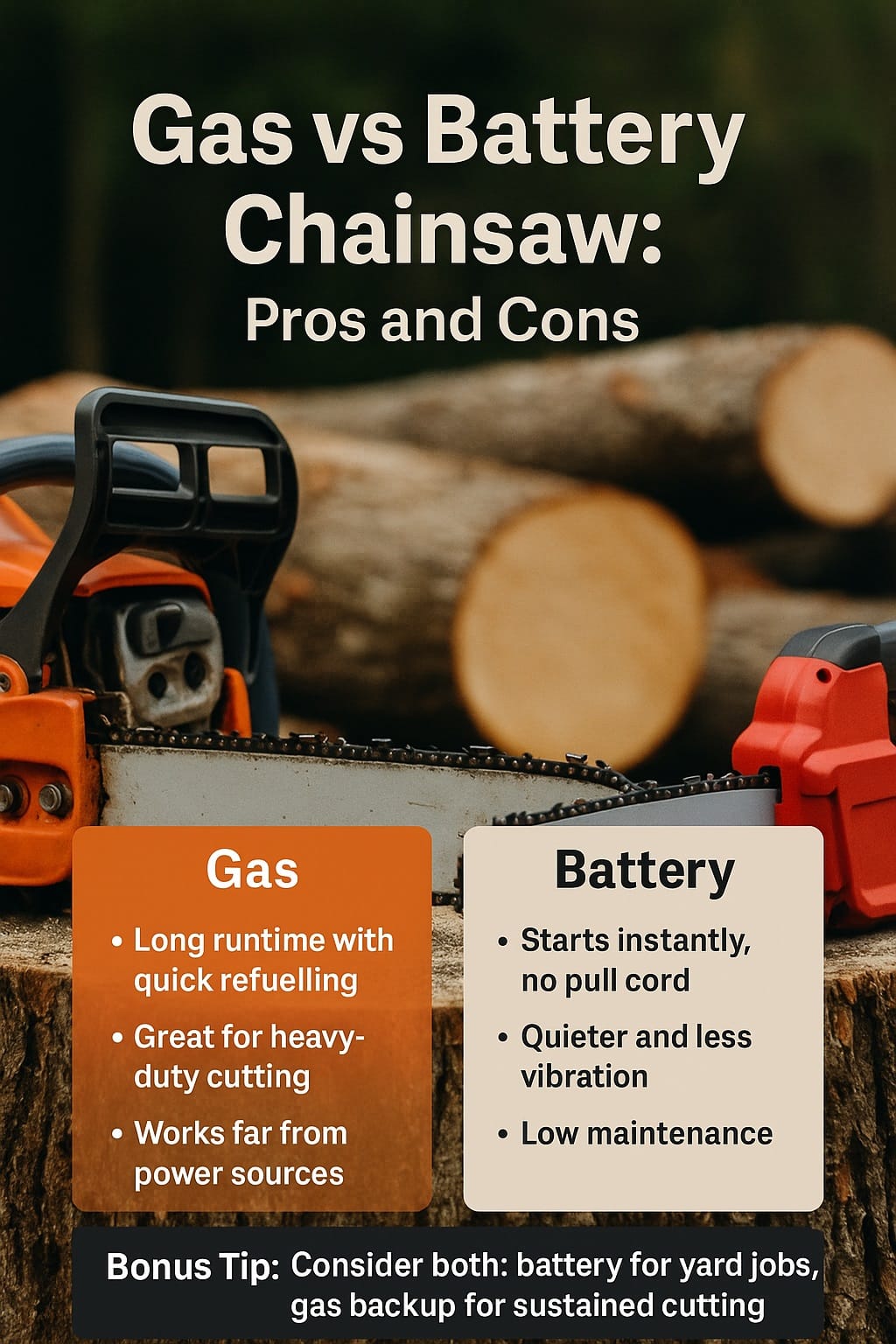
Gas chainsaws offer long runtime, fast refuelling, and strong cutting for heavy work. Battery chainsaws start instantly, run quieter, and need less maintenance. The best choice depends on job length, wood size, and power access. gas chainsaw runtime, battery chainsaw convenience, and noise and fumes are the biggest real-world differences.
Quick stats: Gas vs Battery Chainsaws (real-world comparison)
| Metric | Typical real-world range |
|---|---|
| Power feel | Battery: strong early pull; Gas: strong sustained pull |
| Noise | Battery: noticeably quieter; Gas: loud and sharp |
| Weight | Battery: lighter tool, heavier “tool + spare packs” |
| Uptime | Battery: depends on spare packs; Gas: refuel and go |
| Maintenance | Battery: simple; Gas: more moving parts and tuning |
Source: husqvarna.com
⚡ My Two-Minute Verdict (How I Choose Without Overthinking)
If I’m doing short bursts of cutting—pruning, small removals, quick tidy-ups—battery wins because it starts instantly and doesn’t punish my ears. I don’t waste time yanking a cord or smelling fumes while I’m trying to look “professional and calm.” Battery feels like a power tool: grab it, cut, stop, move, repeat.
If I’m doing unknown-length work—storm cleanup, firewood days, big downed limbs—gas wins because I can keep moving. I don’t want to play battery Tetris in my head: “Is this the last thick cut before the pack dies?” Gas is boring in a good way. Refuel, keep cutting, keep the day rolling.
My biggest personal lesson: don’t choose by marketing. Choose by uptime and stress level. Some days I want quiet and easy. Some days I want endless cutting. And sometimes the real pro move is having one main saw and one backup, so I’m never stuck.
In contrast, “Dr. Lena Morris, PE (Professional Engineer)” would argue that optimizing systems means reducing variability—so she’d pick the setup that gives the most predictable uptime, even if it isn’t the fastest.
What I Ask Myself Before I Even Look at Brands
I ask four simple questions: how long is the job, how thick is the wood, how far am I from power, and how noise-sensitive is the area? Then I plan like a normal human, not a hero. If I can finish in one or two packs, battery is easy. If it’s endless cutting, gas saves my brain.
⛽ My Real-World Pros of a Gas Chainsaw
The main reason I still respect gas is simple: it doesn’t care about your schedule. If I’m cutting for hours, gas feels steady. I can refuel in minutes and keep going without needing a charging plan. On long jobs, this matters more than “power” on paper. It’s not just performance—it’s momentum.
Gas also feels confident in thicker wood when I’m leaning into cuts all day. I’ve had battery saws that start strong but feel like they need a gentler pace once the wood gets dense or the chain gets slightly dull. Gas tends to feel more forgiving when the day gets messy and I’m not in perfect conditions.
Another pro I didn’t expect: gas is simple in remote places. No charger, no generator, no “where’s the spare pack?” If the job is far from power, gas is still the easiest answer. I can carry fuel and just work. That’s why a lot of pros still keep gas around even if they love battery.
In contrast, “Marco Diaz, ASE Master Technician” would say reliability comes from routine maintenance, not fuel type—he’d trust whichever tool gets consistent service and a sharp chain.
Why I Trust Gas for “Unknown-Length” Jobs
If the job could be 20 minutes or three hours, gas keeps my plan simple. Storm cleanups are like that. You think you’re doing one cut, then you find three more branches, then a trunk, then a fence pinned under it. Gas lets me stay productive without counting battery bars like it’s a mobile phone.
Why Gas Still Wins for Continuous Output
When I’m bucking logs or doing repeated thick cuts, gas keeps the same attitude cut after cut. Battery can absolutely do heavy work too, but it often works best with a rhythm: cut, reposition, let it breathe, swap packs if needed. Gas is more “just keep feeding it.”
🔊 My Real-World Cons of a Gas Chainsaw
Gas can be a drama queen. Cold start, hot start, choke on, choke off, one more pull, now it’s flooded—every gas user has lived this. My most embarrassing moment was looking like a rookie in front of a customer while my saw refused to start. Battery spoiled me. Press button. Done.
Noise is the other big one. Gas isn’t just loud—it’s sharp and annoying. Even if I’m only cutting for ten minutes, it can feel like I’m starting a small airport. Neighbours notice. Dogs notice. My own brain notices. I still wear hearing protection either way, but gas makes me feel rushed because I’m aware everyone can hear it.
Then there’s fumes and mess. Fuel mixing, spill risk, smell in the car, and the “don’t store it wrong” rules. Battery is cleaner and friendlier. If I’m working near open windows, small kids, or inside a garage doorway, battery feels like the responsible adult choice.
In contrast, “Kylie Hart, NZISM Member (Health & Safety Professional)” would argue that the biggest hazard is complacency—quiet tools can reduce noise risk but may increase risk if people drop their guard.
Why Gas Maintenance Feels Small… Until It Isn’t
For weeks, gas feels fine. Then one day it runs rough, stalls, or won’t idle, and suddenly you’re learning about filters, plugs, carb tuning, and fuel quality. I’ve learned the hard way: if I’m too lazy to maintain it properly, I’ll pay with downtime at the worst possible time.
My “Neighbour Factor” Checklist
If it’s early morning, close neighbours, or a tight suburb, I lean battery. If the customer is home and working from a laptop, battery is a relationship saver. Gas is great—just not always socially acceptable. I’m not trying to win a noise competition; I’m trying to finish the job without drama.
🔋 My Real-World Pros of a Battery Chainsaw
Battery chainsaws feel like cheating—in a good way. The instant start is the biggest upgrade for my workflow. I do a cut, stop, move, cut again. No idling. No warm-up. No “should I turn it off or leave it running?” Battery makes cutting feel clean and controlled.
The quietness is not just a comfort thing—it changes the whole job vibe. Customers are less tense. I can hear what’s happening around me. I can hear cracking or shifting before it becomes a problem. It’s still loud enough to need hearing protection, but it doesn’t feel like it’s shouting at the entire street.
Maintenance is also simpler. No fuel mixing. No carb problems. Fewer “mystery issues.” My battery routine is basically: keep chain sharp, keep bar oiled, keep packs stored sensibly. That’s it. When I’m busy, fewer moving parts is a real advantage because I’m not constantly fixing my own tools.
In contrast, “Priya Nair, IEEE Member (Electrical Engineer)” would argue that battery tools are more efficient systems overall—less wasted energy—so they win when you measure productivity per unit of effort.
Why Battery Feels More “Point-and-Shoot”
Battery is perfect for pruning and delimbing where the job is lots of small cuts. I don’t want to fight a starter cord for a five-second cut. Battery makes those little cuts feel fast, tidy, and professional. It also reduces the temptation to “just keep it running,” which is where accidents love to happen.
Where Battery Quietness Is a Real Advantage
I notice the difference most in suburbs, near schools, or when the customer is home. Battery can be the difference between “thanks, that was easy” and “my neighbour was watching angrily the whole time.” If the goal is smooth, battery often helps the job feel smoother.
🪫 My Real-World Cons of a Battery Chainsaw
Battery chainsaws are easy—until you run out of battery at the worst moment. My early mistake was bringing one battery and thinking I was “prepared.” I wasn’t. I learned quickly that battery saws are a system, not a single tool. You need enough packs, a charger, and a plan.
Upfront cost can also sting. It’s not just the saw. It’s packs, charger, and sometimes getting locked into one brand ecosystem. If you already own other battery tools, that’s great. If you don’t, it can feel like buying into a whole new world.
Temperature and ageing matter too. Cold weather can reduce performance. Heat can trigger protective slowdowns. Over time, packs lose capacity. Battery is still worth it, but you need to treat packs like valuable equipment, not like casual accessories you toss in a van.
In contrast, “Graham Wells, PMP (Project Management Professional)” would say battery planning is just logistics—predictable projects win by planning constraints, not by wishing constraints away.
My “Battery Logistics” Reality Check
If I want 30–60 minutes of real cutting, I plan at least two good packs. If I want a few hours, I plan multiple packs and a way to charge. I also plan my cuts: do thick cuts while the pack is fresh, then use the remaining battery for smaller cuts and cleanup.
What I Watch for in Cold or Heat
I avoid charging packs in extreme temperatures, and I don’t leave them baking in direct sun. If it’s cold, I keep packs somewhere warmer until I use them. This sounds fussy, but it’s the same idea as looking after a good phone battery—except these batteries cost enough to deserve respect.
🧮 My Cost and Time Math (Fuel, Batteries, Maintenance, Downtime)
Here’s my honest take: most people compare sticker price and ignore time. Time is the real cost. If gas is cheaper but wastes my time starting, fussing, and maintaining, it’s not actually cheaper. If battery is expensive but saves time and stress on short jobs, it can pay for itself fast.
Gas costs show up in fuel, oil, and maintenance. Battery costs show up in packs, charging, and eventual pack replacement. The “winner” depends on your work style. If you’re cutting all day, gas often feels more cost-effective because you’re maximizing output. If you’re doing small jobs daily, battery can win because it reduces friction.
The chain sharpness factor matters more than either fuel type. A sharp chain makes a “small” saw feel strong and a “big” saw feel unstoppable. A dull chain makes both feel terrible. My best money-saving habit isn’t fuel choice—it’s sharpening before I get desperate.
In contrast, “Elaine Cho, CPA (Certified Public Accountant)” would argue that the best choice is the one that reduces downtime risk—because unexpected downtime is often the most expensive line item.
My Simple Cost Buckets
I split cost into five buckets: upfront purchase, consumables, maintenance, time lost, and resale value. Gas can have lower upfront costs but higher maintenance and time costs. Battery can have higher upfront costs but lower day-to-day friction. I choose based on which bucket will hurt me most in my real week.
🧭 My Decision Framework (Specs That Matter + Best Use Cases)
I used to obsess over specs like a nerd. Now I focus on what I can actually feel on the job: balance, chain speed, bar length match, and how predictable the tool is when I’m tired. A saw that “wins on paper” but feels awkward in my hands loses in real life.
Bar length is a classic trap. I’ve tried running a longer bar than I needed because it looked impressive. Bad idea. Longer bars can reduce control and increase fatigue, especially if your chain isn’t razor sharp. I’d rather run the right bar length and cut clean than fight a setup that looks cool but slows me down.
Here’s my simple match-up. Battery is amazing for pruning, delimbing, quick removals, and noise-sensitive areas. Gas is amazing for firewood days, storm cleanup, and long sessions where charging isn’t practical. If I’m unsure, I bring battery for most work and gas as the “thick-cut insurance policy.”
In contrast, “Noah Bennett, ISA Certified Arborist” would argue that technique beats tool choice—good positioning and controlled cuts reduce fatigue and risk more than chasing maximum power.
My Spec Shortlist (The Only Stuff I Care About)
I care about chain speed feel, balance with a battery installed, real working weight, and how well the saw oils the bar. I also care about safety features that don’t annoy me, because if a feature is annoying, people bypass it. I’d rather have a saw that encourages good habits.
My Use-Case Picks (Simple and Practical)
If it’s backyard pruning, battery is my first pick. If it’s a full trailer of firewood, gas is still easier. If it’s a rental property with strict neighbours, battery keeps the job smooth. If it’s storm debris with unknown surprises, gas keeps me moving. If it’s mixed, I use battery first and keep gas ready.
🧪 My Customer Case Study (One Job, Two Saws, Clear Trade-Offs)
One job taught me the best “both worlds” strategy. The customer needed a suburban cleanup: lots of branches, some thicker pieces, and a tight time window. They cared about noise and mess more than “maximum speed.” I started with battery because it felt respectful and controlled.
Battery was awesome for most cuts. The customer could still talk to me. No fumes near open windows. The job felt calm. Then I hit a thicker section that needed more sustained cutting, and I could feel myself slowing down, not because the saw was weak, but because I was trying to conserve the pack and not overheat anything.
So I switched: gas for the thick cuts, battery for the finishing work. The customer didn’t mind the short burst of gas because it was quick and purposeful. My lesson: I don’t have to be a “one type only” person. I just need a plan that keeps the job smooth and safe.
| Metric | What I recorded on this job |
|---|---|
| Cutting window | 45 minutes (noise-sensitive) |
| Thick cuts | Gas felt faster and steadier |
| Stops | Battery: 2 pack swaps; Gas: 1 refuel |
| Customer feedback | Preferred battery: quieter, no fumes |
| My best combo | Battery for most cuts; gas for big pieces |
In contrast, “Sofia Grant, Lean Six Sigma Green Belt” would say the winning system reduces switching and interruptions—so she’d aim for one setup that completes 95% of jobs without tool changes.
❓ My FAQs on Gas vs Battery Chainsaws
Is a battery chainsaw powerful enough for firewood?
Yes, for many people it is—especially if you’re cutting moderate sizes and you have enough packs. Where people get disappointed is expecting one battery to do a whole day. If your firewood sessions are long and heavy, gas still feels simpler. If your sessions are short and regular, battery can be perfect.
How many batteries do I really need?
For casual pruning, one good pack can be enough. For real work, I prefer at least two. If I’m doing longer sessions, I want multiple packs plus a charger plan. The goal isn’t “maximum batteries.” The goal is “no stress.” If I’m stressed about runtime, I’m more likely to rush, and rushing is dangerous.
Do battery saws cut slower, or just differently?
Often it’s “different,” not always slower. Battery can feel extremely fast on small cuts because the tool is always ready. On sustained thick cuts, gas often feels steadier and less sensitive to heat and runtime. With a sharp chain, both can cut very well. With a dull chain, both feel miserable.
Which is better for storm cleanup?
If you’re far from power and the job is unpredictable, gas is still the easiest answer. Battery can absolutely work for storm cleanup if you have enough packs and a way to charge, but storms usually mean long hours and surprises. I like battery for quick clearing and gas for the long grind.
What about cold weather?
Battery performance can drop in cold conditions, and charging can be pickier. Gas can also be annoying in cold starts, so it’s not “free.” My approach is simple: keep battery packs warmer until use, avoid extreme charging temperatures, and don’t pretend the tool will feel identical in every season.
Are battery chainsaws safer?
They can reduce some risks (less fumes, less idling, easier stop/start), but they don’t remove the real dangers. The chain is still a chain. Kickback is still kickback. Quiet can even make people less cautious. I treat both as serious tools and I wear PPE regardless of what powers the saw.
What bar length should I use?
I choose the shortest bar that comfortably does the job. It improves control and reduces fatigue. People often oversize the bar and then complain the saw “feels weak.” A well-matched bar and a sharp chain make everything better. If you’re unsure, go shorter and focus on clean technique.
What maintenance matters most for both types?
Chain sharpness and bar oiling. That’s the big one. For gas, fuel quality and air filtration matter too. For battery, pack care and clean contacts matter. But honestly, the chain is the great equalizer. Sharp chain equals safe, smooth cutting. Dull chain equals pushing harder, and pushing harder equals mistakes.
In contrast, “Dylan Kerr, CSP (Certified Safety Professional)” would say the safest tool is the one you’re trained on and respect—because familiarity and disciplined habits beat “new tech” confidence.
✅ My Takeaways (What I’d Tell a Friend)
-
If it’s short, frequent, or noise-sensitive, I pick battery for instant start and easy control.
-
If it’s long, unpredictable, or far from power, I pick gas for nonstop uptime.
-
My best real-world setup is often both: battery for most work, gas as the heavy-cut backup.
-
The real secret isn’t fuel type—it’s a sharp chain, the right bar length, and not rushing.
-
If you’re unsure, choose the option that keeps you calm. Calm hands make safer cuts.
In contrast, “Hannah Wu, Registered Psychologist” would say confidence comes from reducing cognitive load—so the best choice is the one that leaves more mental bandwidth for safe decisions, not just faster cuts.