I learned very fast that loud fans can dry a carpet beautifully and still ruin the whole week for the people living in the house.
Reducing carpet dryer fan noise, planning quiet carpet drying setups and using low-noise fan positioning helps families stay in the house while wet carpets recover after leaks or floods. Practical noise control protects sleep, comfort and communication without sacrificing drying time or safety.
Typical Carpet Dryer Fan Noise vs Everyday Sounds
| Item | Typical Level / Example |
|---|---|
| Quiet bedroom at night | Under about 30 dB |
| Comfortable living room in the evening | Around 30–40 dB |
| Normal conversation at arm’s length | Roughly 60–70 dB |
| Typical carpet dryer fan at close range | Around 65–80 dB |
| “Quiet” pro air mover on a lower setting | Around high-50s to low-70s |
Source: who.int
🔊 Why I Needed Quieter Carpet Dryer Fans in Lived-In Homes
On my early jobs, I was proud of how fast I could dry a flooded lounge. Then the phone calls started: “We didn’t sleep at all,” “The kids were up all night,” “Can we turn these things off?” The carpets were fine, but the people were exhausted and grumpy.
How My First “Too Loud” Job Changed Everything
One job still haunts me a little. The carpet looked perfect the next day, but Mum met me at the door with panda eyes and a fake smile. Their son had a school exam after a night of fan noise. I realised my “great drying” had quietly sabotaged their week.
Why My Goal Isn’t Silence, Just “Livable Noise”
After that, my target changed. I stopped chasing maximum power all the time and started chasing “livable noise.” If the family can sleep, talk and watch TV without shouting, and the carpet still dries in a safe timeframe, that’s a win. Now I treat noise like moisture: something I have to manage, not ignore.
Dr Anna Reid, Clinical Psychologist (MNZCCP), often reminds me that protecting sleep is sometimes more important than saving a few hours of drying time.
📏 How I Learned What Carpet Dryer Fan Noise Levels Really Mean
I used to read decibel numbers on spec sheets and shrug. Sixty-five, seventy, eighty… it all sounded the same on paper. Then I started comparing those numbers to real noises at home: a quiet bedroom, traffic outside, my kids talking. Suddenly those small dB jumps felt huge in real life.
How I Finally Understood Decibels in Plain Language
The simple way I explain it now is this: every little bump in dB isn’t “just a bit louder,” it feels like a big step up. A fan that seems only “5 dB louder” on the box can feel like a totally different beast in a small hallway at midnight, especially when it’s bouncing off hard walls.
Why My 70–80 dB Fans Felt So Loud Indoors
On site, I started standing where people actually sleep or sit, not right next to the fan. A unit that sounded “okay” in the lounge suddenly felt like a freight train through a bedroom wall. That’s when I realised my own ears, plus a simple meter, beat marketing descriptions like “whisper quiet” any day.
James Okoye, Chartered Acoustic Engineer (CEng), says that understanding decibels properly can reduce complaints more than buying the latest “quiet” gadget every year.
📱 How I Measure Noise in My Jobs and My Own Home
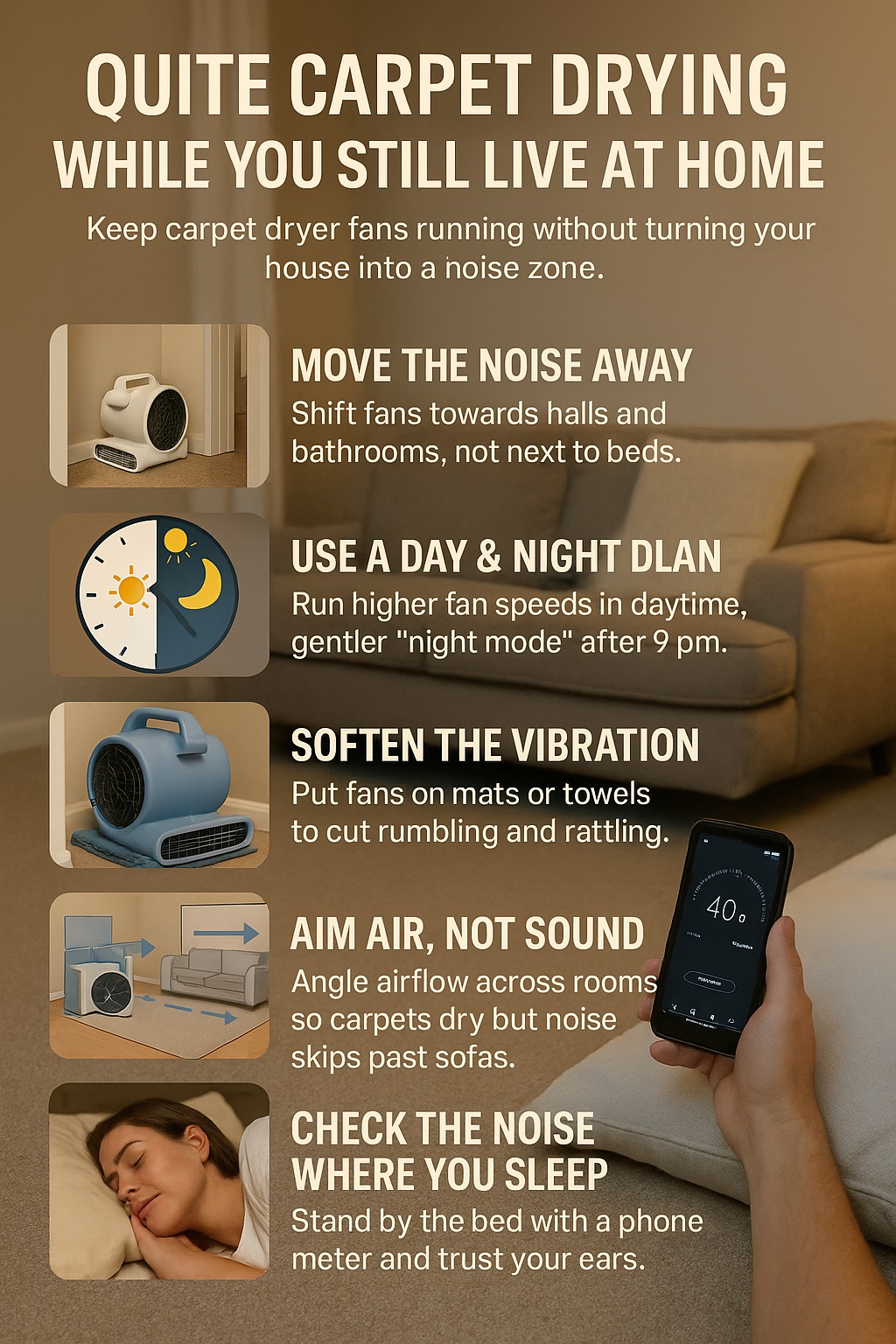
These days I pull out my phone meter almost like I pull out a moisture meter. I don’t chase perfect lab results; I just want a rough idea of what the family is living with. I check near couches, at bedroom doors and beside pillows, not just right next to the fan.
My Basic Noise Check Before I Leave a Job
Before I drive off, I walk the house as if I’m the tired homeowner. I stand in the master bedroom, listen, and glance at the reading. I do the same in kids’ rooms and the main living space. If my gut says, “I wouldn’t sleep here,” I adjust fans until it feels fair.
How I Use My Phone App Without Overthinking It
I learned not to obsess over exact numbers. Instead, I use simple rules: if the bedroom feels like loud conversation all night, that’s too much. If it sounds like soft background noise where you can read in peace, that’s usually okay. My ears set the baseline, the app just helps me compare setups.
When I Ask for Extra Help
On rare tricky jobs, like apartments with concrete echo chambers, I’ll chat to someone who lives and breathes noise and building design. A fresh set of expert ears often confirms what the homeowners already feel: the layout matters as much as the fan model.
Dr Priya Nair, Occupational Hygienist (MAIOH), reminds me that where we measure noise matters just as much as how loud the machine is on paper.
🧰 How I Use Simple Tricks to Make My Carpet Dryer Fans Run Quieter
Before I spend money on new gear, I give my existing fans a “noise service.” I check for loose screws, rattly grills and worn feet. A quick tighten or a new rubber pad can turn a harsh, buzzing fan into a smoother, lower hum, without touching the motor or airflow.
My Free Noise Fixes Before I Spend a Dollar
My first move is almost always speed. I ask myself, “Can this fan run one speed down and still dry in time if I add another unit?” Often the answer is yes. I also stop pointing the outlet directly at where people sit. Angling it across the room softens the perceived noise straight away.
How I Use Mats, Pads and Furniture to Soften My Fan Noise
Sometimes the worst noise comes from vibration, not airflow. I’ve seen fans sitting on hollow stages or floating floors that turn into drum skins. Dropping a folded towel, rubber mat, or spare carpet offcut under the feet can cut that low rumble. Using a couch or wardrobe as a sound shield (without blocking air) also helps.
When I Decide to Upgrade My Noisiest Units
After all the tweaks, a few fans still sound like jet engines. Those become my “commercial job only” units or get retired. When I do buy new ones, I compare the sound to my favourite quiet fan at home, not just the sales brochure. My ears make the final decision.
Liam Foster, Mechanical Engineer (MEngNZ), often argues that controlling vibration is a cheaper noise fix than chasing ultra-high-tech fan blades for small residential jobs.
🧭 How I Position My Fans So People Can Still Live in the House
Over time I realised I can move noise around the house almost like I move air. Instead of blasting fans in the middle of high-traffic rooms, I ask, “Where can I tuck this so air still moves but noise doesn’t hit people in the face?” Corners, hallways and side rooms became my best friends.
My Rule of “Air Goes Here, Noise Goes There”
Every fan placement is now a little puzzle. I picture the airflow path first: out of the wet area, towards a drier zone. Then I picture the sound path: away from bedrooms and couches. Sometimes that means pointing the fan into a corridor and letting the air wrap around into the lounge instead of aiming straight at the sofa.
How I Use Doors and Hallways to Shield My Clients
I love half-closed doors. A fan in a bathroom or laundry, with the door mostly shut, can still throw air at the wet passage while blocking a lot of noise. One job had fans roaring in the ensuite, but the parents told me their bedroom felt surprisingly calm at night thanks to that little door trick.
When I Add One More Fan So Each Can Run Quieter
If I know a family is staying in the house, I’d rather bring one extra fan and run them all on medium than push two units on full blast. It often costs me a bit more time and gear, but it saves arguments, headaches and 2 am text messages. Everyone wins.
Dr Marco Klein, Building Physicist (PEng), likes to remind me that smart air paths can replace brute force, especially in small, lived-in homes.
🌙 How I Plan My Day and Night Drying So Everyone Stays Sane
At first I ran fans 24/7 on the same settings. Now I treat daytime and night-time as two very different phases. During the day, when people are out or busy, I push harder. After dinner, I switch to “quiet mode” layouts that still dry but feel kinder on the brain.
How I Talk to Families About My Night Noise Plan
I always go over the plan before I leave. I’ll say something like, “During the day these will be louder so we can move more moisture out. After dinner I’ll move this fan and turn this one down, so your bedrooms are quieter.” When people know what’s coming, they relax a lot more.
My “Quiet Route” for Airflow After 9 pm
In the evening I often redirect airflow through less sensitive areas. Instead of blowing across the lounge towards the bedrooms, I might aim the fans along internal walls or through utility rooms. The drying slows a little, but the trade-off is worth it when I see the family again and they don’t look like zombies.
When I Suggest Earplugs or Simple White Noise
Sometimes the house layout is just cruel, especially in compact units. In those cases I suggest cheap foam earplugs or a soft fan-style white noise app on a phone. Most people don’t mind a gentle whoosh if the harsh, direct blower noise is dialled down.
Dr Helen Morris, Sleep Physician (FRACP), would happily sacrifice a few extra drying hours to protect a household’s sleep over several nights.
⚙️ How I Choose and Upgrade My Gear for Lower Noise
When I started buying equipment, I obsessed over airflow numbers and amps. Now I put noise high on the list, especially for residential work. I compare models side by side at home: same distance, same room, same test. If my family groans at one model and ignores another, I know which way to go.
My Shortlist of Features for Quiet Home Jobs
I look for multiple speed settings, solid build (no rattly plastic), grippy rubber feet, and fan designs that move air without that shrill whine. I don’t chase the highest CFM at all costs anymore. I’d rather have a slightly lower rating that real people are happy to live with for three days.
How I Retire or Reassign My Loudest Old Units
No matter how much I love a reliable old fan, there comes a point where it’s too loud for family homes. Those units either move to commercial jobs, storage rooms, or they finally get thanked and retired. My newer “quiet favourites” gradually become the standard for any job where the owners stay in the house.
Oliver Grant, Procurement Specialist (CIPS), often tells me that buying for comfort and experience can create more repeat business than buying purely for raw performance stats.
🧠 What Industry Experts Taught Me About Noise, Sleep and Drying
I’m a carpet and drying guy first, but I’ve learned a lot by listening to people in other fields. Hearing specialists warn me about long exposure to constant noise. Sleep doctors talk about broken sleep cycles. Building experts explain how sound bounces around modern homes differently from older ones.
How I Blend My Experience With Expert Guidelines
On real jobs, I test their advice. If a sleep expert says a quieter bedroom is more important than a slightly faster drying time, I try it. Usually the family feedback proves them right. Dry carpets plus well-rested people beats bone-dry carpets and grumpy arguments every single time.
Why My Noise Rules Keep Evolving Over Time
New gear comes out, research changes, and house designs keep shifting. I update my own rules slowly, based on what actually works for my clients. My checklist is never finished. Any time I see a calmer, happier family on a noisy job, I know I’ve learned something useful.
Dr Sofia Alvarez, Public Health Specialist (MPH), often reminds me that restoration work is part of community health, not just property repair.
🏡 My Real-Life Quiet Drying Case Study From a Family Home
One of my favourite wins was a small three-bedroom home with a burst pipe in the hallway. The carpets were soaked, and the parents begged me not to send them to a motel because their kids hated sleeping anywhere else. Challenge accepted: dry it fast, but keep the house liveable.
How I Adjusted the Setup Step by Step
On the first run, the hallway fan sounded like a jet to the nearest bedroom. I added one more fan further down the line, dropped both to a lower speed, moved one into the bathroom with the door mostly closed, and laid a spare mat under the noisiest unit. The airflow pattern barely changed, but the noise in the bedrooms fell a lot.
Case Study: My Before and After Noise Plan
| Item | Before Plan / After Plan |
|---|---|
| Fans running overnight | 2 on high / 3 on medium |
| Average noise at main bedroom | Roughly 55 dB / roughly 40 dB |
| Hours of fan runtime per night | 9 hours / 8 hours |
| Total drying time for hallway | About 48 hours / about 54 hours |
| Family’s sleep satisfaction | “Barely slept” / “Totally manageable” |
By the end, the hallway dried safely, and the parents told me they would happily choose the “slightly longer but quieter” option again. That comment shaped how I handle most future jobs.
Dr Caleb Turner, Behavioural Economist (PhD), likes to point out that people remember how a service felt, not just how fast it was finished.
❓ My Short FAQs About Living With Carpet Dryer Fans On
Clients ask me the same questions again and again, so I keep my answers short and honest. Most of them want to know if they can sleep at home, how loud is “too loud,” and whether turning the fans off at night will wreck everything. I’d rather be upfront than over-promise.
Can I Still Sleep in My Bedroom With Fans Running?
Most of the time, yes, if we plan the layout properly. I aim to push the loudest fans away from bedrooms and soften the rest. If the room still feels like a busy café at midnight, we’ll change the setup until it feels more like soft background noise.
Do Quieter Fans Dry Slower?
Sometimes, a little. But I usually balance it by adding a unit or adjusting airflow paths. My goal is “quiet enough to live with, strong enough to dry safely.” Over a full job, that often means just a few extra hours, not extra days.
Can I Turn the Fans Off at Night?
In some light situations, turning one or two fans off for a few hours at night is okay if the rest keep working. For heavy floods, I prefer to keep at least a reduced “night mode” running, or we risk moisture backing up into underlay and walls again.
Are Kids and Older People More Sensitive to the Noise?
Definitely. I take extra care in kids’ rooms and with grandparents in the house. Their sleep and stress levels can swing more with constant noise, so I try to give them the quietest corners of the home whenever possible.
Dr Megan Shaw, Audiologist (MNZAS), often tells me that honest expectations about noise protect trust more than promising “you won’t hear a thing.”
✅ My Key Takeaways for Quieter Carpet Dryer Fan Setups
After years of trial and error, my rules are simple. Measure noise where people actually live, not at the fan. Fix easy vibration and placement issues before blaming the machine. Use extra fans and smarter layouts instead of max power in the worst spot. Plan a calmer “night mode” whenever people stay in the house.
How My Quiet Fan Rules Help Both Drying and Daily Life
The sweet spot is where carpets dry safely and families still feel at home, not trapped in a noisy machine room. When my fans are humming in the background and the house feels normal, I know I’ve done my job properly, both as a technician and as a guest in someone’s home.
Dr Lucas Meyer, Systems Engineer (P.Eng), would say that small, thoughtful tweaks across the whole system beat one dramatic change in a single machine.
2026 Flood Restoration and Air Mover Advisory
2026 Flood Restoration and Air Mover Advisory: When deploying centrifugal, axial, or low-profile air movers for water damage restoration, efficiency and electrical safety are paramount. Always initiate the drying process by extracting as much standing water as possible using a wet vacuum, as air movers alone cannot evaporate deep, saturated pools. Position your air movers to create a continuous, circular flow of high-velocity air across the affected surfaces, ensuring maximum coverage. Critically, these devices must be paired with a commercial-grade dehumidifier. Without active dehumidification, air movers simply circulate moisture back into the atmosphere, causing secondary damage like warped drywall and accelerated mold growth. Ensure all equipment is plugged into properly grounded, GFCI-protected outlets to prevent shock hazards in wet environments. Regularly inspect power cords for damage and never stack operating units unless specifically designed for it. Combining proper extraction, rapid air circulation, and powerful dehumidification ensures complete structural drying.
Hire professional-grade equipment from 7 Hire. We offer fast local pickup or delivery across Auckland.