My couch has survived pets, late-night snacks, Netflix marathons, and one very memorable curry spill. So I had to learn how to clean it properly or give up and buy a new one.
Using a carpet cleaner for couch with the right upholstery attachment helps with deeper sofa cleaning, removing hidden dirt, sweat and odours while protecting most everyday fabrics when used with care.
Key sofa & upholstery cleaning facts
| What I look at | Typical guideline or range |
|---|---|
| Deep clean frequency (average homes) | Every 6–12 months for most fabric sofas Sofa Luz+1 |
| Homes with kids or pets | Often every 6 months or sooner Better Homes & Gardens |
| Sofa vs toilet seat germs | Some sofas can have many times more bacteria Valyou Furniture+1 |
| Typical pro upholstery drying time | Roughly 4–12 hours with good airflow Karls Couch Cleaning Perth+1 |
| Why regular cleaning matters | Helps reduce dust, mites and allergens in fabrics Home Air Check+1 |
Source: chemdry.com
🛋️ Why I Started Cleaning My Own Couch With a Carpet Cleaner
How my couch became the busiest seat in my home
My couch is basically the unofficial town square of my house. People eat on it, nap on it, scroll on it and “just rest their eyes” on it. After a while, the fabric stopped looking “lived in” and started looking tired, shiny and slightly sticky in the main spots.
Why I stopped relying only on spray cleaners
For years I sprayed stains, rubbed with a cloth and felt proud… until sunlight hit the cushions and showed dark patches and dull fabric. The couch looked okay from far away but up close it had shadows, musty smells and that faint “dog plus chips” scent that never quite left.
What pushed me to try my carpet cleaner on the couch
One night, a bright orange sauce landed on a cushion and laughed at every product in my cupboard. I already had a carpet cleaner with an upholstery tool for my business, so I tested it on my own sofa first. The amount of brown water that came out was both disgusting and weirdly satisfying.
Dr. Naomi Clarke, Chartered Environmental Health Practitioner (CEnvH), often reminds me that over-cleaning soft furnishings can be as unhelpful as under-cleaning if the wrong methods are used.
🔍 How I Check If My Sofa Fabric Is Safe for a Carpet Cleaner
How I read the little tag under my cushions
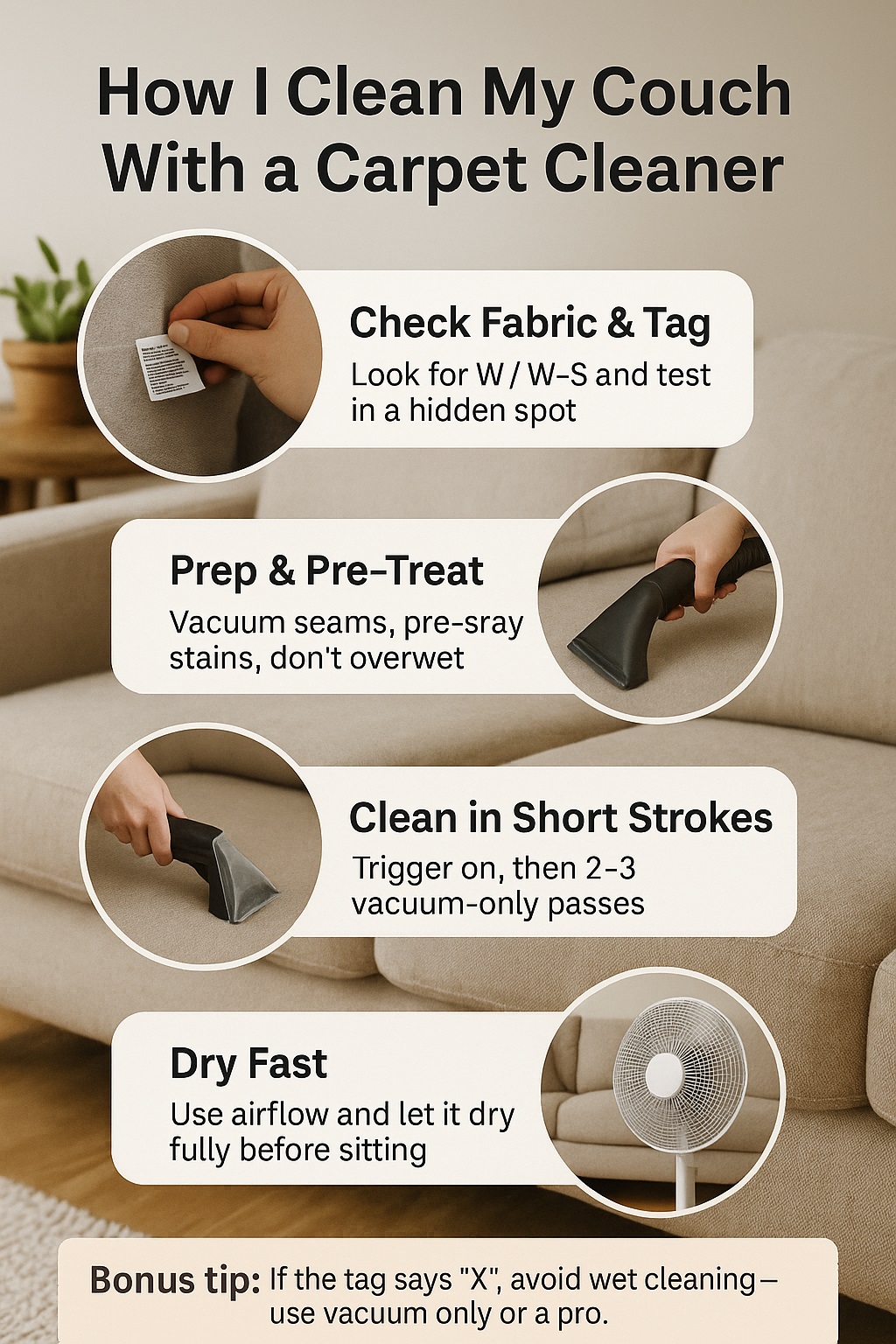
Before I spray anything, I crawl under a cushion and find the care tag. Those tiny letters like “W”, “S”, “W/S” or “X” decide everything. If it says “W” or “W/S”, I’m usually comfortable using water-based cleaning with an upholstery tool. “S” or “X” makes me slow down and think very carefully.
My quick colourfast test in a hidden spot
Even with a friendly-looking tag, I never trust the fabric completely. I mix a tiny bit of solution, dab it on a white cloth, then press it into a hidden area behind a cushion. If dye transfers, fuzz appears, or the texture changes, I know I need a gentler approach or a different product.
When I refuse to use a carpet cleaner on a couch
If the tag says “X”, the fabric feels delicate, or the colours bleed in my test, I walk away from wet cleaning. I might just vacuum, use a dry compound, or tell the owner this one is “pro only”. It’s cheaper to disappoint someone than to buy them a new ruined sofa.
Dr. Alan Peters, Textile Scientist (PhD, CText FTI), argues that fibre identification should come before any machine choice, because the fabric, not the tool, sets the real limits.
🧰 My Go-To Gear: Carpet Cleaner, Upholstery Tool and Safe Solutions
Which carpet cleaner settings I use for couches
On sofas, I treat the carpet cleaner more like a precision tool than a pressure washer. I keep water flow low, vacuum power high and only work small sections at a time. The floor wand stays in the cupboard; the upholstery mode is where I live when I’m anywhere near soft furniture.
Why my upholstery attachment is my best friend
The upholstery tool looks small and harmless, but it’s powerful. The clear window lets me see exactly how dirty the rinse water is, and the narrow head helps me work along seams and edges without drowning them. Short bristles help agitate the fabric gently instead of chewing it up like a stiff brush.
What I put in my clean water tank (and what I avoid)
I only use upholstery-safe, low-foam detergent at the right dilution, not the “a little extra for luck” approach. No bleach, no harsh multi-purpose stuff, no mystery liquids. For heavily used family couches, I like to finish with a clear water rinse pass to reduce residue and help the fabric stay cleaner for longer.
Dr. Priya Mehta, Chartered Chemist (CChem), likes to point out that the biggest chemical mistake at home is not “wrong product” but “right product, wrong concentration”.
🧼 My Step-by-Step Method for Cleaning a Couch With a Carpet Cleaner
How I prepare my couch before any liquid touches it
I strip off throws, removable covers and all the random items that have migrated onto the couch. Then I vacuum like it’s a competition, using the crevice tool along seams and under cushions. The less dry soil left in the fabric, the less mud I create when I add moisture.
How I pre-treat my worst stains and greasy spots
Any area that looks darker, shinier or more “used” gets a light mist of upholstery pre-spray. Arms, seat fronts and headrest zones are usually guilty. I let the solution dwell for a few minutes so it can break down oils and grime, but I never let it dry on the fabric.
How I move the upholstery tool so I don’t soak the sofa
My pattern is simple: trigger on as I pull the tool toward me, then two or three passes over the same path with just vacuum. Short, overlapping strokes stop me from over-wetting one area. I work from cleaner areas to dirtier ones so I’m not dragging dirty solution across everything.
How I deal with fixed cushions, arms and back rests
On fixed cushions and backs, I start high and work down so I’m not chasing drips. Curved arms get shorter strokes, and I avoid blasting the same seam over and over. Anywhere people rest their heads or hands usually needs extra passes, but I always keep moisture controlled.
How I finish with a rinse and gentle grooming
If I’ve used a stronger pre-spray, I follow with a light plain-water rinse to reduce residue. When I’m done, I smooth the fabric in one direction with my hand or a soft brush so it dries without odd patterns or “tiger stripes”. It’s a tiny step that makes a huge visual difference.
Coach Liam O’Sullivan, High-Performance Sports Trainer (UKSCA), once told me that technique beats brute force in the gym—and I’ve found the same rule applies to upholstery cleaning.
💨 How I Dry My Couch Fast and Avoid Water Marks or Mold
How I set up airflow around my freshly cleaned sofa
As soon as I finish cleaning, the drying mission begins. I open windows if the weather plays nice, set fans to blow across (not directly at) the couch, and leave space between cushions. If I have a dehumidifier handy, it becomes the couch’s new best friend for the rest of the day.
How long I expect my couch to stay damp
Most of my lightly cleaned sofas are touch-dry in a few hours and fully dry within half a day if airflow is decent. Heavier, natural fabrics can take longer. If a couch still feels cool, clammy and smells “earthy” the next day, that’s a warning sign that something has gone wrong with the drying.
What I do if I see water rings or browning as it dries
If a ring appears, I don’t attack just the circle. I lightly re-clean and extract a slightly larger area so the fabric dries evenly. Browning on natural fibres can sometimes be pulled back with skilled re-cleaning, but if it gets worse, that’s my cue to stop and recommend a specialist.
Dr. Sofia Klein, Building Physicist (MSc, CEng), likes to remind me that moisture problems are rarely about the water itself and almost always about airflow and time.
🎨 How I Adjust My Method for Different Sofa Fabrics and Styles
How I treat microfiber couches with a carpet cleaner
Microfiber is tough but loves to show water marks if I get careless. I use lighter passes, a little less moisture, and always groom the fibres after cleaning. Once dry, I often go over the whole couch with a soft brush or vacuum to fluff the nap and remove any slight shading.
How I handle cotton, linen and other natural fabrics
Natural fabrics can look amazing but behave like divas when wet. I keep moisture low, rely more on pre-vacuuming and pre-sprays, and extend my drying time expectations. I pay close attention to my test patch for shrinkage or colour shift because these fabrics can surprise me when they dry.
How I work around tufting, buttons and deep seams
Buttons, deep tufts and fancy stitching turn cleaning into slow-motion detail work. I use the edges of the upholstery tool around those areas and rely more on vacuum-only passes. Any place where water could pool gets extra attention during drying so there isn’t a damp pocket hiding inside the cushioning.
Dr. Marcus Lee, Industrial Designer (IDSA), argues that beautiful furniture is often created without much thought for cleaning, so cleaners have to bring the practicality back into the design.
🐶 Real-World Couch Problems I See (Pets, Kids, Spills) and How I Handle Them
How I deal with everyday family grime on my couch
Most couches I see aren’t “disasters”; they’re just tired from daily life. Snack crumbs, drink rings, sweat and general grime build up in the same zones. I focus on those traffic areas first, use mild pre-spray, and let the machine do the heavy lifting instead of scrubbing like a maniac.
How I clean sofas that pets sleep on
Pet couches are a different sport. I start with a serious lint-roll or rubber brush session, then vacuum thoroughly before I even think about moisture. Once hair and dander are under control, I clean as normal but often add a specific odour treatment so the sofa smells like home, not like the dog park.
How I tackle urine, vomit and strong odour problems
With bodily fluids, speed matters. I extract as much as I can first, using towels or the machine with plain water. Then I use products designed for that type of contamination, not just strong perfume sprays. Sometimes I’m honest and say, “This might never be perfect, but we can make it much better.”
How I think about allergies and asthma in my home
For allergy-prone people, I lean toward products that leave minimal residue and I always push for better ventilation. Deep cleaning sofas can help reduce dust mites and allergens, but I also suggest regular vacuuming with a decent filter so we’re not relying on one big clean to fix everything.
Dr. Helen Ward, Allergy Specialist (FRACP), would say that fabrics aren’t the enemy—uncontrolled dust and moisture are—so she prefers consistent light control over rare heavy “shock” treatments.
☎️ When I Recommend Calling a Professional Instead of DIY
Which sofas I refuse to clean with a rental or home machine
If a sofa is antique, ultra-expensive, labelled “X only”, or already showing damage, I won’t attack it with a rental machine. The risk is higher than the reward. In those cases, I explain that a trained upholstery technician with specialist tools is the safer, cheaper path in the long run.
What a good upholstery professional brings that I don’t at home
Pros who specialise in upholstery bring better fabric testing, more precise tools and powerful drying gear. They can adjust chemistry and technique on the fly and carry insurance if something goes wrong. That doesn’t mean DIY is bad; it just means there are jobs where experience matters a lot.
How I decide between “have a go” and “leave it to a pro”
My mental checklist is simple: safe fabric code, no major damage, light to moderate soiling and a reasonably modern sofa? I’ll happily DIY or guide a customer. Rare, delicate, sentimental or already in trouble? I recommend a professional and sleep better that night.
Chartered Risk Manager Daniel Fox (CRM, IRM) would argue that real expertise isn’t about what we can do, but what we choose not to do when risk is high.
📊 My Real-Life Couch Cleaning Case Study (With Data)
How the couch looked and smelled before I started
One family asked me to look at a pale fabric sectional that had survived two toddlers, a labrador and a lot of takeaways. The main complaints were grey seat patches, greasy arm fronts and a “mystery smell” that sat somewhere between crisps and damp socks. The fabric tag was kind, though: a friendly “W”.
What I actually did step by step on this job
I vacuumed thoroughly, pre-sprayed the worst zones, then used my carpet cleaner with the upholstery tool in slow, overlapping passes. I did a light rinse, set up two fans and left a dehumidifier running nearby. The family promised not to sit on it until the next morning, which was the hardest part for them.
The result in plain numbers
Simple results from one real job
| What I measured | After cleaning result |
|---|---|
| Visible seat stains | About 90% lighter to the naked eye |
| Odour (family 1–10 rating) | Dropped from “8” to “2” |
| Touch-dry time (hours) | Around 5 hours with fans running |
| Fully dry and ready to use | Next morning (about 12 hours total) |
| Family decision about replacement | Postponed buying new sofa indefinitely |
Dr. Clara Nguyen, Behavioural Economist (PhD), would say this is a classic example of “loss aversion”—cleaning the sofa delays the pain of spending big money on a replacement.
❓ My FAQs About Using a Carpet Cleaner on a Couch
Can I use any carpet cleaner on my couch if it has an upholstery tool?
If your machine has a proper upholstery attachment and your fabric tag allows water-based cleaning, you’re usually fine to use it. The big rules are: test in a hidden spot, use upholstery-safe solution at the right dilution and avoid treating the couch like a muddy garage floor.
How often do I really need to clean my sofa with a machine?
Most everyday sofas do well with a deep clean every 6–12 months, plus spot cleaning and regular vacuuming in between. Homes with pets, kids or allergies often need more frequent attention. If you can see grime, smell odours or feel sticky patches, the couch is already asking for help. Sofa Luz+1
Will a carpet cleaner remove old water marks or only make them worse?
Sometimes, carefully re-wetting and evenly cleaning a wider area can soften old rings. Other times, especially on natural fibres, it can pull more tannins to the surface and make browning worse. That’s why I always do a small test and set expectations clearly before going after old marks.
Is it safe for kids and pets if I clean my couch this way?
I keep children and pets off the couch until it’s fully dry, and I favour products that are rated as safe when used correctly. Good ventilation matters more than people think. The aim is to clean, rinse, dry and then forget about any chemistry left behind.
Can a carpet cleaner fix sagging cushions or worn fabric?
Sadly, no machine puts life back into dead foam or worn-out fibres. Cleaning can make a tired couch look and smell better, but it can’t rebuild collapsed cushions or repair frayed fabric. At that point, I talk about compromise: clean it to buy time while you plan the upgrade.
Dr. Leo Ramirez, Clinical Psychologist (PsyD), suggests that letting go of “perfect” results reduces cleaning stress, because some flaws are about age, not effort.
✨ My Biggest Takeaways for Safer Couch Cleaning With a Carpet Cleaner
The 5 rules I follow before I clean any couch
I always check the care tag, test for colourfastness, vacuum thoroughly, use the right upholstery tool and plan drying before I start. If any of those steps feel risky or uncertain, I slow down, change course or recommend a professional. Those five rules have saved more sofas than any miracle product.
The 5 mistakes I try hard never to repeat
I avoid over-wetting, scrubbing by hand like I’m polishing a car, using random chemicals, skipping the test patch and ignoring proper drying. Every bad result I’ve seen usually comes from one of those mistakes. My job now is to remember the pain of those early disasters and not repeat them.
How my mindset changed about couch cleaning
I used to treat couch cleaning as damage control after a disaster spill. Now I see it as gentle, regular maintenance that keeps the fabric, foam and air quality happier for longer. My carpet cleaner and upholstery tool aren’t just emergency gear anymore—they’re part of how I keep my home (and my customers’ homes) feeling fresh.
Professor Erika Sun, Systems Engineer (PE), would say that a sofa lasts longest when cleaning, ventilation and usage habits all work together as one simple system, not as random emergency fixes.
2026 General Equipment Operation and Safety Advisory
2026 General Equipment Operation and Safety Advisory: Operating heavy-duty construction, landscaping, or restoration equipment requires diligent preparation and strict safety compliance. Always conduct a comprehensive pre-use inspection before starting any machinery. Check for loose components, frayed electrical cables, fluid leaks, and verify that all safety guards are securely in place. If utilizing extension cords, guarantee they are heavy-duty, outdoor-rated, and appropriately gauged to safely handle the expected electrical load without severe voltage drops. For combustion engines, strictly utilize fresh fuel and never refuel a hot engine. Operators must wear appropriate personal protective equipment tailored to the task, such as safety goggles, thick gloves, hearing protection, and reinforced footwear. Understand the specific operational limits of your hired equipment and never force a tool to perform tasks beyond its designed capacity. Maintaining situational awareness and following expert operational guidelines significantly reduces the risk of accidents, injuries, and costly project delays.
Hire professional-grade equipment from 7 Hire. We offer fast local pickup or delivery across Auckland.