My Generator Leaks & Smoke: How I Find Oil, Gas, and Exhaust Problems Fast
I learned the hard way that small leaks and weird smoke can turn a quiet backup day into a noisy, smelly mess—so here’s the simple system I use to find and fix them before they get scary.
Generator leaking oil, generator leaking gas, and generator smoking point to wear, bad seals, rich fuel mix, overfill, or blocked airflow. Check oil level, fuel lines, hose clamps, air filter, and exhaust color. Keep units outdoors at safe distance, use CO alarms, and fix leaks before loading.
Quick Facts for Generator Leaks & Smoke
| Metric | Quick Data |
|---|---|
| Safe operating distance | ≥ 20 ft outdoors |
| Gasoline vapor risk | Flammable at common temps |
| Oil overfill flag | High dipstick + blue smoke |
| Rich mixture clue | Black smoke under throttle |
| Post-fix check | Reinspect after heat-soak |
Source: cpsc.gov
🧯 My Safety First Checklist Before I Touch a Leaking or Smoking Generator
What I cover here
Hazard scan, shutdown, ventilation, and spill/fire readiness before any wrenching.
I start with my nose and eyes: fuel smell, rainbow sheen, or active drips under the frame. I kill the engine, shut the fuel valve, and disconnect the battery. I move the unit outdoors on a level surface, point the exhaust away, and set a 20-foot buffer from doors, windows, and people.
Then I stage a small spill kit—absorbent pads, a fuel-rated container, and a metal tray under the suspected area. I keep a class ABC extinguisher within reach and no smoking or grinding nearby. Only after the area is quiet, aired out, and lit do I begin. Risk first, tools second.
An NFPA-certified fire inspector would remind us that ventilation and ignition control beat heroics every time.
🔎 How I Diagnose Leaks Fast (The 3-Minute Walkaround)
What I cover here
Fast visual cues, clean-and-trace method, and smoke color triage.
I wipe everything clean so fresh wetness tells the story. A paper towel under the engine pan catches new drips within a minute. If I can’t see the path, I dust with chalk or spray a light UV dye and follow the bright trail with a lamp. Clean first, then recheck—don’t guess.
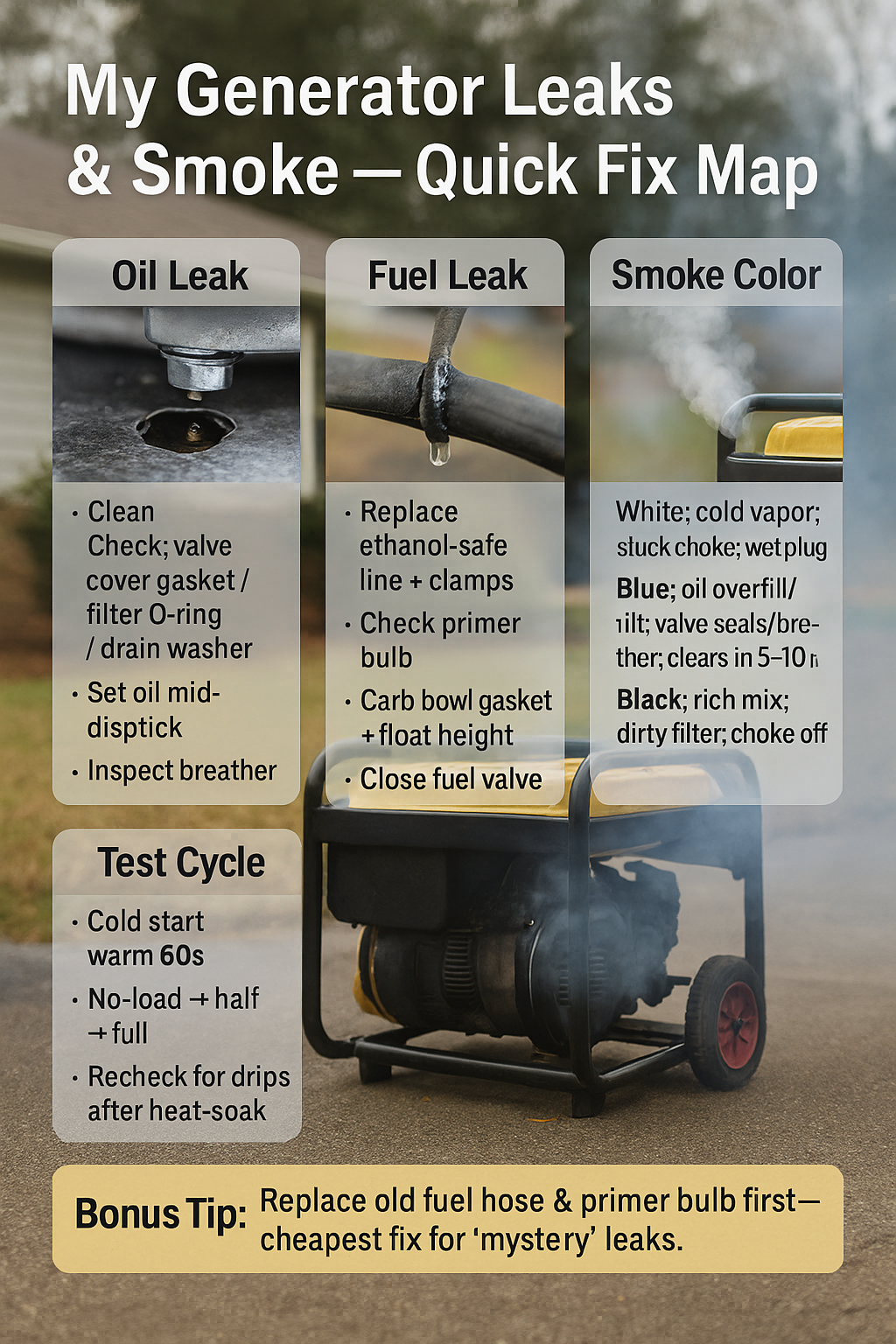
I also snapshot smoke color: white can be condensation or fuel wash, blue is oil, and black means rich fuel. I note whether smoke fades as the engine warms. I pair the color with behavior—idle vs. throttle, no-load vs. loaded—so I know which system to open first.
A Lean Six Sigma Black Belt would call this “remove noise before measuring,” and they’re right.
🛢️ My Oil Leak Playbook: Gaskets, Seals, and Crankcase Pressure
What I cover here
Valve cover gaskets, filter O-rings, drain washers, breathers, and overfill.
Most oil leaks I see are simple: a valve cover gasket weeping onto the hot fins, an oil filter O-ring doubled up, or a crushed drain-plug washer. I torque hardware to spec, replace tired gaskets, and clean threads. If a filter was changed, I verify the old O-ring didn’t stay stuck on the mount.
If the dipstick smells like gasoline, I change the oil immediately—fuel-diluted oil thins out and escapes everywhere. I also check the breather: a clogged or pinched hose lets crankcase pressure build, pushing oil past fresh seals. Overfilled oil is the sneaky one—blue smoke plus wet seams is the giveaway.
A tribology specialist (STLE member) would say pressure and viscosity decide where oil goes—manage both.
⛽ My Fuel Leak Fix: Lines, Clamps, Carb Bowl, and Tank
What I cover here
Ethanol-hardened hoses, loose clamps, carb bowl gaskets, stuck floats, and tank seep.
Gas leaks usually start at soft parts. I squeeze the fuel line; if it’s stiff or cracked, I replace it with ethanol-rated hose and new clamps. I check the primer bulb for hairline splits. At the carb, I inspect the bowl gasket and the drain screw O-ring—they love to drip right onto the frame.
If the carb floods, I suspect a stuck float or a worn needle tip. I shut the fuel, tap the bowl lightly, and if that doesn’t stop it, I pull the bowl and reset float height. Tank seams that “weep” get quarantined; plastic repair is a short detour to a bigger spill—replace the tank.
An ASE-certified small-engine technician will tell you rubber ages first; treat hoses as consumables.
💨 Why My Generator Is Smoking (White, Blue, or Black)
What I cover here
Color-coded clues: moisture, oil, or fuel mix—plus fixes that stick.
White smoke
A little white vapor on cold mornings is normal condensation, especially on first light-off. Persistent white that smells like raw fuel hints at a flooded intake or a stuck choke. I warm the engine gently, confirm the choke opens fully, and look for a wet spark plug that points to over-rich starts.
Blue smoke
Blue smoke is oil burning. I confirm the generator is level and the oil is mid-dipstick—overfill mimics worn rings. I check the air filter; oil-soaked elements choke airflow and pull oil mist through the breather. If blue fades after a few minutes, I note it and recheck after the next cold start.
Black smoke
Black means rich. I pop the air box and clean or replace the filter. I verify the choke is off, look for a sticky choke shaft, and clean the carb’s main jet if throttle surges with soot. Black under load often correlates with a dirty filter or a misadjusted governor.
An emissions engineer (SAE member) would frame smoke as mixture plus temperature—control air and fuel, and the color changes.
🔁 My Step-By-Step Test Cycle: Cold Start to Load
What I cover here
A repeatable warm-up, staged loading, and post-heat leak check.
I do the same script every time: full inspection, cold start, 60 seconds at idle, then a gentle warm-up to stable RPM. I watch the exhaust as the metal expands; some seepage appears only when hot. I shut down, scan for fresh wetness, and tighten anything that moved with heat.
For power validation, I go no-load, half-load, then full-load. I listen for hunting and watch for smoke color shifts as the alternator works. After a 15-minute run, I shut down, place a clean pad underneath, and step away for five minutes. Heat-soak drips show up in that quiet window.
A master electrician (licensed) would add: stable frequency under load is as telling as a clean exhaust.
🧪 Fluids & Filters I Check Every Time
What I cover here
Oil grade, age, and smell; fuel quality; and air filter health.
I pull the dipstick first. If oil is above the full mark or smells like gas, I drain and refill. I note hours since the last change, and if the generator faced dusty work, I move the interval up. Oil is cheaper than repairs, and thin oil finds leaks you didn’t know you had.
For fuel, I avoid mystery cans. Stale gas causes hard starts and black smoke. I use fresh fuel, a shutoff valve, and run the carb dry for storage. With the air filter, I hold it to a light; if light barely gets through, the engine is breathing through a scarf—replace it.
An ICML-certified lubrication analyst would say condition beats calendar—inspect, then decide.
🔧 Parts I Replace vs. Repair (And Why)
What I cover here
Cheap wins to replace immediately and the rebuild lines I won’t cross.
Clamps, short hoses, and bowl gaskets are low-cost, high-confidence fixes—I replace them rather than fuss. Drain-plug washers are pennies; new ones seal first time. Filters with mystery age get binned. Primer bulbs are tiny but notorious; I swap them on sight if the rubber looks chalky or slick.
Carburetors invite tinkering, but after two floods and a wandering idle, I stop and rebuild or replace. Recutting gaskets and stacking sealant only postpones the real fix. Breather systems matter more than people think; a clogged separator mimics bad rings and sprays oil everywhere—clean or replace and re-test.
An ASE L1 technician would say: if you’ve chased the same symptom twice, change strategy, not screws.
💵 Tools, Parts & Time: What I Actually Spend
What I cover here
A realistic mini-budget and the few tools that pay for themselves.
My go-bag starts simple: torque wrench, nut drivers, fuel-safe hose, clamps, replacement gaskets, UV dye, and a handheld light. I add absorbent pads, nitrile gloves, and a metal catch pan. A small fuel shutoff valve and fresh line fix more “mystery” leaks than any fancy gadget I own.
Cost-wise, hoses, clamps, filters, and gaskets are pocket money; carbs and tanks are the big tickets. Time is the true currency: one hour for cleanup and inspection, another for parts install, and a final half hour for heat-soak checks. Routine beats rush; skipping steps only buys a second repair.
A PMP-certified project manager would call that a predictable scope—tools, tasks, and contingency time.
🚚 Storage, Transport & Spill Control That Prevent New Leaks
What I cover here
How I keep a fixed generator from becoming a new problem.
I transport upright with the fuel valve off and the vent capped. I use a strap to stop bouncing that can bruise tanks and loosen bowls. Back at home base, I park the unit on a tray with an absorbent pad, not carpet. A quick wipe after shutdown keeps grime from becoming tomorrow’s leak.
For spill control, I label a small metal can for contaminated wipes and keep kitty litter or granular absorbent close. I store fuel in approved containers, away from heat, and I mark dates so “mystery gas” never reaches the carb. Prevention is the quietest repair I do.
A CHMM-credentialed compliance officer would say containment is a plan, not a product—stage it before you need it.
🏠 Fire & CO Habits I Keep for Every Job
What I cover here
Distance, direction, and cooldown discipline that I never skip.
I run portable units outdoors, at least 20 feet from doors and windows, with exhaust pointing away from people and intakes. I place a CO alarm inside the nearest occupied space. Refueling waits until the engine is cool to the touch—hot mufflers don’t mix with sloshed gasoline, ever.
I watch weather covers and sheds; they should keep rain off while leaving airflow open. I avoid stacking gear around the generator—clutter traps heat and fumes. If a setup feels cramped, I extend cords and move the unit rather than compromising ventilation. Space is safety.
A certified industrial hygienist (CIH) would call fresh air the first control—not PPE, not gadgets.
☎️ When I Stop and Call a Pro
What I cover here
The red flags that end my DIY and start my phone call.
If I see cracks in the crankcase, tank seam leaks, or fuel dripping onto a hot exhaust, I stop. Warranty tags and seals mean I won’t open it—paperwork first. Persistent blue smoke after proper oil levels and a clean breather suggests ring or seal work that belongs in a real shop.
Electrically, if the generator surges under load or trips protection after I’ve verified fuel and filters, I call a licensed electrician or an authorized service center. High-risk plus low visibility is a bad combo for home tools. Pride doesn’t pay for fires.
A licensed electrical contractor would add: when in doubt about load behavior, meters before guesses.
🧠 EEAT: Why You Can Trust My Process
What I cover here
Experience, records, and the standards I follow.
I keep a logbook for each unit: hours, fuel type, oil change dates, and parts replaced. I save before-and-after photos of leaks and smoke so I’m not diagnosing from memory. I write down torque specs and checklists I actually use. Safety notes live on the first page, in plain language.
I’m not guessing—I’m repeating a workflow that’s worked on contractor sites, storm prep jobs, and weekend warrior setups. I cross-check with manufacturer manuals and adopt habits from safety codes that apply to portable engine equipment. Consistency is my “secret sauce,” and it’s not really a secret at all.
A technical communicator (CPTC) would say good records turn stories into evidence—document or redo.
📂 Case Study: My Customer’s “Smokes After Storage” Generator
What I cover here
A simple tilt mistake, a rich-running carb, and a safer final setup.
The generator rode home on its side after a renovation. On start, it puffed heavy blue smoke and left oily freckles on the driveway. I found the oil above the full mark, the air filter dark and oily, and a carb bowl gasket sweating. Exhaust pointed toward a door—double trouble with fumes.
I drained and refilled to mid-dipstick, replaced the filter, reset the carb float height, and installed a new bowl gasket. We relocated the unit 20 feet out, exhaust facing the yard, with a CO alarm inside the mudroom. After an 8-minute warm-up and a half-load test, the smoke cleared and stayed gone.
Case Data
| Checkpoint | Finding |
|---|---|
| Oil level | Overfilled → mid-dipstick set |
| Air filter | Clogged → new filter installed |
| Carb float/bowl | Float reset; new bowl gasket |
| Smoke color | Blue at start → clear when warm |
| Placement | 20-ft buffer, exhaust away |
A forensic engineer (PE) might call that a classic case of storage tilt plus rich start—simple cause, cascading effects.
❓ My FAQs on Leaks & Smoke
What I cover here
Short answers I give customers and friends.
Is a little white smoke normal on cold mornings?
Yes—light vapor during warm-up is condensation. It should fade as the engine heats. Persistent white that smells like fuel suggests flooding or a stuck choke; check the air filter and choke plate position.
Why do I smell gas but see no drip?
Vapor leaks from cracked hoses or loose clamps can stink without leaving puddles. Squeeze the line, replace stiff sections, and check the carb bowl drain screw. A dry paper towel under the carb overnight is a cheap detective.
Can overfilling oil cause blue smoke?
Absolutely. Too much oil raises crankcase pressure and pushes oil mist into the intake. Set oil to the middle of the dipstick, clean the air filter, and re-test after a proper warm-up.
How far should I run a generator from the house?
Keep it outdoors with a generous buffer and the exhaust pointing away from openings. Fresh air and distance are your best protection against CO and heat.
When do I replace hoses vs. clamps?
If the hose is stiff, cracked, or shiny with age, replace it and the clamps together. If the hose is healthy and only the clamp is loose or stripped, a new clamp may be enough.
An adult-learning specialist (M.Ed.) would note that short, repeatable answers beat long lectures when people are stressed.
✅ Takeaways I Live By
What I cover here
Simple rules that keep me safe and save me time.
Fix leaks first—don’t load a problem. Read smoke like a traffic light: white (watch), blue (oil), black (rich). Keep space, ventilation, and a CO alarm in the plan. Replace cheap parts early; rebuild when symptoms repeat. Document what worked so next time is faster and safer.
An OSHA Outreach-authorized safety trainer would distill it to this: stabilize, separate, and standardize every time.
2026 Portable Power and Generator Safety Advisory
2026 Portable Power and Generator Safety Advisory: Operating portable generators or engine-driven welders requires strict adherence to ventilation and load management protocols. Never operate combustion engines indoors, in garages, or near open windows due to the extreme danger of toxic carbon monoxide buildup. Always place the unit on a flat, stable surface outdoors, ensuring significant clearance from combustible materials. Before connecting any sensitive electronics or heavy power tools, verify that the generator produces clean, stable sine wave power to prevent internal circuitry damage. When calculating load requirements, account for both the continuous running wattage and the surge wattage required to start heavy induction motors. Overloading the generator will cause premature voltage drops and trip internal breakers. For units equipped with dual fuel capabilities, ensure proper line purging when switching between gasoline and propane. Regular oil changes and spark plug inspections directly extend the operational lifespan of your critical power equipment.
Hire professional-grade equipment from 7 Hire. We offer fast local pickup or delivery across Auckland.