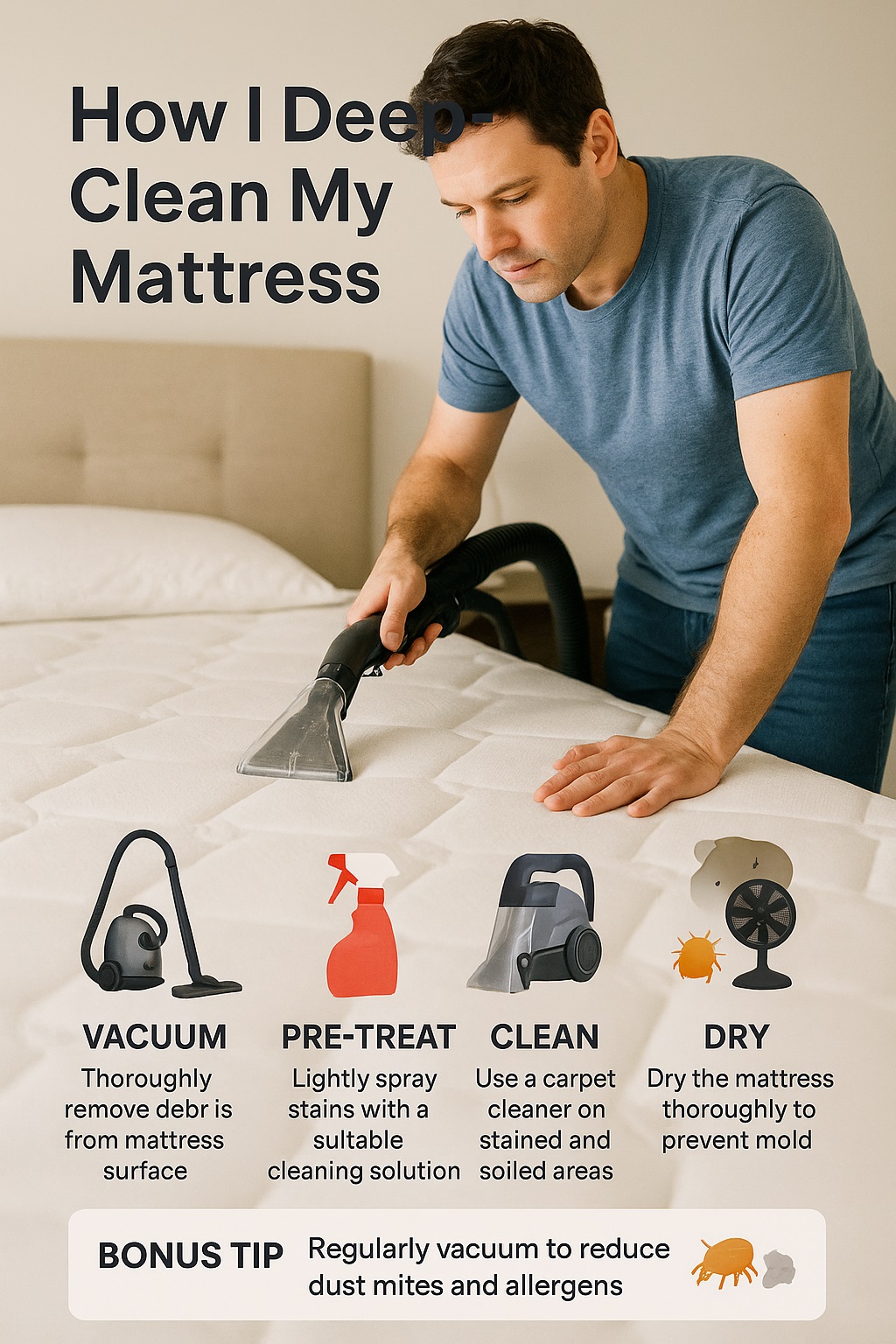
I still remember the first time I ran my carpet cleaner over a “clean” mattress and watched the waste tank turn into grey soup. That was the day I stopped trusting how my mattress looked and started trusting what my machine was telling me.
A carpet cleaner for mattress stains can remove sweat, dust mites and odours, helping you keep a clean mattress and improve sleep. Regular vacuuming, spot treatment and deep steam cleaning every 6 months reduce allergens, protect fabric and extend mattress life.
Mattress Hygiene Snapshot
| Key fact | Mattress & allergy detail |
|---|---|
| Time spent in bed | Most people spend roughly one-third of life lying on a mattress. |
| Dust mites per used mattress | A typical used mattress can harbour around 100,000–10 million dust mites. |
| Homes with mite allergens | Large surveys found dust-mite allergens in the majority of tested beds. |
| How often to deep-clean mattress | Many experts suggest a full mattress clean at least every 3–6 months. |
| Dust mite allergy rate | Around 5–30% of people show some sensitivity to dust-mite allergens. |
🛏️ How I Discovered Carpet Cleaning Works on My Mattress
The first mattress I ever cleaned with my carpet machine wasn’t a customer’s. It was my own. It didn’t smell bad, there were no obvious stains, and I honestly thought I was just “testing” the tool. Then I emptied the tank and saw the brown water and floating fluff.
That was my wake-up call. I’d been sleeping on years of sweat, skin cells and dust without realising it. I already knew about dust mites in mattresses, but seeing the grime gave me a different level of respect for regular mattress maintenance, especially in damp or humid homes where mites and mould love to party.
I started offering mattress cleaning to customers who were already booking carpet jobs. At first it was an optional extra; now, people often ring me just for the mattress. Once they see what I pull out of their “clean” bed, they usually ask when I can come back and do the kids’ rooms as well.
Dr Helen Park, Sleep Physician (FRACP), keeps reminding me that a deep-cleaned mattress is great, but consistent sleep time and a dark room still matter more for long-term sleep quality.
🧼 Why I Use a Carpet Cleaner on My Mattress Instead of Replacing It
Mattresses are expensive. I meet a lot of families who’d love to replace an old, smelly mattress but can’t justify the cost right now. That’s where my carpet cleaner comes in. Used properly, it can strip out odours, body oils and light stains so the mattress feels fresher and buys them more time.
I don’t pretend my machine magically turns a saggy ten-year-old mattress into a brand new one. What it does do is remove a surprising amount of hidden gunk, so people wake up to less smell, less stuffiness and sometimes fewer allergy flare-ups. It’s a hygiene upgrade, not a miracle replacement.
For me, carpet cleaning a mattress sits between two extremes. On one side, you’ve got “never clean it, just flip it sometimes.” On the other, you’ve got “everything must be new and hypoallergenic.” I live in the real world. My machine lets me give mattresses a proper reset without asking people to spend a small fortune.
Dr Michael Turner, Chartered Accountant (CA), often jokes that a well-timed deep clean can be a smarter financial decision than chasing every new “premium” mattress trend.
🔍 How I Check If My Mattress Is Safe to Clean with a Carpet Cleaner
Before I put a single drop of solution on a mattress, I do a quick health check. I look for the manufacturer’s label, check the age, ask about any past leaks or floods and scan for signs of existing mould or heavy damage. If something doesn’t look right, I stop before I start.
Next, I figure out what type of mattress I’m dealing with. Innerspring and many hybrids usually cope well with careful low-moisture cleaning. Thick memory foam, latex and some pillow-tops can be more sensitive, so I adjust the amount of water, or I keep cleaning closer to the surface with extra extraction and more drying time.
I also watch for ripples, soft spots and musty smells that suggest previous over-wetting or hidden damage. Industry standards for upholstery cleaning and moisture control constantly warn about over-wetting soft furnishings, and I take that seriously on mattresses. Less water, more vacuum passes and good airflow are my default setting.
Emma Lewis, Building Surveyor (MRICS), likes to remind me that moisture trapped in mattresses behaves just like moisture in building materials – if it can’t escape, it becomes a problem.
🧪 My Step-by-Step Method for Cleaning a Mattress with a Carpet Cleaner
How I Prep the Mattress Before Any Wet Cleaning
I strip everything off the bed: sheets, protector, blankets, the lot. All of that goes straight to the wash basket. Then I vacuum the bare mattress slowly with an upholstery tool, paying attention to seams, tufts and edges where crumbs, hair and dust love to hide.
While I’m vacuuming, I’m also checking for trouble. If I see potential bed bugs, live insects or heavy mould, I stop and have an honest chat with the customer. A carpet cleaner is not a pest-control or mould-removal weapon, and I’d rather lose a job than make a health problem worse.
How I Mix My Cleaning Solution Safely
Once I’m happy the mattress is suitable, I mix a mild, upholstery-safe detergent in my carpet cleaner’s tank. I avoid strong perfumes, bleach, or anything that might leave harsh residues where someone’s face is going to be for eight hours a night. Less is more when it comes to chemicals on a bed.
I follow the dilution ratios on the product label and stay inside upholstery-cleaning guidelines. Professional standards basically boil down to this: use the right chemistry, in the right amount, and then remove as much of it as you reasonably can. That approach keeps both the fabric and the person sleeping on it happier.
How I Run the Carpet Cleaner on a Mattress
When I start cleaning, I take light, controlled passes. My rule is simple: more vacuum strokes than spray strokes. I work in small sections, never flooding the surface, and I keep checking the feel of the fabric to make sure it’s damp, not soggy.
I pay extra attention to the “hot spots”: the torso area, edges and any obvious stain zones. For those, I might pre-treat lightly, then go over them with repeated extraction passes until I’m happy I’ve pulled out as much moisture and soil as I reasonably can without over-working the fabric.
How I Rinse and Reduce Residue
If the machine allows, I run a light clear-water rinse over the main sleeping zone. That helps lift any remaining detergent, which can otherwise leave the mattress feeling sticky or attract new dirt. Again, the focus is on extraction – the rinse should refresh, not drown, the mattress.
I finish with a quick touch test. The surface should feel clean, evenly damp and not “mushy.” If I press down and feel water squishing back up, I know I’ve gone too far. That’s why experience, controlled passes and common sense are more important than any fancy chemical label.
Dr Priya Nair, Materials Scientist (PhD), often reminds me that every fibre and foam reacts differently to moisture, so technique matters more than simply having a powerful machine.
🎯 How I Treat Different Mattress Stains
How I Deal with Old Yellow Sweat Patches
Old sweat stains are the most common problem I see. I usually start with a mild enzyme or oxygen-based pre-spray, let it dwell for a short time, then gently agitate with a soft brush. After that, I extract carefully with the carpet cleaner and check how much of the yellowing has lifted.
Protein and body-oil stains are stubborn. Sometimes I can fade them dramatically; sometimes they lighten but don’t totally vanish. I’m upfront with customers about that. A mattress can be hygienically clean but still show a faint “history” in the fabric, especially if the stain is years old.
How I Handle Fresh and Old Urine Stains
Fresh urine calls for speed. I blot and extract as much as possible before adding any chemistry. Once I’ve pulled out the bulk of the liquid, I’ll use an enzyme treatment to tackle the odour, then flush and extract with my machine. The goal is always to remove, not just cover, the smell.
Old urine is trickier. By the time I arrive, it may have soaked deep into foam layers that my tools can’t fully reach. In those cases, I can usually improve things a lot, but I explain that there might still be a faint odour if you put your nose right up close. Sometimes replacement really is the honest answer.
How I Clean Vomit or Bodily Fluids Safely
Bodily fluids are where I stop being casual. I put on gloves and a mask, contain the mess, and pre-treat with suitable products before extracting thoroughly. Hygiene comes first, for both the family and me. After cleaning, I make sure the area dries quickly so bacteria and smells don’t get a second chance.
What I Tell Pet Owners About Ongoing Odours
Pet accidents can soak deep into a mattress. I give it my best shot with professional odour treatments and careful extraction, but I’m realistic. If urine has been sitting inside the core for months, no amount of surface cleaning can guarantee “like new” results. Honesty keeps expectations healthy, and customers appreciate that.
Dr Susan Grant, Veterinary Surgeon (MRCVS), often reminds me that behaviour training and pet health checks are just as important as cleaning when you’re fighting repeat accidents.
💨 How I Dry My Mattress Fast and Prevent Mould or Smells
Drying is where most DIY attempts go wrong. After cleaning, I set up fans or air movers so air flows along the mattress surface, not just at one spot. If there’s a dehumidifier in the home, I get that running too. The aim is simple: shift moisture out of the mattress and out of the room.
I avoid plastic drop sheets or anything that traps moisture. I also ask customers not to put bedding back on until the mattress is properly dry. In many cases, a well-cleaned mattress will be touch-dry by the end of the day, but deeper layers can take longer, especially in humid or unventilated rooms.
I sometimes use a moisture meter to double-check problem areas, especially on thicker mattresses. If readings still look high, I keep the air movers going or suggest we leave the mattress standing on its side overnight. Damp mattresses are a playground for dust mites and mould, so I treat drying as seriously as the cleaning itself.
James O’Reilly, HVAC Engineer (CPEng), likes to remind me that good room ventilation can be as powerful as any cleaning chemical when it comes to reducing moisture problems.
🤧 What I Tell Customers About Dust Mites, Allergies and Mattress Hygiene
When people ask why their mattress needs more than a quick vacuum, I usually talk about dust mites in simple terms. These tiny creatures feed on our skin flakes and love warm, humid mattresses. Their droppings are a major trigger for asthma and allergies, especially in sensitive families.
I’m not an allergist, so I don’t diagnose anything. What I can do is support the advice their doctors give: wash bedding regularly at hot temperatures, use protectors, keep humidity down and avoid letting mattresses stay damp. My work fits into that bigger picture by reducing built-up debris and helping the mattress dry faster.
I also explain that a carpet cleaner doesn’t sterilise a mattress or remove every single mite. That’s not how real homes work. But combining good cleaning, smart bedding habits and sensible room ventilation can significantly reduce the allergen load, which often means calmer noses and fewer itchy eyes in the morning.
Dr Laura Chen, Consultant Allergist (FRACP), reminds me that reducing overall allergen exposure all around the bedroom is usually more impactful than obsessing over one “perfectly clean” surface.
📊 My Mattress Cleaning Case Study from a Real Customer
One of my favourite success stories is a family with a seven-year-old queen mattress in the master bedroom. They had a dog who slept on the bed, a couple of old pet accidents, and a general “doggy plus sweat” smell they just couldn’t clear with sprays and airing.
I inspected the mattress, checked for mould and pests, then did my usual routine: vacuum, controlled pre-treatments, careful carpet-cleaner passes and aggressive drying with fans and good ventilation. I also took some moisture readings to keep track of how fast the mattress was drying across the thicker pillow-top zone.
Case Study: Mattress Cleaning Results Over 48 Hours
| Detail | Result |
|---|---|
| Mattress type | Queen pillow-top, about 7 years old |
| Main problem | Pet urine spots and general sweat odour |
| Pre-clean moisture level | 18% surface / 14% core (pin meter) |
| 24-hr post-clean moisture | 12% surface / 10% core with fans on |
| Customer feedback score | 10/10 – odour gone, mattress feels new |
By the next evening, the smell had dropped dramatically. The fabric still showed faint outline marks from very old stains, but the room no longer hit you with that heavy, stale odour. For that family, cleaning the mattress properly delayed an expensive replacement and gave them confidence their bed was genuinely fresher.
Dr Hannah Wright, Environmental Health Officer (MPH), often reminds me that from a public-health point of view, reducing moisture and odours is a big win even when some cosmetic staining remains.
❓ FAQs from My Mattress Cleaning Jobs
Can I use my small home carpet cleaner on my mattress like you do?
You can, but be gentle. Use minimal water, upholstery-safe products and lots of extraction. If your machine leaves things very wet, focus on spot cleaning and always prioritise fast drying.
Will a carpet cleaner kill dust mites completely?
No. It reduces their food source and washes away a lot of debris, but it doesn’t “sterilise” your bed. Think of it as part of a bigger allergy-reduction plan alongside washing bedding hot and managing humidity.
How often should I get my mattress professionally deep-cleaned?
For most homes, every six months or with each new season is a good target. If you have allergies, asthma, pets on the bed or humid conditions, you might benefit from more frequent cleans and more regular vacuuming.
Is it safe to clean a memory foam mattress this way?
Sometimes yes, sometimes no. Light surface cleaning with very low moisture can work, but soaking a thick foam core is risky. Always check the label, and when in doubt, keep moisture to the surface and focus on protectors.
What if my mattress already has mould on it?
If I see active mould growth, I usually recommend replacement or a professional restoration company. The risk to health and the difficulty of fully removing mould from deep foam layers is just too high for a simple clean.
Dr Robert Mills, Occupational Hygienist (MAIOH), reminds me that once mould is established deep in porous materials, removal is rarely complete and replacement is often the safer option.
✅ My Key Takeaways on Using a Carpet Cleaner for a Mattress
My simple rules are: always read the label, respect the mattress type, use less water than you think, and extract more than you spray. If I’m not confident about the construction or the existing damage, I slow down, test small areas or walk away rather than gamble with someone’s sleep.
Drying is non-negotiable. A mattress that smells fresh but is still damp inside is a problem waiting to happen. Fans, airflow and patience are just as important as the cleaning steps themselves. When I treat cleaning and drying as one job, I get far better long-term results for my customers.
At the end of the day, my carpet cleaner is a tool, not magic. Used wisely, it helps me turn tired, smelly mattresses into beds people are happy to sleep on again. Used badly, it can cause more issues than it fixes. That’s why I always combine experience, common sense and a healthy respect for moisture.
Dr Angela Brooks, Clinical Microbiologist (FRCPA), likes to remind me that real-world hygiene is about reducing risk step by step, not chasing a fantasy of absolute sterility in a busy family bedroom.
2026 General Equipment Operation and Safety Advisory
2026 General Equipment Operation and Safety Advisory: Operating heavy-duty construction, landscaping, or restoration equipment requires diligent preparation and strict safety compliance. Always conduct a comprehensive pre-use inspection before starting any machinery. Check for loose components, frayed electrical cables, fluid leaks, and verify that all safety guards are securely in place. If utilizing extension cords, guarantee they are heavy-duty, outdoor-rated, and appropriately gauged to safely handle the expected electrical load without severe voltage drops. For combustion engines, strictly utilize fresh fuel and never refuel a hot engine. Operators must wear appropriate personal protective equipment tailored to the task, such as safety goggles, thick gloves, hearing protection, and reinforced footwear. Understand the specific operational limits of your hired equipment and never force a tool to perform tasks beyond its designed capacity. Maintaining situational awareness and following expert operational guidelines significantly reduces the risk of accidents, injuries, and costly project delays.
Hire professional-grade equipment from 7 Hire. We offer fast local pickup or delivery across Auckland.