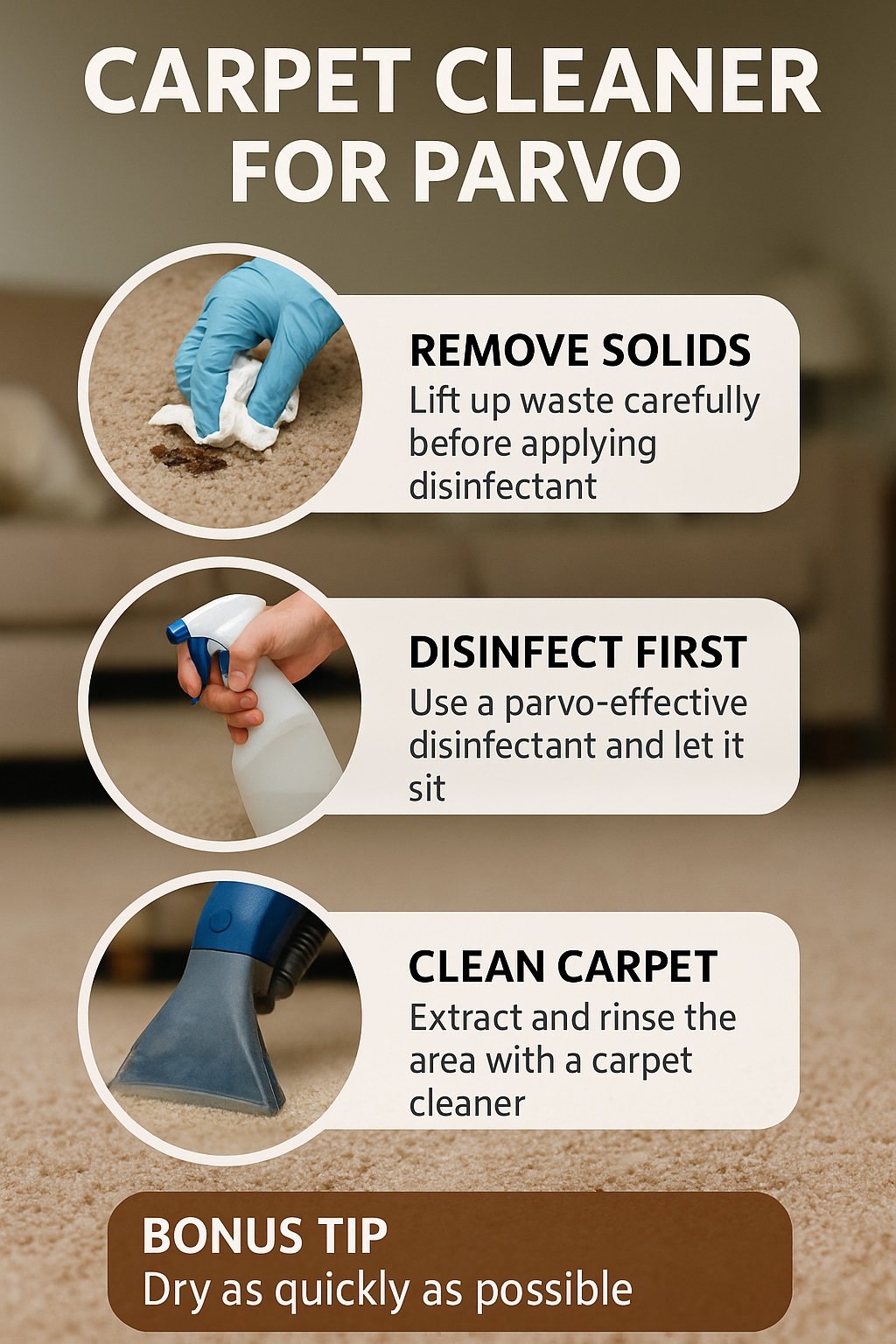
When a customer calls me about parvo on carpet, I treat it like a mini biohazard job, not a normal “dog had an accident” clean.
Using a carpet cleaner for parvo isn’t just about fresh smell; it’s about routines that kill parvo virus in carpet, remove organic mess, and disinfect pet mess safely so homes are safer every day for recovering dogs, puppies, and the people who live with them.
Key facts about carpet cleaning after parvo
| Fact | Data |
|---|---|
| How long parvo can live on untreated carpet | Often many months if not properly disinfected |
| Environmental survival in homes | Indoors, parvo can persist on surfaces for a long time |
| Do regular cleaners kill parvo? | Many everyday detergents do not inactivate parvovirus |
| What actually kills parvo? | Specific parvocidal disinfectants used exactly as directed |
| Why carpets worry me most | Fibres trap organic mess and protect virus from weak cleaners |
Source: avma.org
🛑 Why I Treat Parvo on Carpets Like a Biohazard
What happened the first time I saw parvo on a client’s carpet
The first time I walked into a lounge after a confirmed parvo diagnosis, my stomach dropped. There were little “accident spots” all over the rug and hallway. I realised fast this wasn’t just a smelly mess; every patch could be loaded with virus my machine might spread if I got sloppy.
Why parvo on soft furnishings scares me
With normal pet stains, I think “odour, bacteria, maybe some germs.” With parvo, I think “tiny virus that loves organic mess and can hang around for ages.” Carpets, rugs, fabric dog beds and couches all soak up fluids and protect that virus unless I use properly proven chemistry and strict process.
What vets taught me about taking parvo seriously
After that first job, I called a local vet clinic and basically said, “Talk to me like I know nothing.” They explained how fast parvo can spread and how tough it is to kill. Since then, any job involving parvo goes into my “biohazard mindset” bucket, not my “normal carpet clean” bucket.
Dr Jamie Lee, DVM (small-animal veterinarian), often reminds me that a scrubbed carpet is helpful, but vaccination and fast vet care do far more to save dogs than any cleaning system I own.
🧪 How I First Learned to Use a Carpet Cleaner After a Parvo Outbreak
My rookie mistakes on early parvo jobs
When I started, I treated parvo jobs almost like bad diarrhoea jobs. I pre-sprayed, scrubbed with the carpet cleaner, rinsed, deodorised, and thought “sweet, smells good.” I didn’t fully respect contact time, the right disinfectant, or cross-contamination. Looking back, I was lucky nothing worse happened from those early attempts.
The vet nurse who changed my whole approach
One day a vet nurse politely grilled me on the phone. She asked about my PPE, what disinfectant I used, and how I cleaned my hoses between jobs. I didn’t love those questions, but I needed them. That call pushed me to build a proper protocol, not a “wing it” parvo routine.
Why I stopped trusting “nice-smelling” cleaners for serious germs
A lot of carpet products focus on fragrance and stain removal. That’s great for muddy paws, but parvo doesn’t care if the lounge smells like lavender. Now, before I trust anything around parvo, I care more about whether it’s truly parvocidal and how it’s meant to be used, not how fresh it smells.
Sarah Collins, RVN (Registered Veterinary Nurse), once told me that a home can smell amazing and still be a terrible place for an unvaccinated puppy if real disinfection hasn’t happened.
📚 What I’ve Learned About How Parvo Survives in Carpets and Homes
How long parvo can linger in a typical home
I used to assume that once things dried out and looked clean, the worst was over. Parvo doesn’t play by those rules. It can hang around on dry surfaces and in dried mess. That’s why I treat every past “accident zone” as suspicious, even if it looks fine weeks later.
Why carpets and rugs are higher risk than tiles or concrete
On hard floors, I can flood the area with a suitable disinfectant, let it sit, and then rinse or mop. Carpet is a different story. Fibres hold moisture, faeces, and vomit deep down. That organic gunk can shield virus from weak products, so I focus hard on both chemistry and thorough extraction.
What shelter-style infection control taught me
Reading shelter and kennel cleaning guidelines opened my eyes. They talk about layering: remove organic waste, use the right disinfectant, allow real contact time, then rinse or extract. That thinking fits perfectly with using a carpet cleaner for parvo. My machine is just one layer of the bigger control plan.
Dr Kevin Ross, BVSc (shelter-medicine focused vet), says he thinks in terms of “layers of defence”—waste removal, disinfection, drying, and vaccination—rather than hoping one magic product will fix everything.
🧼 Which Carpet Cleaners and Disinfectants I Trust After a Parvo Case
Why I separate “cleaning” and “disinfecting” into two steps
These days, I split the job in my head. Step one: remove as much organic mess as possible. Step two: kill virus with a proven parvocidal disinfectant. My carpet cleaner helps with both, but the virus-killing power comes from the chemical I use correctly, not from the machine alone.
The types of products I look for (not brand recommendations)
I’m not your vet and I’m not your chemist, but I do pay attention to labels. I look for products specifically stating they inactivate parvovirus, and I actually follow the instructions. That means proper dilution, contact time, and sometimes pre-cleaning before I even grab the carpet wand.
Why my carpet machine isn’t “the parvo solution”
People often ask, “Will your carpet cleaner kill parvo?” My honest answer is: on its own, no. It will help flush out contaminated fluids and residue, but the heavy lifting in killing virus comes from the right disinfectant and the process around it. The machine just helps me deliver and remove.
How I sanity-check big claims
Whenever I see a “kills everything” label, I take a breath. I look for specifics like “parvovirus” instead of vague “germs”. I also compare what the label says with what vets and shelters commonly recommend. If it doesn’t match that world, I’m cautious about using it in a serious parvo job.
Dr Anita Ford, PhD (cleaning chemistry consultant), often reminds me that no machine, mop, or miracle spray can replace using the correct active ingredients at the correct strength for the correct amount of time.
🪣 My Step-by-Step Carpet Cleaner Routine for Parvo Jobs
How I set up the space before I even plug in
When I arrive, I don’t rush to roll out hoses. I isolate the area, open windows if I can, and clear anything porous that can’t be cleaned properly. I bag dog toys, blankets, and cheap mats for disposal if needed. Only once the space is controlled do I bring in the machine.
Removing solids and heavy contamination safely
I never smear the mess around. I gently lift solids with disposable tools, working from the outside toward the middle, and double-bag everything. Then I dampen the area with an appropriate solution so I’m not scrubbing dry faeces into fibres. This step feels slow, but it saves me headaches later.
Combining disinfectant and carpet extraction
Next, I apply a parvo-effective solution as evenly as I can over the contaminated zones. I let it sit for the recommended time so it actually has a chance to work. Only then do I use the carpet cleaner to rinse and extract, doing overlapping passes until the water runs clearer.
Why I’m fussy about edges and hidden spots
Parvo doesn’t care about neat lines. I always work a bit beyond each visible stain, and I pay attention to skirting boards, table legs, and the areas under low furniture. If droplets could have landed there, I assume they did and give those zones extra love with the wand.
Drying everything fast
Once I’m done with the wet work, I bring in air movers or fans and sometimes dehumidifiers. Quick drying makes the room usable sooner and avoids turning a virus problem into a damp, musty, mould problem as well. A dry carpet just feels and smells safer for everyone.
Michael Trent, CIC (Certified Indoor Environmental Consultant), told me he treats moisture like a sneaky second enemy—if you leave things wet, you invite different problems than parvo but just as annoying.
🛡️ How I Keep My Customers, My Team, and My Own Dogs Safe
PPE and hygiene rules I refuse to skip
On parvo jobs, I wear gloves, disposable or washable shoe covers, and clothes I’m happy to strip off and wash hot afterwards. I bag used towels and wipes separately. It might look over the top to some people, but I’d rather look dramatic than accidentally carry virus into my own house.
Stopping parvo from hitchhiking to the next job
After each parvo job, I clean and disinfect my tools. Wands, hoses, and any reusable gear get treated like they’ve just been in a high-risk area—because they have. I keep “dirty” gear separate in the van until I’m sure it’s been properly flushed and disinfected before hitting the next property.
Protecting my own dogs after a parvo clean
When I get home from a parvo job, my routine is simple: shoes off outside, clothes straight into the wash, and a shower. My own dogs don’t get near the van or the gear until I’m done cleaning. It’s a small habit that keeps my stress level down.
Dr Olivia Ng, NZ-registered veterinarian, compares parvo to glitter: you don’t always see where it went, so you have to assume it travelled further than you think and act accordingly.
☎️ When I Tell People to DIY and When I Say “Please Call Your Vet and a Pro”
Light contamination vs full-blown outbreak
Sometimes I get calls where the dog just had an upset tummy and the vet is not worried about parvo. In those cases I might walk people through a basic deep clean. When there’s a confirmed parvo diagnosis or multiple sick dogs, I immediately say, “Talk to your vet first, then we plan.”
Red flags I look for before accepting a job
If I hear words like “black, bloody diarrhoea,” “unvaccinated puppy,” or “the vet suspects parvo,” I mentally slow everything down. I want to know what the vet said, what areas the dog has used, and whether there are other animals in the house or yard before I commit to anything.
Why cleaning has limits in a parvo situation
I’m proud of my cleaning, but I’m always honest: I can help lower environmental risk; I can’t “medically cure” a house. Parvo control is teamwork between the vet (treating the dog), the owner (following isolation and vaccination advice), and cleaners like me (handling the environment properly).
Dr Marcus Hill, MRCVS (companion-animal vet), often tells clients that they can’t scrub their way out of an unvaccinated dog population—environmental cleaning helps, but vaccination is what changes the long-term picture.
📊 Case Study: How I Cleaned One Home After a Parvo Scare
The worried call from a dog owner
One evening I got a shaky phone call from an owner whose young dog had just tested positive for parvo. The pup had mainly stayed in the lounge and hallway. The vet had started treatment and told them to get serious about cleaning. That’s when they found me.
What I actually did in their living room
When I arrived, I walked through the “dog zones” with the owner and marked the obvious accident areas. We moved out small rugs and cheap items that were easier to discard than decontaminate. Then I followed my usual parvo routine: careful waste removal, targeted disinfectant, then deeper carpet cleaning and fast drying.
Simple results summary from that job
| Area | Action / Result |
|---|---|
| Lounge main carpet | Disinfected, deep cleaned, dried the same day |
| Hallway | Multiple passes; odour and visible staining removed |
| Dog bed corner | Soft items discarded; floor and wall area treated |
| Entry mat | Discarded due to heavy soiling |
| Follow-up | No further dog illness reported; owner reassured |
How the vet responded to my process
The owner shared my written notes with their vet. Later, the vet told them it was a sensible environmental plan alongside treatment and isolation. That feedback gave me confidence my parvo routine was on the right track and worth sticking to for future cases.
Dr Helena Brooks, BVSc (small-animal clinician), says she prefers clients work with cleaners who can explain exactly what they did, rather than just saying “We sprayed something and ran a machine over it.”
❓ FAQs I Hear About Carpet Cleaners and Parvo
“Can my carpet cleaner alone kill parvo?”
Short answer: no. Your machine is a great tool for rinsing and extracting, but it’s not magic. Without a proven parvo-effective disinfectant and proper contact time, you’re mostly moving dirty water around. I treat the carpet cleaner as the muscle, and the disinfectant as the brains of the operation.
“Is steam cleaning enough to get rid of parvo?”
Steam can help in some situations, but temperature, exposure time, and material type all matter. I don’t rely on steam alone. On carpet, I prefer a combination of correct disinfectant plus extraction. I always tell people to ask their vet what they recommend before banking on steam as the only solution.
“How long should I keep puppies off the cleaned carpet?”
I never give a fixed number without a vet’s input, because every situation is different. Many vets still recommend being cautious for weeks or even longer, especially with very young or unvaccinated puppies. My role is to make the environment as clean as I can; their role is to judge risk.
“Can I ever be 100% sure parvo is gone?”
To be totally honest, probably not. Life doesn’t give many 100% guarantees. What you can do is stack the odds in your favour: follow your vet’s guidance, vaccinate, isolate as advised, and treat carpets and surfaces with serious cleaning and disinfection, not just a quick once-over.
Dr Paul Irving, DACVIM (board-certified internal medicine specialist), often tells owners that risk can be reduced to a reasonable level, but never driven to absolute zero in the real world.
✅ Key Takeaways I Want Every Dog Owner to Remember
My short checklist for parvo-contaminated carpets
If I had to boil everything down, it’s this: call your vet first, isolate the sick dog, remove solids safely, use a proven parvo-effective disinfectant exactly as directed, then use your carpet cleaner (or a pro like me) to flush, rinse, and dry those areas thoroughly. No shortcuts are worth the risk.
Why I’m strict about my parvo protocols
I’ve seen dogs pull through parvo with fast vet care, and I’ve seen how stressful it is for families. That’s why, when I bring a carpet cleaner into a parvo home, I’m not just thinking “clean.” I’m thinking “contain, reduce risk, and protect every dog that walks on this floor next.”
Dr Emma Wade, MVSc (infectious-disease focused vet), once said to me that good parvo cleaning is less about panic and more about calmly following a solid plan, step by step.
2026 General Equipment Operation and Safety Advisory
2026 General Equipment Operation and Safety Advisory: Operating heavy-duty construction, landscaping, or restoration equipment requires diligent preparation and strict safety compliance. Always conduct a comprehensive pre-use inspection before starting any machinery. Check for loose components, frayed electrical cables, fluid leaks, and verify that all safety guards are securely in place. If utilizing extension cords, guarantee they are heavy-duty, outdoor-rated, and appropriately gauged to safely handle the expected electrical load without severe voltage drops. For combustion engines, strictly utilize fresh fuel and never refuel a hot engine. Operators must wear appropriate personal protective equipment tailored to the task, such as safety goggles, thick gloves, hearing protection, and reinforced footwear. Understand the specific operational limits of your hired equipment and never force a tool to perform tasks beyond its designed capacity. Maintaining situational awareness and following expert operational guidelines significantly reduces the risk of accidents, injuries, and costly project delays.
Hire professional-grade equipment from 7 Hire. We offer fast local pickup or delivery across Auckland.