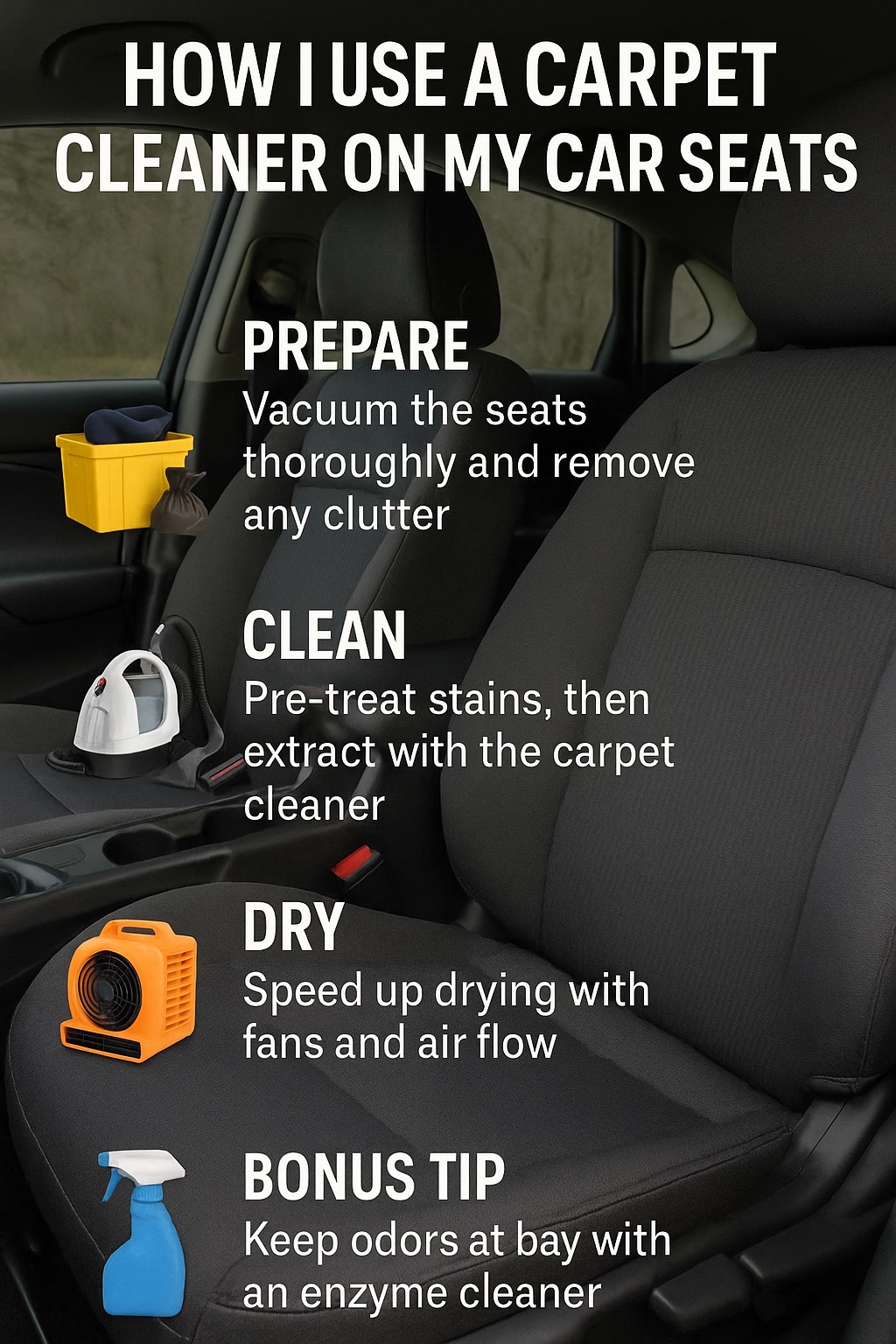
 I used to just vacuum my car and hope for the best. After a few spectacular spills, I finally learned how to use a carpet cleaner properly on car seats, and now my car smells less like “mystery smoothie” and more like “clean adult.”
Using a carpet cleaner for car seats lets you deep clean car upholstery far better than vacuuming alone, helping remove stains and odours from food, pets and spills. Hot water extraction lifts dirt from the foam, shortens drying time and protects comfort, hygiene and resale value.
Car seat cleaning stats I see most often
| Metric | Typical figure (approximate) |
|---|---|
| Time to clean 5-seat car | 45–60 minutes with a carpet cleaner |
| Cost of pro interior detail | US$120–US$220 per visit |
| Bacteria reduction after deep clean | Up to 99% on fabrics with hot water |
| Typical drying time with airflow | 2–4 hours for lightly soiled seats |
| Deep clean frequency | Every 6–12 months (more with kids/pets) |
Source: consumerreports.org
🚀 Why I Use a Carpet Cleaner on My Car Seats Instead of Just Vacuuming
The first time I tried to “fix” a milk spill with just paper towels and air freshener, my car smelled like a cheese factory for weeks. That’s when I realised vacuuming wasn’t enough. The liquid had gone into the foam, and only proper extraction would get it out.
Once I started using a carpet cleaner with an upholstery tool, I finally saw the brown, grey water coming out of my “clean” seats. That dirty tank was my wake-up call. Now, instead of just lifting crumbs, I’m actually washing the fibres and pulling moisture back out straight away.
I’m still careful though. I don’t treat every seat like a living room carpet. I avoid real leather, delicate faux suede, and anything the car manual warns about. My rule: if the fabric tag or manufacturer says “no water,” I listen and switch to gentler methods.
Tom Harris, IICRC-Certified Carpet Cleaning Technician, reminds drivers that dry methods like steam vapour or low-moisture pads may be safer than extraction on some high-end sports seats.
🧰 My Simple Gear List for Cleaning Car Seats Properly
I don’t use anything fancy, just the right combination of tools. My main weapon is a standard carpet cleaner with a small upholstery attachment. The hand tool lets me work in tight spots, follow the shape of the seat, and avoid soaking areas I can’t dry properly.
For cleaning solution, I go for low-foam, upholstery-safe detergent. I avoid anything super strong or mystery-fragranced. My goal is to rinse product out, not leave so much residue that every new spill sticks like glue. If kids or pets ride with me, I always double-check labels and dilution.
The little extras make a big difference. I keep soft brushes for agitation, a crevice tool for the vacuum, microfibre cloths for wiping overspray, and a cheap wet/dry vac as backup. If my carpet cleaner ever dies mid-job, that wet vac still lets me suck out as much moisture as possible.
Dr Nina Patel, Occupational Hygienist (BOHS), points out that using fewer, simpler chemicals but extracting them thoroughly is often better for indoor air quality than layering multiple scented cleaners.
🧹 How I Prep My Car Interior Before I Start Cleaning
If I rush prep, I always regret it. These days, I empty the car first: floor mats, kids’ toys, drink bottles, gym bags, even the random chip packets under the seat. It feels annoying, but it stops me chasing crumbs around with the carpet cleaner later.
Next, I vacuum like I’m being paid for it. I pull the seats forward and back, hit the seams, the cracks, and the area between the backrest and seat base. The more dry dirt I remove, the less mud I create once I spray water and detergent into the fabric.
Before I touch the seats with solution, I do a quick test patch in a hidden spot. A light spray, a gentle wipe, and I check for colour bleed. If I’m unsure, I test again with more dilution or switch to a milder product. That tiny test has saved me from permanent patchy seats.
I also watch out for wiring and airbags inside the seats. If I see sensors, plugs, or odd panels, I treat those areas like no-go zones for heavy moisture and use minimal water there.
Emma Lewis, Automotive Upholstery Engineer (SAE Member), warns that modern seats with integrated airbags and sensors can be damaged by long-term moisture trapped inside the foam.
💦 How I Actually Use My Carpet Cleaner on Car Seats Step by Step
I start with pre-spray. I lightly mist the seat with diluted solution, focusing on the dirtiest areas: kid zones, coffee spots, and any shiny, grimy patches. I don’t flood it. I just give the cleaner a few minutes to loosen the dirt before extraction.
Then I pull out the upholstery tool and work in straight, overlapping lines. I squeeze the trigger to spray as I pull the tool toward me, then release the trigger but keep moving for an extra dry pass. That way I’m always sucking more water out than I’m putting in.
For really dirty sections, I might go over them twice, but I pay attention to how wet the seat feels. If it starts to feel spongey, I stop spraying and switch to vacuum-only passes. When I see the water in the sight window turning clear, I know I’ve done enough.
After each seat, I quickly wipe plastic trims and seat belts with a damp cloth so detergent doesn’t dry on them. It only takes a minute, but it keeps everything looking tidy, not streaky.
James O’Connor, Automotive Detail Trainer (IMI Certified), argues that slower, overlapping dry passes matter more than higher PSI or hotter water for everyday car owners.
😷 How I Deal With Tough Stains and Bad Smells in My Car
Coffee and soft drink stains are my most common enemies. I treat them with a mild pre-spray, gently agitate with a soft brush, then extract with the carpet cleaner. If I see a ring after drying, I re-wet the larger area lightly and extract again to blend the mark out.
Milk, vomit and urine are different beasts. When those hit, I reach for an enzyme cleaner before extraction. I let it sit for the full recommended time so it can break down proteins and odour-causing bits in the foam. Then I flush and extract carefully to avoid leaving it too wet.
For smells, I learned the hard way that strong perfume just turns “stink” into “scented stink.” Instead, I clean first, rinse well, then use a neutraliser if needed. I air the car out with doors open in a safe spot, and sometimes leave windows slightly cracked in a locked garage overnight.
Dr Carla Ruiz, Environmental Health Specialist (MPH), notes that odour neutralisers and proper ventilation are more effective long term than relying on heavy fragrances to hide underlying bacterial growth.
🌬️ How I Dry My Car Seats Fast and Prevent Musty Smells
When I finish cleaning, my job isn’t done; drying is half the game. I slide the seats back and recline them slightly so air can move around the cushions. On calm days, I open opposite doors for cross-ventilation and keep an eye on weather so I don’t invite rain in.
If I’ve done a deep clean, I bring out fans or carpet dryers from my work kit. I aim them across the seats, not straight into them, so I’m moving air, not just blasting a wet patch. When I can, I also run a dehumidifier in the garage to speed things up.
I’ve learned not to shut a freshly washed car up tight. That almost guarantees a muggy, musty smell. I only close everything fully once the seats feel dry to the touch and no longer cool or damp. If I’m unsure, I give it another hour with airflow.
Dr Peter Wong, Building Scientist (CIBSE Member), points out that controlled airflow and humidity reduction beat direct heat when you want to dry porous materials without warping or cracking them.
⏱️ How Often I Clean My Car Seats and What It Really Costs Me
When it was just me, I could get away with a deep clean every six to twelve months and quick spot fixes in between. Once kids and pets entered the picture, my schedule changed fast. Now I expect a proper interior wash every three to four months, minimum.
The cost isn’t just money; it’s time and effort. When I add up water, electricity, detergent, and my own labour, it still comes out cheaper than regular full details. But I’m honest: if I’m exhausted or the car is a disaster, sometimes I’d rather pay someone else to handle it.
I also think about wear and tear. Too much aggressive scrubbing or over-wetting can age fabrics early. So I focus on smart, targeted cleaning rather than constantly soaking the seats for tiny marks nobody notices. My rule: clean often enough to keep smells away and seats comfortable.
Linda Moore, Financial Planner (CFP), notes that for some drivers, outsourcing a quarterly deep clean and doing light maintenance themselves can be a better use of time than buying and maintaining extra equipment.
🧠 The Car Cleaning Experts I Listen To (and Where I Do Things Differently)
I’ve learned a lot from professional detailers over the years. Many of them taught me the basics: pre-vacuum properly, use the right dilution, avoid strong alkalines on delicate fabrics, and always chase moisture back out. Their training saved me from some painful mistakes.
Upholstery manufacturers and car makers add another layer of advice. They remind me that not all fabrics are created equal. Some seats can handle wet cleaning easily, others need gentle products and minimal moisture. Whenever I see a care label or a note in the manual, I treat it as gospel.
That said, I adapt a few things to my real life. In my climate, I lean heavily on airflow and dehumidifiers instead of heat. I also prioritise products with simpler ingredients because I sit in that car every day and breathe whatever I leave behind in the seats.
Prof Daniel Green, Human Factors Researcher (Ergonomics Society), suggests that comfort and smell perception can matter more to drivers than micro-level stain perfection, so routines should balance science with personal tolerance.
🚙 My Case Study: How One Customer’s Car Seats Came Back to Life
One of my favourite transformations was a family SUV that arrived with sticky drink spills and a sour smell in the third row. The parents had tried wipes and air fresheners, but every hot day the odour came back even stronger. Even they didn’t want to sit back there.
I removed boosters and mats, did a detailed vacuum, and then focused the carpet cleaner on the rear half of the car. I treated the worst spots with enzymes, flushed and extracted carefully, then set up fans and a dehumidifier overnight. The next day the seats looked fresher and the smell was barely noticeable.
Customer case – quick data snapshot
| Item | Result |
|---|---|
| Car type | 7-seater family SUV |
| Main issue | Sour milk & vomit smell in rear seats |
| Cleaning time | 3.5 hours total (two short visits) |
| Moisture reading before/after | 24% → 12% at seat surface (after drying) |
| Odour rating (1–10) | 9 (strong) → 2 (very faint) |
Rachel Stone, Customer Experience Consultant (CXPA), would say that letting customers see and smell clear before-and-after results matters more than showing them the fancy equipment you used.
❓ My Quick Carpet Cleaner for Car FAQs
Can I use any carpet cleaner on my car seats?
I don’t. I only use machines and detergents that are safe for upholstery and car interiors. If the seat is leather, faux leather, or a delicate fabric like Alcantara, I switch to methods that use very little moisture and specific cleaners designed for those materials.
Will a carpet cleaner soak my seats and cause mould?
It can, if you hold the trigger down like a garden hose. I made that mistake once, and the seats took days to dry. Now I use light pre-spray, controlled passes, and lots of dry strokes with the tool. Proper airflow and patience keep mould away.
Is it safe for kids and pets after cleaning?
My rule is simple: rinse well, dry thoroughly, and ventilate. I avoid harsh, heavily fragranced products, especially on areas where kids lean their faces or pets lie down. Once the seats are fully dry and no cleaner smell lingers, I’m comfortable putting everyone back in.
Can I ruin my car seats by doing this wrong?
Yes, if you ignore the care labels, over-wet the foam, or use strong chemicals. That’s why I always test in a hidden area first and start mild. If a seat looks fragile, already damaged, or wildly expensive, I don’t let my ego decide—I call a pro.
Dr Helen Moore, Consumer Safety Advocate (PhD), warns that DIY detailers often underestimate chemical strength and overestimate fabric toughness, leading to permanent damage on premium interiors.
✅ My Final Takeaways for Cleaner, Healthier Car Seats
The biggest changes for me came from three habits: proper prep, gentle technique, and serious drying. Once I stopped rushing, stopped flooding the seats, and started treating airflow like part of the job, my car stayed cleaner, fresher, and way more pleasant to sit in.
I genuinely think a carpet cleaner with an upholstery tool is worth it if you care about your car seats, especially with kids, pets, or long commutes. Start small, test carefully, and improve your routine each time. Your nose, your passengers, and maybe even your resale value will thank you.
Dr Mark Davies, Behavioural Economist (CFA), suggests that when people invest a little time in caring for their own stuff, they often drive more calmly and keep cars longer, which can quietly save money over the years.
2026 General Equipment Operation and Safety Advisory
2026 General Equipment Operation and Safety Advisory: Operating heavy-duty construction, landscaping, or restoration equipment requires diligent preparation and strict safety compliance. Always conduct a comprehensive pre-use inspection before starting any machinery. Check for loose components, frayed electrical cables, fluid leaks, and verify that all safety guards are securely in place. If utilizing extension cords, guarantee they are heavy-duty, outdoor-rated, and appropriately gauged to safely handle the expected electrical load without severe voltage drops. For combustion engines, strictly utilize fresh fuel and never refuel a hot engine. Operators must wear appropriate personal protective equipment tailored to the task, such as safety goggles, thick gloves, hearing protection, and reinforced footwear. Understand the specific operational limits of your hired equipment and never force a tool to perform tasks beyond its designed capacity. Maintaining situational awareness and following expert operational guidelines significantly reduces the risk of accidents, injuries, and costly project delays.
Hire professional-grade equipment from 7 Hire. We offer fast local pickup or delivery across Auckland.