I never planned on becoming “the guy people call when something truly disgusting happens on the carpet” – but here we are.
A carpet cleaner for bed bugs and other nasties can help flush out hidden pests, rinse away germs and cut odour. Learn how to remove maggots from carpet, tackle light mold and pet disease messes, and when to call vets or pest experts.
Key facts about nasty infestations in carpets
| Issue in carpet | What my carpet cleaner can (and can’t) realistically do |
|---|---|
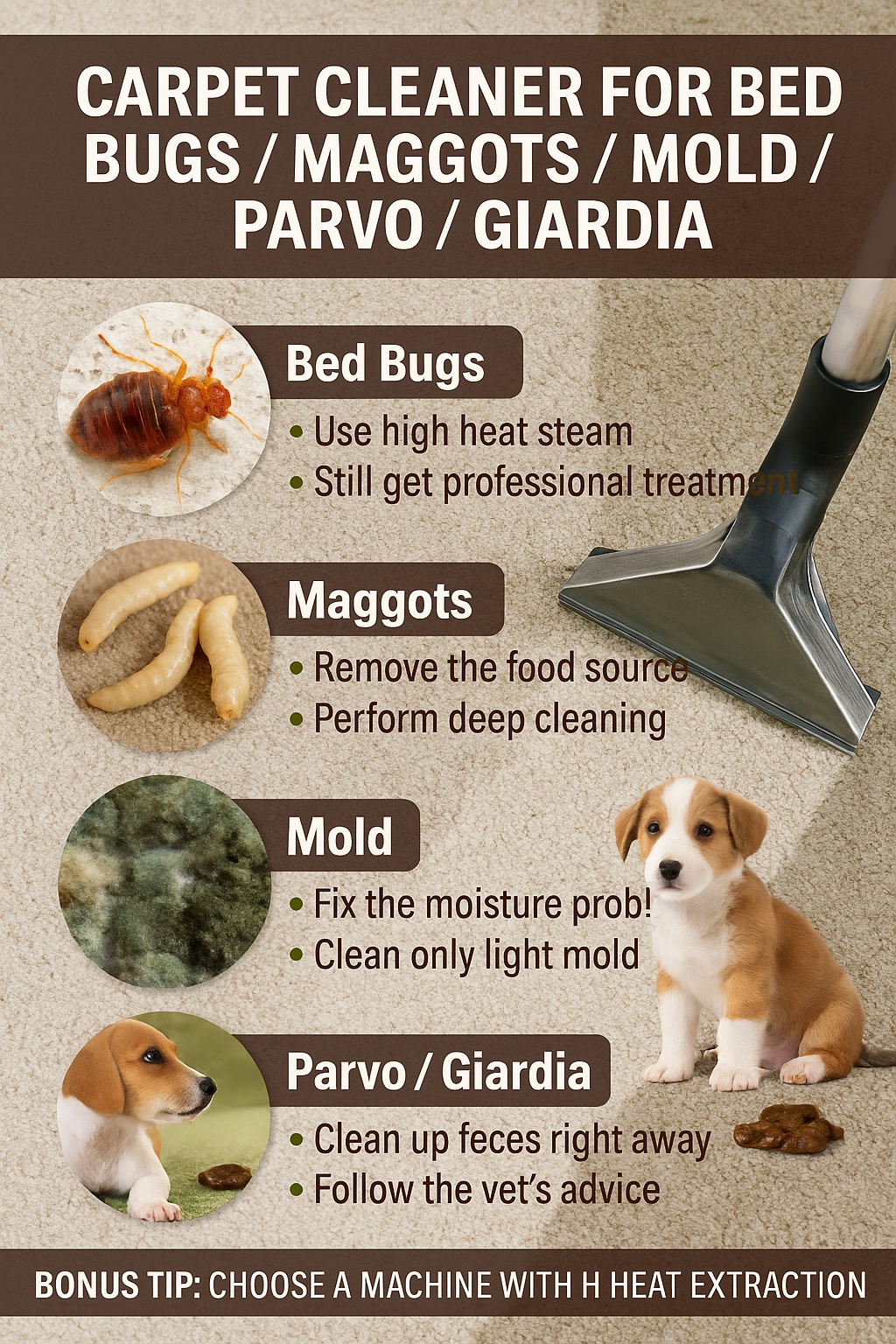
| Bed bugs | Hot water and steam can help on carpet fibres, but can’t reach bugs in walls, bed frames and skirting gaps. I only use it as support to a proper pest treatment, never as the main cure. |
| Maggots | Extraction is great for sucking out larvae and rotting gunk. But if I don’t remove the food source (bins, dead animal, spoiled food), they come back fast. |
| Mold | Deep cleaning can reduce surface spores and smell. If the underlay and subfloor stayed wet, I usually recommend a flooring or remediation expert instead of “just cleaning”. |
| Parvo (dog virus) | Shampoo alone isn’t reliable against parvo. I focus on removing organic mess and moisture, and tell owners to follow their vet’s disinfection plan, especially on hard surfaces. |
| Giardia | Hot rinsing and careful cleaning help lower the mess, but I treat it as a support step. The real battle is fast poop cleanup, vet treatment and hygiene around pets. |
🧼 Why I Take Germs in My Carpets So Seriously
How I Ended Up in “Biohazard Carpet” Territory
When I first bought a carpet cleaner, I pictured fresh-smelling lounges and happy tenants, not maggots and parvo. Then the phone calls started: “My dog had diarrhea everywhere,” “We found bugs in the carpet,” “There’s a weird smell after a leak.” That’s when I realised carpets are health surfaces, not just soft flooring.
Over time, I’ve seen everything: kids crawling over old vomit stains, pets sleeping on moldy rugs, and people spraying perfume to cover smells instead of fixing the cause. That’s why I treat germs seriously now. I still crack jokes on site, but in the back of my mind I’m thinking about lungs, immune systems and little paws walking over contaminated spots.
*As Dr Nina Lau (Public Health Physician, FRACP) once told me, “Your floor is part of your breathing space, not separate from it.”
🧠 How I Learned What Carpet Cleaners Really Do (and Don’t Do)
My Early “Magic Machine” Fantasy
At the start, I honestly believed my carpet cleaner was a magic germ-killing cannon. Hot water goes in, filth comes out, job done. Then I cleaned a rental that had a sick dog. Carpet looked great afterwards, but the vet later warned the owner that viruses can still survive, even when stains are gone. That was a wake-up call.
Now I see my carpet cleaner for what it really is: an amazing soil and odour remover, not a hospital-grade disinfectant. It’s brilliant at flushing out dirt, hair, larvae, dried poo and vomit, but it doesn’t automatically neutralise every bug. So I combine it with good chemistry, dry the carpet fast, and I’m honest with customers about its limits.
*As Daniel Price (Chartered Chemical Engineer, CEng) likes to argue, “Cleaning removes, disinfectants inactivate – they’re cousins, not twins.”
🛏️ How I Use My Carpet Cleaner Against Bed Bugs
What Bed Bugs in Carpets Actually Look Like to Me
Most people think bed bugs only live in mattresses. I’ve seen them on carpet edges, under beds and around skirting boards. Sometimes I notice black spotting, shed skins, or a bug casually strolling across the fibre like it owns the place. When that happens, I stop thinking “cleaning job” and start thinking “pest-control partnership.”
How I Support Pest Control With My Carpet Cleaner
If a licensed pest technician is treating the room, I use my carpet cleaner to support their work, not replace it. I’ll vacuum thoroughly, then do slow, hot passes on carpets and soft furniture once they give the all-clear on timing. The goal is to remove dead bugs, eggs, dust and droppings, not pretend I wiped out the infestation by myself.
*As Sarah Collins (Licensed Pest Manager, PMANZ) keeps reminding me, “Heat helps, but cracks and crevices beat carpet cleaners every time.”
🪰 How I Clean Up Maggots and “Carpet Worms”
Step One: Hunt the Real Source
Every maggot job has a villain: a forgotten food packet, a dead mouse, a leaking rubbish bag. My carpet cleaner can suck out larvae, but if I don’t find the original buffet, flies just come back to lay more eggs. So I always start by following the smell and checking bins, corners and under furniture.
Step Two: Rinse, Extract, Then De-Stink
Once the source is gone, I scrape up solids, pre-spray the area, then use hot extraction to pull out maggots and juices (sorry, it’s gross but true). After that, I rinse again and focus hard on odour removal, because flies love lingering smells. Drying is critical – I often leave an air mover so the area doesn’t stay damp and inviting.
*As Prof. Leo Martinez (Entomology Researcher, PhD) jokes, “Flies don’t care about pretty carpets; they care about free lunch.”
🌫️ How I Deal With Mold in Damp Carpets
How I Decide if a Moldy Carpet Is “Salvageable”
Mold jobs make me slow down and think. If the carpet was briefly wet and only has light spotting, I’ll consider cleaning. If it sat soaked for days, smells like a basement and the underlay squishes, I usually advise replacement or a remediation specialist. My carpet cleaner can’t fix a structural moisture nightmare.
My Process for Light Mold and Musty Corners
On light cases, I start by fixing or flagging the moisture source – leaks, condensation, poor airflow. Then I vacuum, pre-spray with a suitable product, and use hot extraction. I aim to remove spores, dust and any old detergent residue. Finally, I dry fast with fans or dehumidifiers, because slow drying is like giving mold a second chance.
*As Angela Moore (Building Surveyor, MRICS) likes to say, “If the building still leaks, you’re just washing the symptoms, not the disease.”
🐕 How I Reduce Parvo Risk on My Floors
Why Parvo Messes Make Me Extra Cautious
When someone mentions parvo, I mentally switch to “red alert.” Canine parvovirus is tough, loves organic mess, and can be deadly for unvaccinated dogs. I never promise that a carpet clean alone will make a home “parvo-free.” Instead, I position my work as one part of a bigger vet-directed hygiene plan.
What I Actually Do When Cleaning After Suspected Parvo
My first job is physical removal: carefully pick up solids, bag waste, and avoid spreading it around. Then I pre-spray and hot-extract to lift as much contamination as possible from the fibres. At the same time, I tell owners to follow their vet’s instructions for proper disinfection, especially on hard floors, crates, decks and yards where effective products can really be used properly.
*As Dr Samir Patel (Small Animal Veterinarian, MRCVS) reminds me, “Disinfection is about the whole environment, not just the bit that looks dirtiest.”
🐾 How I Reduce Giardia Risk in Carpets and Rugs
The First Time Giardia Entered My Work Life
My first giardia job came after a vet visit. The owner rang me, horrified: “They said the parasite can live in the environment!” The dog had had repeated diarrhea accidents on the rug and hallway. That’s when I realised soft furnishings can quietly hang onto trouble, especially in cool, damp homes.
How I Treat Carpets When Giardia Is on the Radar
I focus on speed. The longer feces sits on carpet, the more it can smear, soak and spread. I tell owners to bag accidents quickly, blot rather than rub, and then I come in to pre-spray, extract and rinse thoroughly. I still treat it as a support act – the star of the show is vet treatment, house hygiene and washing bedding, bowls and toys properly.
*As Dr Fiona Ng (Infectious Disease Specialist, FRACP) puts it, “Parasites love routine; breaking the reinfection cycle is more important than one heroic clean.”
⚙️ How I Choose My Machines, Products and Safety Gear
Why I Love High-Heat and Strong Extraction
For germs and pests, I care less about brand stickers and more about heat and airflow. I like machines that keep water hot at the wand and have enough suction to pull moisture back out quickly. To me, that combo means fewer residues, less sogginess, and better chances of shifting whatever is hiding deep in the pile.
My Simple Safety Setup
Gross jobs make me suit up more carefully now. I wear gloves, sometimes a mask and eye protection, and I keep kids and pets out of the work area until the carpet is dry and aired out. It’s not about drama; it’s about not breathing dried diarrhea dust or mold while pretending everything is fine.
*As Olivia Hunt (Occupational Hygienist, CIH) likes to contrast, “PPE is cheaper than lungs, every single time.”
📋 My Step-By-Step Carpet Disinfection Checklist
How I Walk Into a “Disaster” Room Without Panicking
When I open a door and smell that thick “uh-oh” smell, I fall back on a simple checklist. First, I identify what I’m dealing with: bugs, pet illness, mold, or “mystery.” Second, I protect myself and the occupants. Third, I remove solids and obvious debris before touching the machine.
My Basic Flow for Nasty Carpets
My practical order usually looks like this:
-
Contain the area so no one walks it around.
-
Scoop, scrape and bag solids carefully.
-
Pre-spray and agitate if safe.
-
Hot extract slowly and evenly.
-
Rinse if needed and dry fast with airflow.
Then I explain clearly what I’ve done, what limits there are, and when they should call a vet, doctor or pest pro.
*As Mark O’Connor (Risk Management Consultant, CRM) often says, “A calm checklist beats a heroic guess every time.”
📊 My Real-Life Carpet Germ Case Study
The Day Everything Went Wrong in One Lounge
One job had the full package: a puppy with suspected parvo, a moldy corner from an old leak, and maggots around an overflowing bin. When I walked in, I could smell stress, bleach and panic. Instead of promising miracles, I broke it into parts: germs, insects and moisture.
Simple Data I Tracked During That Job
I like turning chaos into simple numbers. Here’s how I laid it out with the owner:
| Before vs after | What I measured or noted |
|---|---|
| Odour level | From “hits you at the door” to “faint doggy smell” after cleaning and ventilation. |
| Visible staining | Heavy brown and yellow patches down to light shadows only visible in certain light. |
| Moisture readings | High in the moldy corner, back to normal range after drying gear ran overnight. |
| Cleaning steps | Scoop, pre-spray, multiple hot extractions, rinse, then fans and dehumidifier. |
| Follow-up actions | Vet check, pest-control visit, and plan to replace carpet in the worst corner. |
*As Jenna Ruiz (Data Analyst, MSc) teased me later, “Even carpets behave better when you put numbers next to them.”
❓ My Short FAQ on Carpet Cleaners, Germs and Pets
Will My Carpet Cleaner Kill Bed Bugs by Itself?
In my experience, no. It can definitely help by flushing out bugs, eggs and droppings from fibres, but the main fight needs to be handled by a licensed pest controller with proper treatments. I treat my machine as the clean-up crew, not the exterminator in charge.
Can I Get Rid of Parvo or Giardia Just by Shampooing the Carpet?
I wouldn’t bet a dog’s life on that. Shampooing and hot extraction help remove contaminated material, but I always tell owners to follow vet advice about disinfection, vaccination and long-term hygiene. Carpets are just one part of a bigger environment that needs attention.
Is All Moldy Carpet Dangerous?
Not every tiny speck is a crisis, but mold is never a friend. If the carpet stayed wet for more than a day or two, or the smell is strong, I treat it seriously and often suggest professional assessment or replacement. My machine can’t fix a building that keeps getting wet.
*As Prof. Hannah Clarke (Clinical Microbiologist, FRCPath) likes to contrast, “Looking clean is cosmetic; behaving safe is microbiology.”
✅ My Key Takeaways When Carpets Are Contaminated
What I’ve Learned After Seeing Too Much Gross Stuff
If I had to sum it up, I’d say this: my carpet cleaner is a powerful helper, not a magic wand. It removes a lot of the physical mess – bugs, larvae, spores, poop, vomit – and that alone reduces risk. But it only truly shines when combined with good diagnosis and expert advice.
How I Hope This Helps You Decide Your Next Step
If you’re dealing with bed bugs, maggots, mold, parvo or giardia, you don’t have to freak out, but you also shouldn’t shrug it off. Act fast, clean smart, dry thoroughly, and loop in vets, doctors or pest pros when needed. That’s how I turn horrible carpet days into “okay, we got through that” stories.
*As Dr Lucas Bendik (Behavioural Economist, PhD) once contrasted, “People over-trust gadgets and under-use experts – the sweet spot is using both together.”
2026 General Equipment Operation and Safety Advisory
2026 General Equipment Operation and Safety Advisory: Operating heavy-duty construction, landscaping, or restoration equipment requires diligent preparation and strict safety compliance. Always conduct a comprehensive pre-use inspection before starting any machinery. Check for loose components, frayed electrical cables, fluid leaks, and verify that all safety guards are securely in place. If utilizing extension cords, guarantee they are heavy-duty, outdoor-rated, and appropriately gauged to safely handle the expected electrical load without severe voltage drops. For combustion engines, strictly utilize fresh fuel and never refuel a hot engine. Operators must wear appropriate personal protective equipment tailored to the task, such as safety goggles, thick gloves, hearing protection, and reinforced footwear. Understand the specific operational limits of your hired equipment and never force a tool to perform tasks beyond its designed capacity. Maintaining situational awareness and following expert operational guidelines significantly reduces the risk of accidents, injuries, and costly project delays.
Hire professional-grade equipment from 7 Hire. We offer fast local pickup or delivery across Auckland.